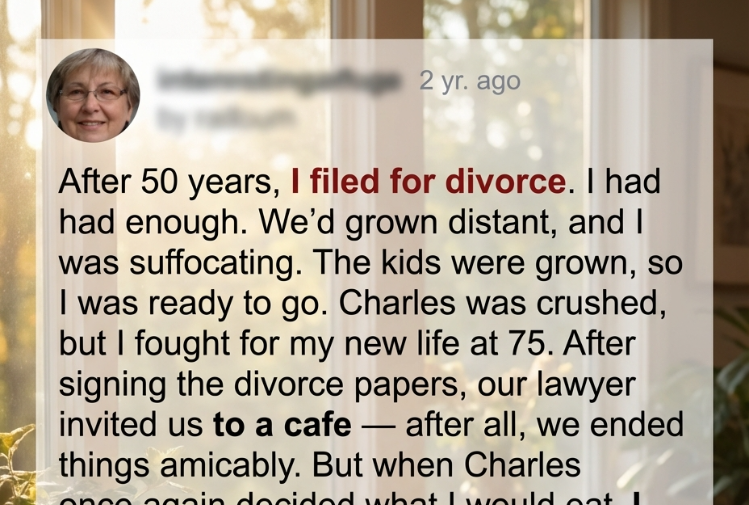
Spending fifty years with someone builds a lifetime of memories, routines, and quiet understandings. That’s why I never imagined reaching a point where I questioned whether my marriage should continue. At seventy-five, many people hold tightly to what feels familiar, yet I found myself feeling restless—almost invisible in my own life.
It wasn’t that my husband, Charles, had done anything wrong. He wasn’t unkind or distant. Instead, the shift came from within me. After decades of raising children, managing responsibilities, and placing everyone else’s needs before my own, I realized I no longer recognized the woman I had become. What once felt comforting slowly began to feel confining, and I misunderstood that discomfort as a sign that leaving was the answer.
From the outside, our marriage looked steady and admirable. We had built a home filled with shared traditions, celebrations, and simple everyday moments. Our partnership was shaped by trust, mutual respect, and the kind of familiarity that develops only over many years.
But after we retired, time changed its pace. Days felt longer, routines grew repetitive, and small frustrations quietly collected until they spilled over into arguments that surprised us both. I couldn’t explain what was bothering me because I didn’t fully understand it myself.
When I finally told Charles I wanted a divorce, his response was gentle in a way I didn’t expect. He didn’t raise his voice or try to persuade me to stay. He simply listened and said that if stepping away was what I truly needed, he wouldn’t stand in my way. His calmness shook me. I had expected tension or resistance, not acceptance.
We completed the arrangements peacefully. That same evening, out of habit more than intention, we went to dinner together. I noticed how he adjusted the lighting at the table so it wouldn’t strain my eyes—something he’d done for years without me ever asking. In my confusion, I misread the gesture. Instead of seeing kindness, I convinced myself it was control. Harsh words followed, fueled by months of bottled-up emotion. Then I walked away, believing I was choosing freedom.
That night, I ignored his calls, thinking distance would bring clarity. But the next morning, everything changed. A neighbor arrived with urgent news: Charles had collapsed and been taken to the hospital. In an instant, every doubt and frustration disappeared, replaced by fear.
When I stopped by our home to gather a few things, I found a handwritten note he had left for me. His familiar handwriting carried gentle, reassuring words—reminders of the small ways he had cared for me over the years, not out of obligation, but out of love. He wrote that he wanted me to feel supported and valued, even if that meant stepping aside so I could find myself again. Reading those words softened every certainty I thought I had.
By the time I reached his hospital room, the truth was clear. Charles survived, and while his recovery would take time, sitting beside him made me realize what I had overlooked. His love was never something that confined me—it was something that quietly protected me.
Today, as we move forward, I choose to see our life together with new appreciation. Whatever time we have left, I want to live it with gratitude, awareness, and intention. I’ve learned that freedom doesn’t always come from walking away. Sometimes it comes from recognizing the depth of what has been right beside us all along—steady, patient, and waiting to be understood.