As people get older, it’s common to notice new spots, bumps, or textured patches appearing on the skin. While many of these changes are harmless, they can still cause concern, especially if they itch or seem to appear suddenly.
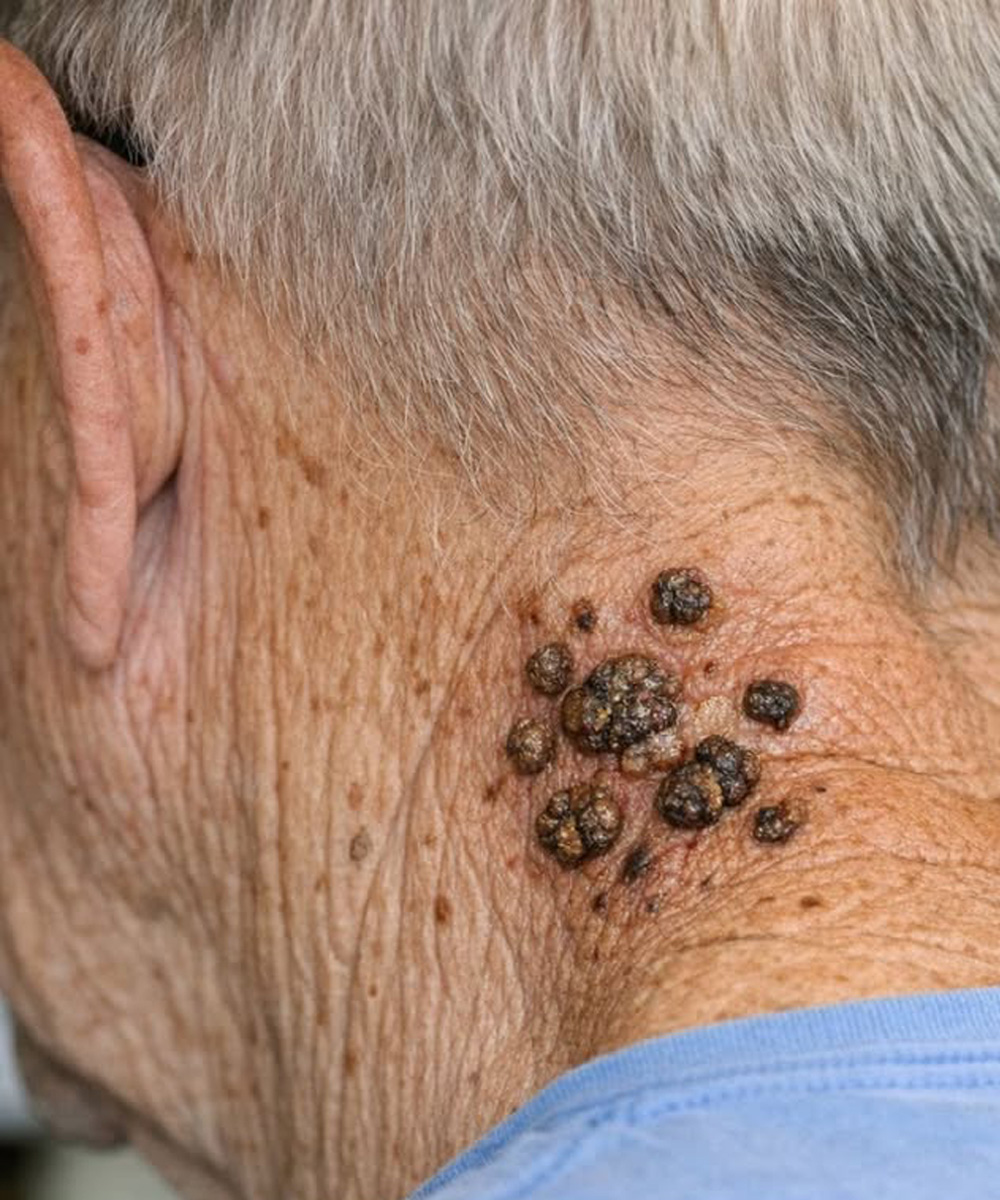
If your grandpa has dark, waxy bumps on his neck that sometimes itch, there’s a strong possibility they are something known as Seborrheic keratosis. Understanding what this condition is can help ease worry and guide the next steps.
Seborrheic keratoses are non-cancerous skin growths that frequently develop in adults over the age of 50. They may appear gradually over time or seem to show up unexpectedly. These growths often look brown, black, or light tan and have a waxy, slightly raised surface. Many people describe them as looking like they are “stuck onto” the skin. They can be small or grow to more than an inch wide and are commonly found on the neck, chest, back, or scalp.
Although they are usually painless, these bumps can sometimes itch. This irritation may be caused by friction from clothing, dry skin, or accidental scratching. Mild itching is common, but if a growth begins to bleed, becomes very painful, or changes quickly, it should be checked by a healthcare professional.
The reassuring news is that seborrheic keratoses are benign, meaning they are not cancerous. However, certain skin cancers, including Melanoma, can sometimes resemble harmless growths. That is why it is important to pay attention to warning signs such as uneven borders, multiple colors within one spot, rapid growth, or unexplained bleeding. Any unusual changes deserve medical attention.
Age plays an important role in the development of these growths. Years of sun exposure may contribute to their appearance, and genetics can also increase the likelihood of developing them. In many cases, they are simply a normal part of aging skin.
Doctors can often diagnose seborrheic keratosis through a simple visual examination. A dermatologist may use a magnifying device to take a closer look. If there is any doubt about the diagnosis, a small skin sample may be removed and examined to ensure the growth is not something more serious.
Treatment is not always necessary unless the bumps cause discomfort or cosmetic concerns. When removal is desired, options may include freezing the growth, gently scraping it away, or using laser therapy. These procedures are typically quick and done in a medical office.
It is important not to attempt removing these growths at home. Picking, cutting, or using unverified remedies can lead to irritation, infection, or scarring. Consulting a healthcare provider is always the safest approach.
Encouraging older family members to speak openly with their doctor about new or changing skin growths can provide reassurance and clarity. Most of the time, these dark, waxy bumps are harmless. Still, monitoring changes and seeking professional advice when needed helps protect long-term skin health and peace of mind.