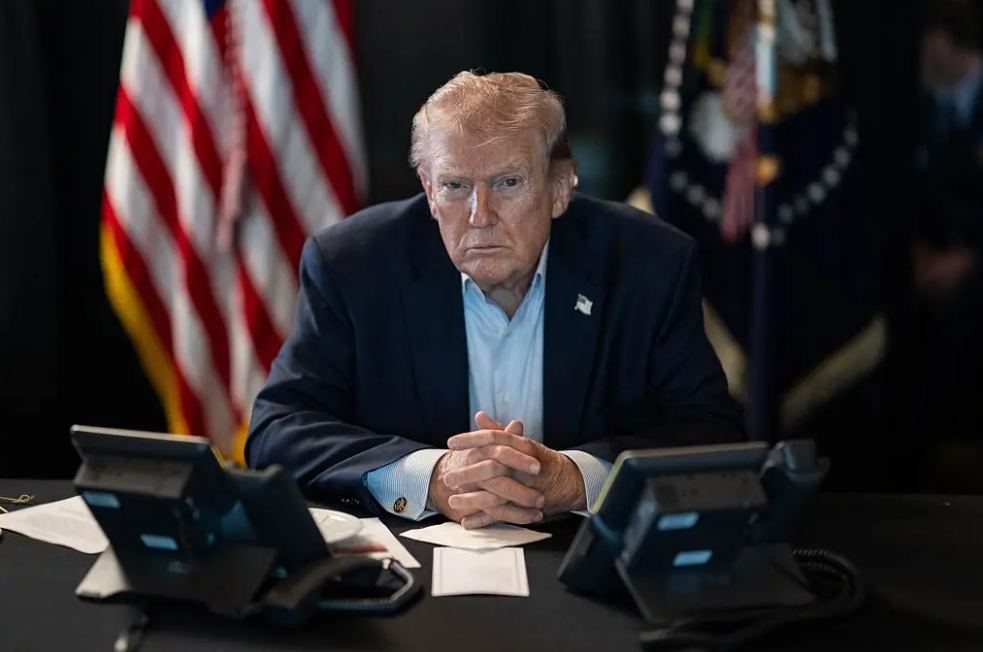
Could a Rare Constitutional Rule Remove a U.S. President Understanding the Debate Around the Twenty-Fifth Amendment
Recent political discussions in the United States have brought renewed attention to a little-known constitutional provision that outlines how a sitting president could be temporarily or permanently removed from office under specific circumstances.
The conversation intensified after Donald Trump shared strong remarks regarding tensions with Iran, particularly around the strategic Strait of Hormuz. His comments drew reactions from both political opponents and some members of his own party, sparking broader debate about presidential conduct and constitutional safeguards.
What Is the Twenty-Fifth Amendment
At the center of the discussion is the Twenty-fifth Amendment, a constitutional mechanism designed to ensure continuity of leadership in the United States. Ratified in 1967 in the aftermath of President Kennedy’s assassination, it clarified questions about presidential succession and disability that the original Constitution had left vague.
The amendment includes four sections. The first three address situations such as a president’s death, resignation, or temporary inability to perform duties. In these cases, the vice president, currently JD Vance, would assume presidential responsibilities.
The fourth section is the most complex and rarely discussed. It allows the vice president and a majority of the Cabinet to declare that the president is unable to carry out the duties of the office. This is the provision at the heart of the current debate.
How the Process Works
If such a declaration is made, the vice president immediately becomes acting president. However, the process does not end there. The amendment builds in multiple layers of protection against misuse:
1. The declaration: The vice president plus a majority of the Cabinet (or another body established by Congress) formally declares the president unable to serve.
2. The president’s response: The president has the right to contest the decision by declaring that no inability exists.
3. Reaffirmation: If contested, the vice president and Cabinet must reaffirm their position within a set timeframe.
4. Congressional vote: Congress would then vote on the matter, requiring a two thirds majority in both chambers to uphold the removal.
Because of its complexity and political sensitivity, this section has never been fully used to remove a president. The framers of the amendment designed it as a safeguard for genuine inability, not as a political tool, and the high bar for action reflects that intent.
Why Section 4 Is So Difficult to Invoke
The two thirds requirement in both the House and Senate makes Section 4 extraordinarily difficult to use. In practice, it requires:
- The vice president to act against the president they serve alongside
- A majority of the Cabinet to agree
- Supermajorities in a Congress that is almost always divided
Legal scholars widely agree that the provision was designed for situations like a president in a coma or suffering severe cognitive impairment, not for policy disagreements or controversial statements. Using it over political disputes would stretch the amendment beyond its intended purpose, which is why even serious discussions of it tend to remain theoretical.
Political Reactions and Expert Opinions
Following recent statements, some lawmakers including Chris Murphy publicly discussed the possibility of invoking the amendment, emphasizing concerns about leadership stability and decision making during international tensions. For supporters of this view, the combination of high stakes foreign policy moments and provocative rhetoric raises legitimate questions about steady leadership.
At the same time, reactions have not been limited to political opponents. Figures within the president’s broader political circle such as Marjorie Taylor Greene also expressed concern, highlighting divisions in opinion over how leaders should communicate during sensitive global situations. When criticism comes from both sides of the aisle, it signals that the unease extends beyond ordinary partisanship.
Meanwhile, international leaders like Keir Starmer have continued to emphasize diplomatic approaches to global conflicts, underscoring differences in strategy among allied nations. The Strait of Hormuz, through which a significant share of the world’s oil passes, is precisely the kind of flashpoint where rhetoric carries real consequences.
The Strait of Hormuz: Why It Matters
The strategic importance of the Strait of Hormuz explains why remarks about it generate such intense reactions. The narrow waterway between Iran and Oman is one of the world’s most critical oil transit chokepoints. Any disruption there could send energy prices soaring and destabilize the global economy.
In such a context, strong remarks from an American president are not just domestic political theater. They are signals received in Tehran, Riyadh, Beijing, and European capitals, each interpreting them through their own interests and fears. This is why debates about presidential temperament during international tensions carry weight far beyond Washington.
A Rare but Important Safeguard
The Twenty Fifth Amendment remains an important constitutional safeguard designed to address extreme scenarios where presidential leadership may be in question. However, its use requires broad agreement among top government officials and lawmakers, making it a measure of last resort.
Its real value may be less in its use than in its existence. Knowing that a mechanism exists for genuine inability provides reassurance that the system can handle even the most extreme scenarios. The amendment is part of the constitutional architecture that keeps the republic stable through crises.
How Constitutional Frameworks Get Tested
As political debates continue, the situation highlights how constitutional frameworks are tested during times of heightened global and domestic tension, and how leadership decisions can quickly become central to national conversation.
Every generation discovers anew that the Constitution’s provisions are not abstract. They are tools, designed for moments exactly like these, when the country must balance strong leadership with accountability. Whether or not the Twenty-Fifth Amendment is ever invoked under Section 4, the debate itself serves a purpose: it forces Americans to think seriously about what they require of their presidents.
Frequently Asked Questions
What is the Twenty-Fifth Amendment?
Ratified in 1967, it clarifies presidential succession and disability. Sections 1 through 3 cover death, resignation, and voluntary temporary transfer of power. Section 4 allows the vice president and a Cabinet majority to declare the president unable to serve.
Has Section 4 ever been used to remove a president?
No. Because of its complexity and political sensitivity, it has never been fully invoked to remove a president against their will.
What would it take to remove a president under Section 4?
The vice president and a Cabinet majority must declare inability, the president can contest it, and Congress must then uphold the removal by a two thirds vote in both chambers.
Why is the Strait of Hormuz significant?
It is a narrow waterway between Iran and Oman through which a major share of the world’s oil shipments pass, making it one of the most strategically important chokepoints on the planet.
Is the amendment intended for policy disagreements?
Legal scholars generally agree it was designed for genuine inability to serve, such as severe medical incapacitation, not for disputes over policy or rhetoric. The high procedural bar reflects that intent.