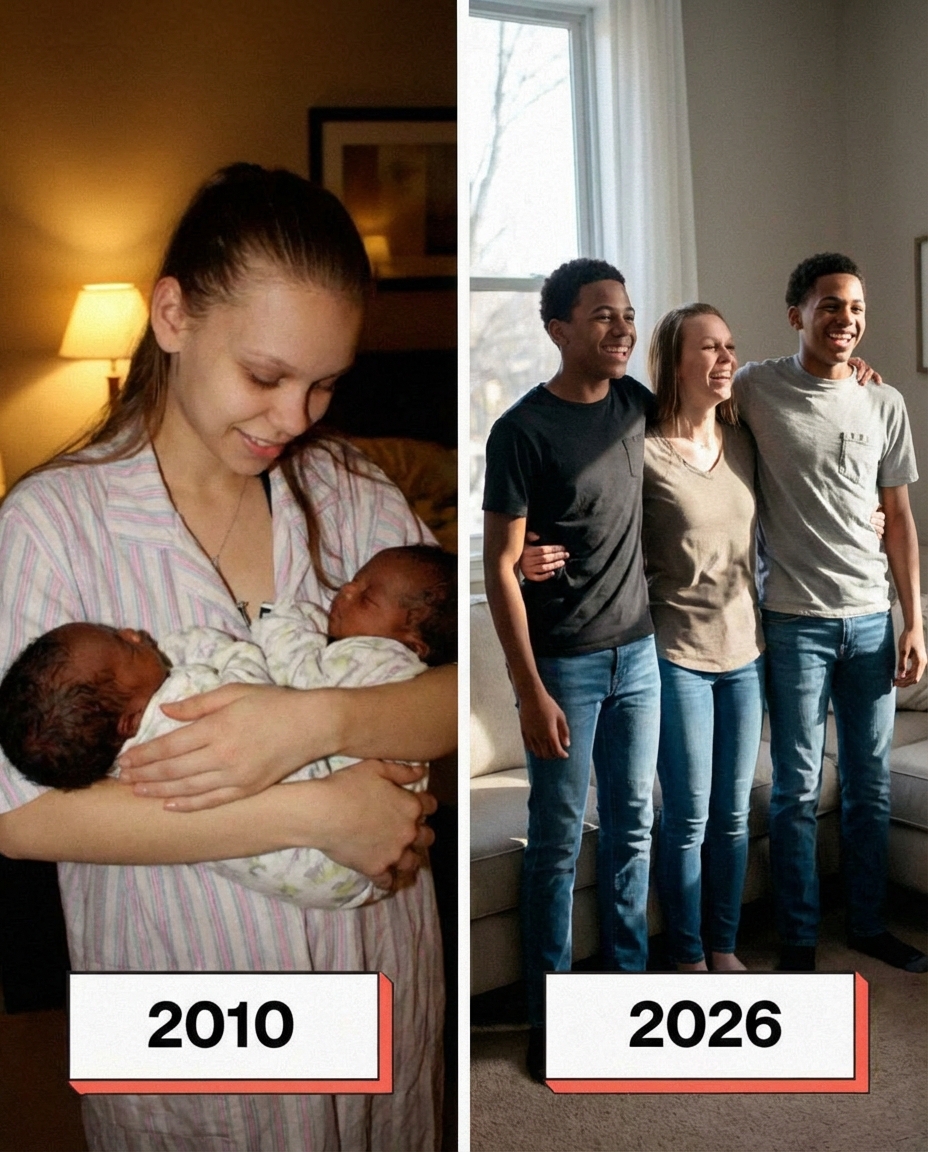
For years, I believed the hardest part of becoming a mother so young would be the exhaustion, the financial stress, or watching others enjoy a freedom I had to give up early. I was wrong. The most difficult moment came much later—sixteen years later—when my twin sons came home one evening and calmly told me they no longer wanted to live with me or continue our relationship.
That night is burned into my memory. Rain rattled against the windows, my work uniform was still damp from a long shift at the diner, and the house felt unusually quiet. My sons sat across from me, serious and distant, as if they had already made their decision. When one of them finally spoke, it felt like the ground shifted beneath me.
This moment didn’t happen out of nowhere.
I became a mother at 17. Their father promised he would stay, but within months he disappeared entirely—cutting contact and leaving me to figure things out on my own. From that point on, survival became routine. I worked long hours, stretched every dollar, and tried to give my boys a childhood filled with small but meaningful traditions: weekend movie nights, simple celebrations, and reassurance that they were loved, even when life felt uncertain.
As the years passed, those efforts seemed to pay off. My sons worked hard in school and earned spots in a dual-enrollment college program. I remember sitting in my car after the acceptance news, overwhelmed with relief and pride. It felt like proof that all the sacrifices had mattered.
That sense of peace didn’t last.
Around the time they started the program, their father reappeared—now successful, well-spoken, and eager to rewrite the past. He told my sons a version of the story that painted me as the reason he had been absent. Slowly, doubt took root. The conversations at home became tense. I could see how confused and conflicted they were, especially when their academic future felt tied to someone they barely knew.
Instead of reacting emotionally, I asked them to take things slowly. I told them we would face the situation carefully and together.
Eventually, we attended a formal event where their father presented himself as a devoted parent who had “found his way back.” When he tried to publicly frame my sons as proof of his redemption, something unexpected happened. One of my boys spoke up—not angrily, but honestly. He thanked the person who had raised them and made it clear that it wasn’t the man standing on stage. His brother followed, explaining how their mother had been the constant presence in their lives.
The room fell silent.
We left quietly, without confrontation. But the truth had already done its work. In the days that followed, questions were asked, stories unraveled, and perspectives changed.
Most importantly, my sons came home—not just physically, but emotionally. We sat together at the kitchen table the next morning, sharing breakfast and conversation like we used to. It wasn’t a perfect ending, but it was real.
And for the first time in a long while, it felt like we were truly moving forward—together.