I Stepped Onto My Balcony One Morning and Noticed Something Moving Inside the Wall
A Morning That Started Like Any Other
That morning started like any other. I stepped out onto the balcony to open the window, take in some fresh air, and fully wake up. Everything felt routine, until my eyes landed on the wall.
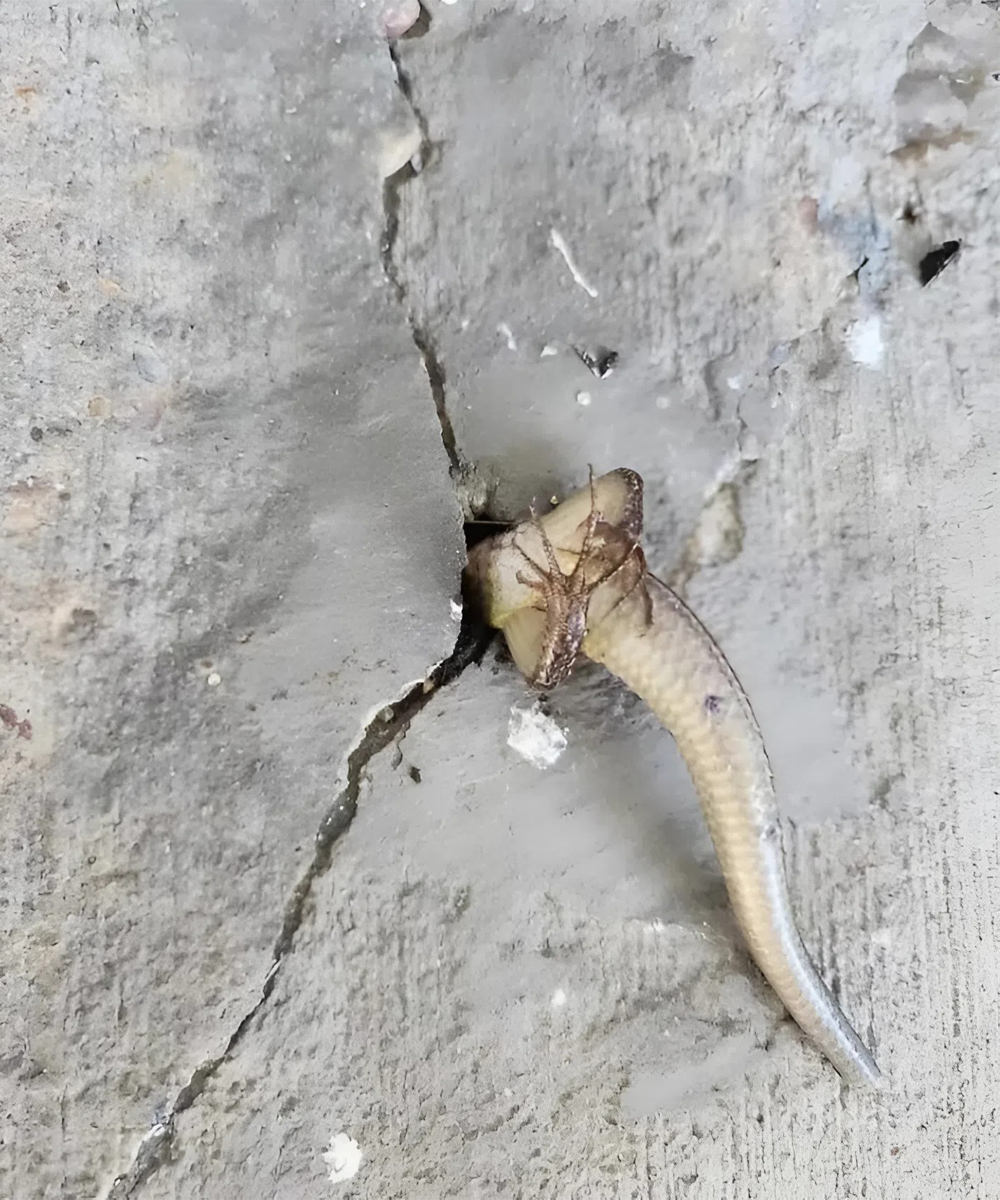
At first, I was not sure what I was seeing. Something inside the wall was moving. The motion was slow and unusual, almost as if the wall itself were alive. I stopped in my tracks, staring.
It is a strange and primal feeling when the familiar suddenly becomes unfamiliar. Your own home, the walls you have looked at a thousand times, abruptly behaving in a way that makes no sense. The brain cycles frantically through explanations, discarding each one as quickly as it arrives.
The Mind Races Through Possibilities
My mind rushed through possibilities: a shadow, maybe something loose behind the surface. For a brief moment, I even wondered if it could be an animal. The longer I looked, the more unsettled I felt.
The movement was not smooth. It was uneven and strained, as if whatever it was could not move freely. Part of it appeared to be trapped, with only a small section visible outside a narrow crack. That detail, the sense of something struggling, made the whole scene harder to watch and harder to look away from.
A wave of anxiety hit me. I felt uncomfortable, unsure of what to do, and unsure of what I was even looking at. It was one of those moments where curiosity and fear exist at the same time. Every instinct said to step back. Every other instinct said to look closer.
This is a deeply human response to the unknown. Our brains constantly match what we see against what we expect. When something violates those expectations, when a wall moves, the result is a cocktail of fascination and dread that is almost impossible to resist.
Discovering What Was Really There
I cautiously stepped closer and realized the truth: a small lizard was stuck in the crack of the wall. It was a skink, alive, exhausted, and clearly unable to free itself.
Seeing it up close changed everything. What had first felt frightening suddenly felt sad. The animal was struggling, its movements growing weaker. Whatever fear I had felt evaporated, replaced by an urgent need to help.
Skinks are common in many regions, small sleek lizards that thrive around homes and gardens. They are harmless, beneficial creatures that eat insects. This one had likely been exploring the wall's exterior when it wedged itself into a space too narrow to escape.
The Rescue
What followed was a careful, improvised rescue operation. Freeing a small animal from a wall crack requires patience more than tools. Sudden movements could injure the skink or drive it deeper into the crevice. The goal was to widen the opening just enough, or to coax the animal out gently, without causing harm.
Key principles for helping a trapped small animal:
- Stay calm and move slowly. Panicked movements can frighten the animal into struggling harder, worsening the entrapment.
- Assess before acting. Determine how the animal is stuck and which direction offers the easiest exit.
- Avoid pulling. Pulling a wedged animal can cause serious injury. Gentle coaxing or carefully widening the space is safer.
- Use soft tools. A piece of cardboard, a soft cloth, or a thin spatula can help guide without harming.
- Give it time. Sometimes the best approach is to create an opening and step back, letting the animal free itself when the pressure eases.
- Check for injury after. Once free, observe briefly. If the animal appears hurt, contact a local wildlife rehabilitator.
In this case, patience and gentle effort paid off. The skink, exhausted but alive, was freed from the crack. After a moment of stillness, likely gathering its strength and its bearings, it scurried off into the garden, back to the world of insects and sun-warmed stones where it belonged.
Why This Small Moment Mattered
It would be easy to dismiss this as a trivial morning anecdote: person sees lizard, person frees lizard, morning continues. But small moments like this carry outsized meaning, and that is worth examining.
First, there is the transformation of fear into compassion. The initial reaction, anxiety at the unknown moving wall, is natural and self-protective. But the willingness to look closer, to move past fear toward understanding, is what separates a frightening experience from a meaningful one. Had I simply walked back inside, I would have carried a vague unease all day. Instead, I have a story about helping.
Second, there is the reminder of the hidden lives around us. Our homes and gardens teem with creatures living their own complex existences just outside our attention. A skink hunting insects in a wall crack is going about its day with the same seriousness we bring to ours. Noticing these parallel lives, even briefly, enriches our own.
Third, there is the simple satisfaction of a kindness performed. No one was watching. No one would have known if I had ignored the struggling skink. The rescue mattered only to the skink and to me. And somehow, those are often the kindnesses that feel most significant.
Skinks: The Unseen Neighbors
Most people share their outdoor spaces with skinks without ever realizing it. These fascinating little reptiles deserve a brief introduction:
- Beneficial predators: Skinks eat insects, spiders, and other small invertebrates, providing natural pest control around homes and gardens.
- Harmless to humans: They do not bite people, are not venomous, and prefer to flee rather than confront.
- Remarkable tails: Many skink species can detach their tails when threatened, distracting predators while they escape. The tail regrows over time.
- Sun lovers: Like all reptiles, skinks regulate body temperature through basking, which is why they are often seen on warm walls and rocks.
- Shy by nature: Despite living close to humans, skinks are secretive and quick to hide, which is why encounters feel surprising.
Understanding these neighbors makes moments like the wall encounter less startling and more wonderful. That moving wall was not a malfunction of reality. It was a glimpse into a small, struggling life that happened to intersect with mine.
When to Help Wildlife and When to Step Back
Not every wildlife encounter requires intervention, and well-meaning help can sometimes cause harm. Useful guidelines:
- Help when an animal is clearly trapped, injured, or in immediate danger you can safely resolve.
- Observe first when the situation is unclear. Many young animals that appear abandoned are actually being watched by parents nearby.
- Do not handle wildlife more than necessary. Stress alone can be dangerous for small animals.
- Contact professionals for larger animals, venomous species, or situations beyond your ability to manage safely.
- Prevent future incidents by sealing cracks and gaps where small animals might become trapped.
The skink in the wall was a clear case for gentle intervention: trapped, weakening, and freeable with minimal risk. Trust your judgment, but when in doubt, a local wildlife rehabilitator can advise by phone.
The Morning After
The next morning, I stepped onto the balcony again. The wall was still. The crack was just a crack. Everything was routine, exactly as it should be.
But I looked at that wall a little differently. Somewhere in the garden, a skink was hunting insects in the morning sun, alive because a strange moving shadow had prompted a closer look instead of a hasty retreat. It is a small thing. But on some mornings, small things are everything.
Frequently Asked Questions
What was moving inside the wall?
A small skink, a type of lizard, had become wedged in a narrow crack in the wall. Its struggling movements, partially visible through the crack, created the unsettling impression that the wall itself was moving.
Are skinks dangerous?
No. Skinks are harmless to humans. They do not bite people, are not venomous, and are beneficial creatures that eat insects and other small pests around homes and gardens.
How should you free a trapped small animal?
Stay calm, assess the situation, avoid pulling the animal, use soft tools or gentle coaxing, give it time, and check for injuries afterward. If the animal appears hurt or the situation is beyond your ability, contact a local wildlife rehabilitator.
Why do skinks get stuck in walls?
Skinks explore crevices while hunting insects. A crack that looks passable from outside may narrow inside, trapping the lizard. They are most active in warm weather when hunting and basking.
How can you prevent small animals from getting trapped?
Seal cracks and gaps in exterior walls, especially near gardens and ground level. Regular home maintenance not only prevents trapped wildlife but also improves energy efficiency and keeps out pests.