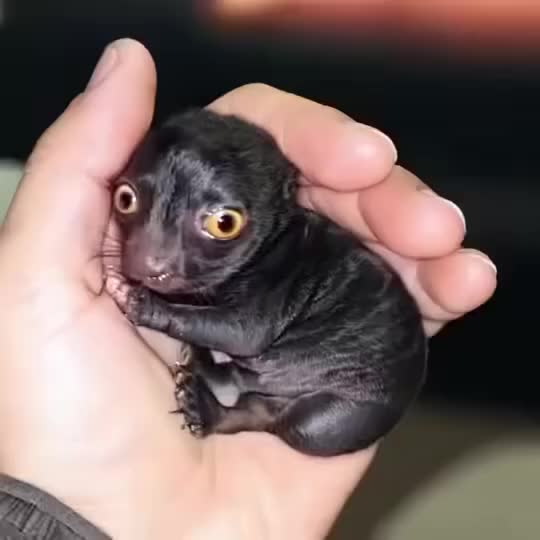
Local Man Discovers Mysterious Creature in the Forest, The Truth Weeks Later Leaves Everyone Amazed
It all began on a calm, sunlit afternoon when the team at the Heart of the Forest Animal Center received an unusual call. A local resident had brought in a tiny, black-furred creature that no one could quite identify. Its little eyes were still closed, its body fragile, and its soft fur gleamed like silk under the light.
A Mystery That Captivated Thousands
Soon after, photos of the mysterious animal began circulating online. Thousands of people shared their guesses, was it a kitten, a squirrel, or perhaps even a baby bear? Even experienced wildlife rescuers couldn't agree. The creature's delicate features only deepened the mystery. Yet, one thing was certain: this tiny life had already touched the hearts of many.
There is something about an unidentified baby animal that captures the public imagination. Part of it is the puzzle: our brains love a mystery with a satisfying answer. Part of it is pure tenderness: a helpless newborn triggers a deep caregiving instinct in humans. And part of it is the reminder that the natural world still holds surprises, even in an age when it feels like everything has been catalogued and explained.
Wildlife centers report that misidentification of baby animals is extremely common. Newborn mammals often look nothing like their adult forms. Baby squirrels are hairless and pink. Baby rabbits are tiny and helpless. Without fur patterns, open eyes, or distinctive features, even professionals sometimes need days of observation to be sure.
A Surprise That Shocked Everyone
After several days of careful observation, the truth finally came out, and it astonished everyone. The mysterious baby wasn't a wild animal at all. It was a domestic rabbit, only a few days old. She had a few minor scratches but was otherwise healthy and strong.
But the story didn't end there. The most heartwarming twist was yet to come. This fragile little rabbit hadn't been found by a human, she'd been rescued by a dog.
A Heartwarming Act of Compassion
According to rescuers, a local dog had discovered the tiny rabbit alone in the woods. Instead of harming her, the dog gently carried her in its mouth and brought her to safety.
Dogs carrying small animals gently is a behavior rooted in their ancestry. Retriever breeds were specifically developed to carry game birds without damaging them, using what trainers call a "soft mouth." But this instinct appears across breeds. Dogs regularly demonstrate an ability to calibrate their jaws with extraordinary precision, carrying eggs, kittens, and baby birds without harming them.
What makes this story remarkable is not just the gentleness but the intent. The dog did not simply find the rabbit and leave it. The dog brought her to safety, to humans, as if understanding that this tiny creature needed help beyond what a dog could provide. Animal behaviorists are cautious about attributing human-like reasoning to animals, but they acknowledge that dogs show remarkable sensitivity to distress in other species.
When the story was shared online, it quickly went viral, touching thousands of people around the world. It became a beautiful reminder that kindness knows no species.
Why This Rescue Was So Rare
Rescuers explained that finding a newborn domestic rabbit in the wild is extremely rare. Unlike wild rabbits, domestic babies are born blind, nearly hairless, and entirely dependent on care. Without their mothers, they can hardly survive.
To understand the stakes, consider the differences:
- Wild baby rabbits (kits) are born with fur, their eyes open within days, and they are designed to survive with minimal maternal contact. Mother rabbits visit the nest only briefly to avoid attracting predators.
- Domestic baby rabbits are born blind, nearly hairless, and completely helpless. They depend entirely on their mother's warmth and milk. Alone in the woods, a domestic newborn has almost no chance.
That is why this rescue felt nothing short of miraculous. A creature with every odd stacked against her survived because a dog decided to be gentle, and because humans decided to care.
Turning a Viral Moment Into Education
To help others recognize and respond to similar situations, the animal center shared an educational campaign on social media. They explained how to tell the difference between wild and domestic baby rabbits, and when to step in or let nature take its course.
This is one of the most valuable things wildlife centers do. Well-meaning people frequently "rescue" baby animals that don't need rescuing, separating them from mothers who are nearby. The center's guidance helps the public make better decisions:
- If you find baby rabbits in a nest with grass and fur lining, leave them alone. The mother is almost certainly nearby, visiting when humans aren't watching.
- If the babies are injured, cold, or clearly domestic (unusual colors like black, white, or spotted), contact a wildlife rehabilitator.
- Never try to raise wild animals yourself. They need specialized diets, and in most places it is illegal without a permit.
- Keep dogs leashed in areas where wildlife nests, during spring baby season especially.
- When in doubt, call first. A quick call to a rescue center before intervening can save a life, or prevent an unnecessary separation.
A Happy Ending for the Little Survivor
Today, the once-mysterious rabbit is thriving under the loving care of her rescuers. Her fur has grown soft and bright, her energy has returned, and her playful spirit fills the shelter with joy.
The heroic dog who found her remains a local legend, a symbol of loyalty, compassion, and unexpected friendship.
Stories like this endure because they reorder our assumptions. We expect the wild to be ruled by instinct and appetite. Then a dog carries a baby rabbit to safety, and we are reminded that gentleness exists everywhere, even, and perhaps especially, in creatures we underestimate.
A Lesson in Love and Hope
What began as a mystery turned into a touching lesson about empathy and the incredible connections that exist in nature. Sometimes, heroes don't wear capes, they have wagging tails. And sometimes, hope arrives quietly on four paws, carrying life and love where it's needed most.
Frequently Asked Questions
What should I do if I find a baby animal in the wild?
Observe first from a distance. Most baby animals found alone are not abandoned; their mothers are nearby. If the animal is injured, cold, or in immediate danger, contact a licensed wildlife rehabilitator before intervening. Never take wildlife home to raise yourself.
How can you tell a wild baby rabbit from a domestic one?
Wild kits are typically brown or agouti colored for camouflage and are born furred. Domestic babies may be black, white, spotted, or other unusual colors, and are born blind and nearly hairless. Unusual coloring in the wild is a strong sign of a domestic animal.
Why do dogs sometimes gently carry small animals?
Many dogs have a "soft mouth" instinct, particularly retriever breeds developed to carry game without damage. Dogs also show sensitivity to distress and vulnerability in other animals. Gentle carrying behavior reflects both breeding and individual temperament.
Is it legal to keep a rescued wild animal?
In most places, no. Keeping native wildlife without proper permits is illegal, and wild animals have specialized needs that are difficult to meet at home. Always transfer rescued wildlife to a licensed rehabilitator or animal center.
When is it right to intervene with baby rabbits?
Intervene if they are injured, visibly cold, covered in insects, or clearly domestic animals out of place. Do not intervene simply because they appear to be alone; mother rabbits feed their young only once or twice a day, usually at dawn and dusk, and stay away otherwise to avoid attracting predators.
How can I support local wildlife rescue centers?
Donate money or supplies, volunteer your time, foster animals if the center offers fostering, and share their educational content. During baby season in spring, spreading guidance about when not to intervene is one of the most helpful things you can do.