From a very young age, I learned what it felt like to be judged before being understood. In school, I wasn’t known for my curiosity, my grades, or the effort I put into my work. Instead, I carried a label that followed me everywhere: “the garbage collector’s kid.” After my father lost his life in a tragic workplace accident, my mother became the backbone of our family. To keep us afloat, she took a demanding sanitation job, waking up long before sunrise, pulling on her reflective vest, and heading out into the streets while most people were still asleep.
At school, the whispers never really stopped. Some classmates made careless jokes, others avoided sitting near me, and a few acted as if my family’s situation somehow defined my future. Lunchtime was often spent alone, watching groups laugh together while I focused on finishing my homework early. Those moments hurt, but I never let them reach home. Each evening, my mother greeted me with a tired smile and the same gentle question: “How was your day?” I always answered, “Good.” I knew she was already doing everything she could, and I didn’t want to add to her worries.
As the years passed, school became more than a requirement—it became my escape. While others went home to private tutors or quiet bedrooms, I stayed late in the school library. I taught myself using old textbooks, donated materials, and free online lessons. We didn’t have extra money, but I had discipline and a clear goal: to build a future where my mother wouldn’t have to work such exhausting hours forever. Every test, every assignment, felt like a step toward that goal.
One teacher noticed the effort I was putting in. Mr. Anderson never asked about my background or my family’s job. He cared about my curiosity, my problem-solving skills, and my willingness to learn. He challenged me to aim higher than I ever thought possible and introduced me to opportunities I didn’t know existed. With his guidance, I began applying to universities that once felt completely out of reach. I did it quietly, without telling my mother, afraid of raising her hopes if nothing came of it.
Then, one evening, the email arrived. I had been accepted into a highly respected engineering school—with a full scholarship. I read the message over and over, hardly believing it was real. I wanted to tell my mother immediately, but something told me to wait. I wanted to share the news at a moment that truly mattered.
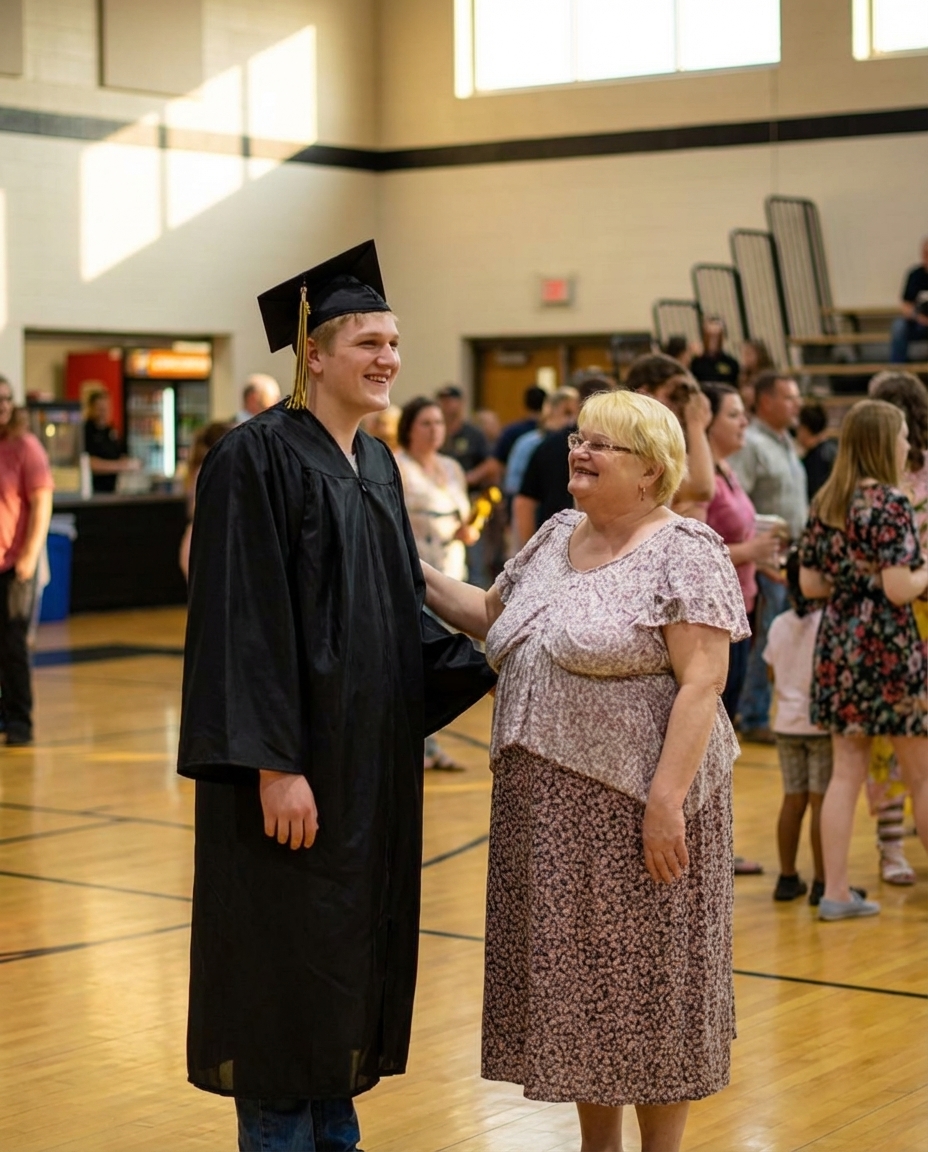
Graduation day finally arrived. The gym was packed with families, cameras, and proud smiles. When my name was announced as valedictorian, I walked toward the stage with my heart pounding. Standing at the microphone, I didn’t list my achievements or awards. Instead, I spoke from the heart. I said one sentence that changed the entire room:
“My mom has been picking up your trash for years so I could stand here today.”
The gym fell completely silent. I went on to explain who my mother really was—a hardworking woman who sacrificed her own dreams so I could chase mine. I spoke about dignity in honest work, about perseverance, and about how a job title never defines a person’s worth. I thanked Mr. Anderson for believing in me when few others did. Finally, I shared the news about my scholarship and the future waiting ahead.
What followed wasn’t just applause—it was recognition. People stood, clapped, and cheered. In the crowd, I saw my mother crying openly, pride shining on her face as she called my name. In that moment, every difficult day, every quiet lunch, and every late night in the library felt worth it.
Later, in the parking lot, my mother hugged me tightly and whispered that she wished she had known how much I had been carrying on my own. I told her the truth—I had done it all for her. Today, I am still the garbage collector’s son, and I always will be. But those words no longer feel like an insult. They represent sacrifice, resilience, and unconditional love. And wherever life takes me next, I will carry that title with pride.