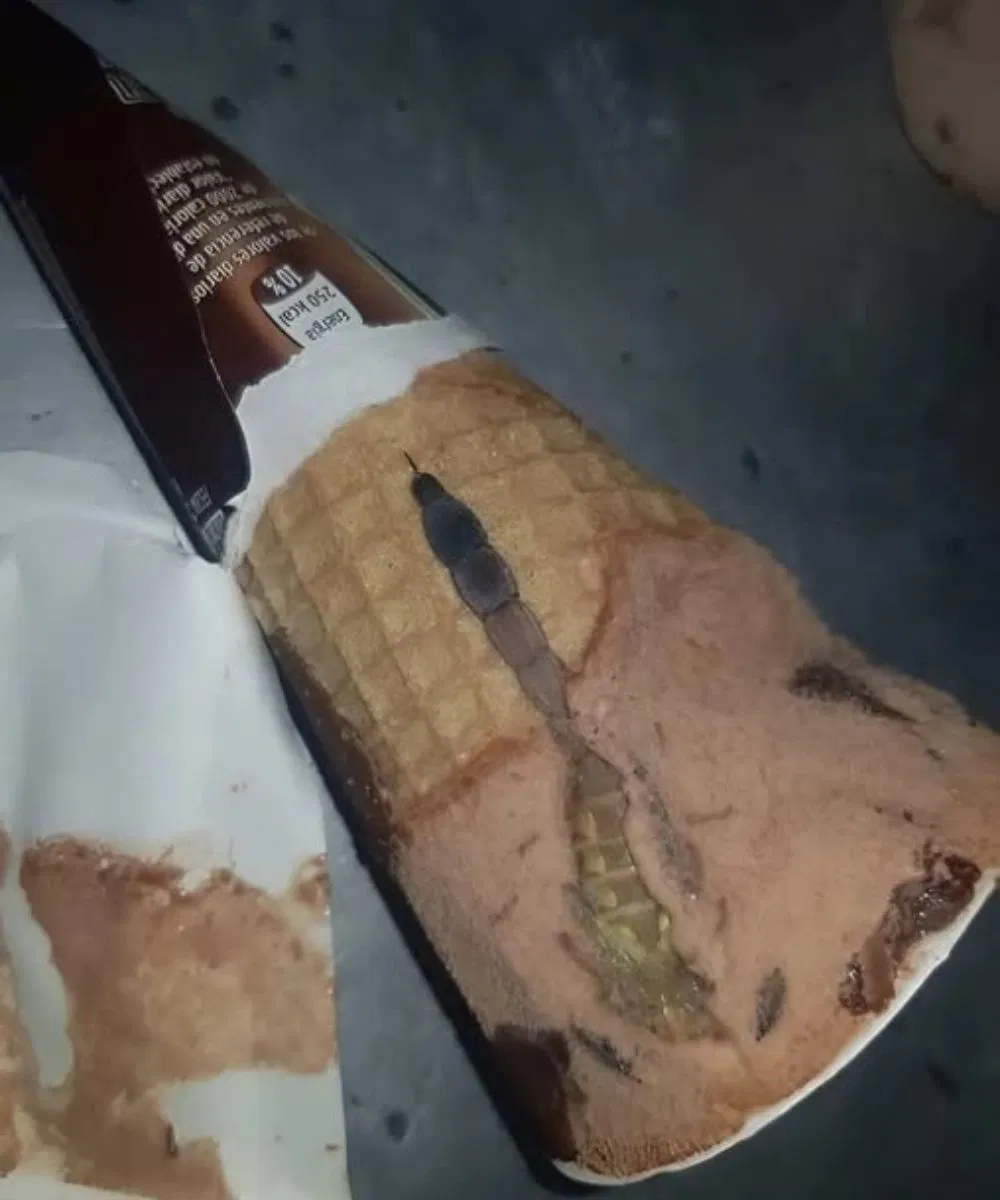
My Daughter Found Something Unexpected Inside Her Ice Cream: What We Discovered Left Us Speechless
It was supposed to be an ordinary afternoon treat. My daughter had just come home from school, excited to open her favorite chocolate ice cream, the same one she's loved since she was little. The moment she peeled off the wrapper, everything seemed perfectly normal. The crunchy cone, the rich scent of cocoa, and the smooth chocolate layer on top made her eyes light up.
But just a few bites later, she froze. "Mom, come here! Look at this!" she called out.
The Discovery
When I leaned in, I saw something unusual hidden in the middle of the ice cream: a small, dark shape that definitely didn't belong there. At first, I thought it was just a bit of extra chocolate or caramel that hadn't melted properly. But my daughter, ever the little detective, decided to investigate further with her spoon.
That's when we both gasped. Inside the creamy center was a strange, hardened object, something that looked like a tiny creature encased in the chocolate. It was clearly not part of the dessert.
We were completely shocked. How could something like this end up inside a sealed ice cream cone? Was it a production error, or something that slipped through during packaging?
Taking Action
After taking a few photos, I contacted the company immediately. They responded quickly and promised to investigate the matter in detail. Their representative assured me that safety and hygiene were their top priorities, and that they would look into how such an incident could have occurred.
Thankfully, my daughter is fine, just a bit shaken and not too eager to eat ice cream for a while.
This experience reminded us of something important: even when products look perfect on the outside, it's always worth taking a closer look. You never really know what surprises might be hiding beneath that smooth, glossy layer of chocolate.
How Do Foreign Objects End Up in Packaged Food?
While shocking, incidents like this one are not unheard of in food manufacturing. Understanding how they happen can help consumers respond effectively:
- Production line contamination. High-speed manufacturing lines process enormous volumes. Occasionally, materials from the facility environment, packaging, or equipment can enter the product stream.
- Ingredient supply issues. Contaminants can arrive with raw ingredients before they ever reach the main production line.
- Packaging failures. Damaged seals or compromised packaging can allow foreign material to enter after production.
- Quality control gaps. Most manufacturers use metal detectors, X-ray inspection, and visual checks, but no system catches 100 percent of anomalies, especially in products with complex textures like chocolate-coated ice cream.
Food safety agencies in most countries require manufacturers to investigate consumer complaints about foreign objects and to take corrective action when a systemic issue is found.
What to Do If You Find Something Foreign in Your Food
My instinct to photograph the item and contact the company immediately was exactly right. Here is the step-by-step approach food safety experts recommend:
- Stop eating the product immediately. Don't try to remove the object and continue. Preserve the evidence.
- Photograph everything. Take clear photos of the foreign object, the product, and the packaging, including any batch codes, expiration dates, or lot numbers.
- Save the product and packaging. Store them safely in case the company or regulators need to examine them. Note where and when you bought it and keep the receipt if possible.
- Contact the manufacturer. Use the customer service number on the packaging. Provide the batch information and describe what you found calmly and precisely.
- Report to food safety authorities if warranted. In the U.S., you can report to the FDA; in the UK, to the Food Standards Agency; in the EU, through national food safety bodies. Reports help regulators spot patterns.
- Seek medical attention if anyone feels unwell. Even if symptoms seem mild, document them and consult a healthcare professional.
- Keep a written record. Note dates, names of representatives you spoke with, and what was promised. This matters if the issue escalates.
Your Rights as a Consumer
When a packaged food product contains a foreign object, consumers generally have the right to:
- A full investigation by the manufacturer into how the contamination occurred.
- A refund or replacement for the affected product.
- Clear communication about the findings and any corrective measures taken.
- Regulatory protection, as food safety agencies can require recalls or facility inspections when warranted.
Companies take these complaints seriously because a single viral incident can damage a brand far more than the cost of a thorough investigation.
Teaching Kids to Be Observant
One unexpected silver lining: my daughter's curiosity turned a scary moment into a learning experience. Teaching children to notice when something seems "off" about their food is a valuable life skill:
- Trust your instincts. If food looks, smells, or tastes wrong, stop and tell an adult.
- It's okay to inspect. There's nothing rude about looking closely at what you're about to eat.
- Speak up. My daughter called me over instead of just pushing the object aside. That decision preserved the evidence and kept her safe.
- Ask questions. Curiosity about how things are made leads to smarter, safer consumers.
The Takeaway
What started as an ordinary afternoon treat became an unforgettable lesson in vigilance, consumer rights, and the importance of speaking up. My daughter is fine, the company is investigating, and we've both learned to look a little closer, even at the foods we trust most.
Sometimes the most valuable discoveries are the ones we never wanted to make.
Frequently Asked Questions
How common are foreign objects in packaged food?
They are relatively rare given the enormous volume of food produced, but they do happen. Manufacturers use multiple detection systems, yet occasional incidents still occur and should always be reported.
Should I report a foreign object to the authorities or just the company?
Start with the company, since they need to investigate their production line. If the response is inadequate, if someone was harmed, or if you suspect a wider problem, also file a report with your national food safety authority.
What information does the company need from me?
The product name, batch or lot code, expiration date, where and when you purchased it, clear photos of the object and packaging, and a description of what happened. Keep the original packaging if possible.
Can I get compensation for finding something in my food?
At minimum, you are entitled to a refund or replacement. If the incident caused illness or other harm, consult a consumer protection organization or legal professional about your options.
How can I check if a product has been recalled?
Food safety agencies maintain public recall databases. In the U.S., check the FDA's recall listings; in the UK, the Food Standards Agency; and in the EU, the RASFF portal.