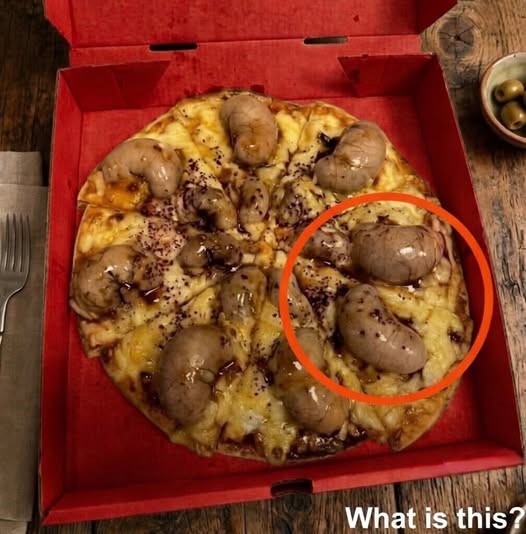
What started as a routine moment—opening a freshly delivered pizza—quickly turned into something unexpected. Usually, there’s a sense of familiarity: the look, the smell, the anticipation. Everything feels predictable. But this time, something small caught my attention and made me pause.
At first glance, the pizza seemed perfectly normal. The crust had a golden finish, the toppings were in place, and the cheese was melted just right. But across the surface were several smooth, raised bubbles that stood out immediately. They weren’t messy or burnt—just unusual enough to feel different. That slight difference was enough to create hesitation.
It’s interesting how much we rely on appearance when it comes to food. Even a minor change can make us question whether something is right or not. The bubbles looked like air pockets trapped beneath the cheese—some small, others more noticeable. Everything else looked fine, but those details became hard to ignore.
Instead of assuming something was wrong, curiosity took over. A bit of quick research revealed something reassuring: these bubbles are completely normal. In fact, they’re a natural result of how pizza bakes in a hot oven.
Here’s what’s happening behind the scenes. Pizza dough contains small pockets of air and moisture. When exposed to high heat, these pockets expand. At the same time, the cheese melts into a soft layer on top, sometimes trapping the expanding air beneath it. This creates those rounded bubbles on the surface.
Other factors also play a role. The type of cheese, for example, can affect how much moisture is released during baking. Higher-moisture cheeses tend to produce more steam, which can lead to larger bubbles. Oven temperature, dough thickness, and even how the toppings are spread can influence the final look.
Understanding this changes everything. What first seemed odd becomes a sign of the cooking process in action. Instead of being a flaw, the bubbles are simply part of how ingredients react to heat.
With that in mind, the hesitation fades quickly. The pizza tastes exactly as expected—warm, flavorful, and satisfying. The bubbles don’t affect quality at all. If anything, they add a slight variation in texture that goes unnoticed once you take a bite.
This small experience highlights something bigger. Sometimes, a tiny difference can make us question what we’re used to, even when nothing is wrong. It’s a reminder that not everything unfamiliar is a problem—sometimes it’s just something we haven’t noticed before.
In the end, the pizza wasn’t strange at all. It was a simple example of how everyday cooking involves natural processes we don’t always think about. And occasionally, those processes leave visible clues—like a few harmless bubbles on the surface.