Strangers Save Stranded Orca After 6-Hour Battle, Whale's Reaction Leaves Crowd in Tears
A Cruise Turned Rescue Mission
It started as an ordinary cruise near the rocky coast of Alaska, until something extraordinary happened. Out of nowhere, passengers spotted a massive 20-foot orca helplessly stranded on the rocks, gasping under the hot sun. The scene was heartbreaking. But what came next restored faith in humanity.
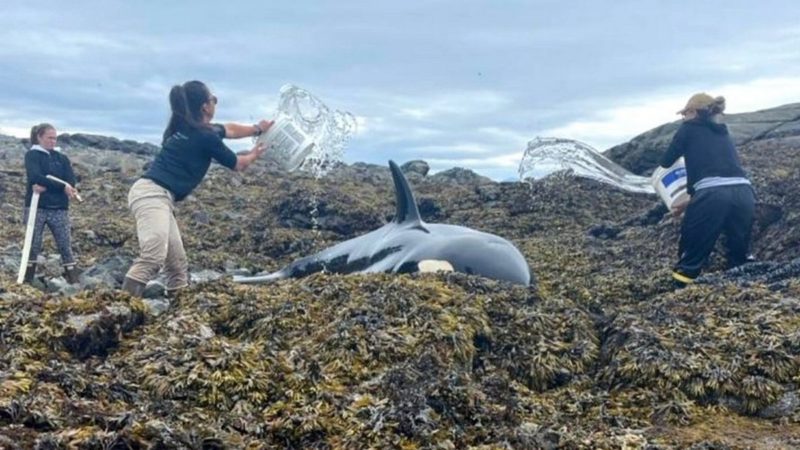
Instead of sailing past, the crew immediately stopped the ship. Passengers and sailors rushed to help, knowing time was running out. But moving a creature that size was impossible. A 20-foot orca can weigh several tons, far beyond what a group of people could lift or push. So they did the only thing they could: they poured water on it, again and again, to keep it alive.
For six long hours, strangers worked together, drenched in seawater, refusing to give up. They called for professional rescuers, but until help arrived, they never stopped caring for the animal. Nobody had planned this. Nobody was trained for it. They were simply ordinary people who chose to stay.
Why Keeping the Whale Wet Mattered So Much
Pouring water over the stranded orca was not just a comforting gesture. It was the single most important thing the rescuers could do, and marine biologists consider it the correct first response in a stranding situation.
Whales and dolphins live in water that supports their enormous body weight and keeps their skin cool and moist. Out of the water, two deadly things begin happening at once. First, the animal's own weight starts crushing its internal organs, because on land there is no buoyancy holding everything in place. Second, the skin dries out and overheats under the sun. Marine mammal skin is incredibly sensitive, and sunburn can damage it within hours.
By continuously dousing the orca with seawater, the passengers were protecting its skin, helping it stay cool, and reducing stress. This is exactly what professional stranding response teams do while they wait for heavier equipment to arrive. The passengers could not move the whale, but they gave it the one resource it needed most: time.
The Moment That Made It Go Viral
Photos of the emotional rescue quickly went viral. One powerful moment showed a child kneeling beside the whale, gently pouring water on its fin.
"The whale was crying," the captain later recalled. "It looked straight at us, like it understood."
Orcas are among the most intelligent animals on the planet. They have complex social structures, distinct cultures that vary between pods, and emotional capacity that researchers are still working to fully understand. They recognize individuals, they grieve their dead, and they can communicate in sophisticated ways. Whether the whale truly "understood" what the strangers were doing is something science cannot prove, but anyone who has looked into the eye of an orca knows how conscious and aware these animals seem.
Marine experts believe the orca may have gotten disoriented or chased prey too close to shore. Some speculated about underwater tremors, but no earthquake was confirmed. What is known is that strandings happen for many reasons: illness, injury, disorientation, or simply a hunting mistake that goes wrong near a shoreline.
The Tide Turns
In the end, their persistence paid off. As the tide slowly rolled back in, the orca began to move. And then, with one massive push, it slipped back into the water and swam free.
Cheers erupted. Some cried. Others simply watched in awe. One thing was certain: a life was saved, not by professionals, but by people who chose to care.
There is a special kind of joy in watching an animal return to its element after hours of suffering. After six hours of fear, exhaustion, and hope, those strangers got to witness the exact moment their effort became a miracle. The orca did not look back. It swam free, back into the deep water where it belonged.
Why Do Orcas Strand?
Strandings of whales and dolphins are more common than most people realize, and the causes are still not fully understood. Here are the main reasons marine scientists point to:
Disorientation: Orcas rely on echolocation to navigate. In shallow or rocky coastal areas, echoes can bounce in confusing ways, leading an animal into water too shallow to escape.
Hunting accidents: Orcas chase fish, seals, and other prey with extraordinary speed. A pursuit near shore can end with the whale beached before it realizes the danger.
Illness or injury: A sick or injured whale may strand because it is too weak to swim or navigate properly.
Tides: In some areas, dramatic tidal shifts can leave animals stranded in shallow areas that were navigable just hours earlier. The fact that the incoming tide freed this orca suggests tidal movement played a role here.
What Should You Do If You Find a Stranded Marine Animal?
If you ever encounter a stranded whale, dolphin, or seal, here is what experts recommend:
- Call professionals first. In the United States, you can report strandings to the NOAA marine mammal stranding hotline or your local stranding network. Trained responders know how to handle these situations safely.
- Keep the animal cool and wet. Like the passengers on this cruise did, pouring water over the animal's skin is the correct immediate help, especially on a sunny day.
- Keep your distance. Stranded marine mammals are large, powerful, stressed animals. Even gentle species can thrash and cause serious injuries.
- Never push the animal back into the water. Without professional assessment, refloating can be dangerous for both the animal and the people involved.
- Keep dogs and crowds away. Noise and commotion add stress to an already suffering animal.
- Do not touch the blowhole. Keeping water away from the blowhole is important, since water entering it can drown the animal.
How You Can Help Marine Life
You do not need to be on a cruise to make a difference for ocean animals. Here is how you can help in general terms:
- Support marine rescue organizations. Many stranding response networks are nonprofits that depend on donations and volunteers.
- Keep beaches and waterways clean. Plastic pollution and fishing debris kill marine animals every year. Participating in beach cleanups protects wildlife directly.
- Respect wildlife viewing guidelines. When watching whales or dolphins from a boat, keep a respectful distance and follow local regulations.
- Learn before you act. Reading up on stranding response before you ever encounter one means you will be ready to help correctly.
Frequently Asked Questions
Can orcas actually cry?
Whales do not cry emotional tears the way humans do, but they do have eyes that stay moist and can appear teary. The captain's observation was likely describing the whale's eye secretions combined with its visible distress.
How long can an orca survive out of water?
It depends on the animal's size, health, weather, and whether people are helping. With continuous cooling and wetting, as in this rescue, several hours are survivable. Without help, organ damage and overheating can become fatal much sooner.
Are orcas endangered?
Some orca populations, like the Southern Residents of the Pacific Northwest, are endangered. Overall, orcas are found in every ocean, but many populations face threats from pollution, noise, and shrinking prey.
What do orcas eat?
It depends on the population. Some hunt fish like salmon, while others hunt marine mammals such as seals. Their diet is one of the things that varies between orca cultures.
A Reminder of What Kindness Can Do
Six hours. Dozens of strangers. Buckets of seawater and one very tired, very scared whale. That is all it took to turn a tragedy into a story people are still sharing with tears in their eyes.
The passengers on that Alaskan cruise will never forget the day they saved a life. And the rest of us get a reminder that heroism does not always look like strength. Sometimes it looks like kneeling beside a stranded whale in the hot sun, pouring water, and refusing to leave.