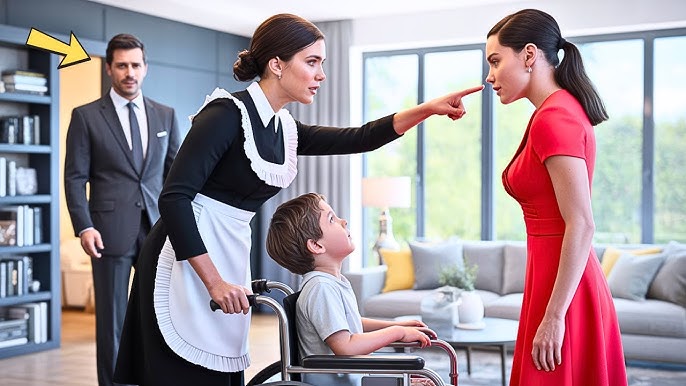
The 7-Year-Old Boy in a Wheelchair Tried to Hold Back His Tears as His Stepmother Humiliated Him Mercilessly
A House Heavy With Sadness
For two years, the Montes de Oca mansion had felt silent, not empty, but heavy with sadness. The quiet was not peaceful; it was a constant reminder of what had been lost.
Tomás, the owner of the grand house with its tall windows and perfectly maintained garden, had grown used to the emptiness. His wife, Clara, had passed away in a car accident on a rainy night while bringing home a gift for their son Leo's fifth birthday. Since then, everything in the house felt different.
Leo had been left in a wheelchair after the accident, and he had not spoken much, laughed, or shown joy. Even the toys and activities that others thought would cheer him up seemed to have no effect. The boy who had once run laughing through the garden now sat quietly, his world shrunk to the rooms of a mansion that felt more like a memorial than a home.
Tomás did everything he could: doctors, therapy, caregivers, toys. But he could not replace the warmth of a mother's love. He spent his mornings buried in work and his afternoons sitting silently beside Leo, trying to offer comfort.
The Stepmother's Cruelty
Into this fragile household came a new presence: Leo's stepmother. Rather than bringing warmth to a grieving home, she brought something far colder. The 7-year-old boy in a wheelchair tried to hold back his tears, feeling lonely and overwhelmed, as his stepmother humiliated him mercilessly.
There is a particular cruelty in targeting a child who cannot fight back, a child already carrying the weight of loss and disability. Leo, who had already endured the death of his mother and the trauma of the accident, now faced humiliation in what should have been the safety of his own home.
He tried to hold back his tears. That small, brave effort says everything about Leo's character. Even at seven, even in a wheelchair, even facing an adult's cruelty, he tried to be strong. He tried not to give his tormentor the satisfaction of his tears. But loneliness and humiliation are heavy burdens for small shoulders, and the tears came anyway.
An Unexpected Intervention
Just as a tense moment unfolded, the housemaid appeared and gently intervened, breaking the tension and offering a calming presence. Marina's arrival in that moment was no accident of timing. She had been watching, listening, and understanding far more than anyone realized.
Marina was new to the mansion. Recommended by Tomás's assistant, she had arrived one morning to a household that other caregivers had fled. Many caregivers had come and gone, unable to cope with the sadness in the mansion. But Marina was different. Where others saw only grief and difficulty, she saw a little boy who needed someone to truly see him.
Her intervention was gentle but firm. She did not escalate the confrontation. She simply stepped in, redirected the moment, and offered Leo the calming presence he desperately needed. Sometimes the bravest acts are not loud.
Who Is Marina?
Though new to the household, Marina quickly proved herself to be far more than a housemaid. Her background, her instincts, and her compassion set her apart from every caregiver who had come before her.
What made Marina different was her ability to see past Leo's silence to the child underneath. Where others saw a difficult case, Marina saw a grieving child who had lost his mother, his mobility, and his joy in a single terrible night. She understood that Leo did not need more toys. He needed patience, consistency, and genuine warmth.
Her gentle intervention during the stepmother's cruelty was likely not the first time she had noticed what was happening. Careful observers in a household see everything: the sharp words, the dismissive gestures, the moments when no one thinks anyone is watching. Marina had been watching, and when the moment demanded action, she acted.
The Dynamics of a Broken Home
The Montes de Oca mansion, for all its grandeur, had become a case study in how grief and cruelty can poison even the most privileged environments. Each member of the household was trapped in their own pain:
- Tomás, burying himself in work because facing his son's suffering felt unbearable, yet spending silent afternoons beside Leo in a father's quiet devotion
- Leo, grieving a mother he lost at five, adjusting to life in a wheelchair, and now enduring humiliation from the woman who should have offered maternal care
- The stepmother, whose cruelty may have stemmed from her own insecurities, resentment, or inability to connect with a grieving child, though none of that excuses her behavior
- Marina, the newcomer who saw the truth of the household and chose compassion over self-preservation
Wealth and luxury provide no immunity from these dynamics. If anything, the mansion's grandeur made the emotional poverty more stark. Tall windows and manicured gardens cannot fill the silence left by a mother's absence.
Why Marina's Courage Matters
Intervening in someone else's household cruelty takes extraordinary courage, especially for an employee. Marina risked her position, her livelihood, and her safety to protect a child who was not her own. That choice reveals the depth of her character.
Her intervention matters for several reasons:
- It broke Leo's isolation. For a child enduring humiliation, knowing that even one adult sees the truth and stands up can be life-changing.
- It modeled moral courage. Marina showed that doing the right thing matters more than keeping the peace or protecting yourself.
- It disrupted the pattern. Cruelty thrives in silence. By speaking up, Marina made it harder for the abuse to continue unchecked.
- It gave Tomás information. A father buried in work and grief may not see what happens in his own home. Marina's actions shone light into dark corners.
The Road Ahead for Leo
Leo's story is far from over. At seven years old, he has already survived more than most people face in a lifetime: the loss of his mother, a life-altering injury, and cruelty from someone who should have protected him. Yet the fact that he tried to hold back his tears, that he fought to be brave, suggests a resilience that runs deep.
With Marina's compassion, his father's devotion, and the right support, Leo has every chance to reclaim the joy that the accident stole. Healing from grief and trauma is a long road, especially for a child. But the presence of even one person who truly cares, who intervenes, who stays, can make all the difference.
The mansion may still be quiet, but perhaps now the quiet is beginning to change. Perhaps it is becoming, slowly, the sound of healing rather than the echo of loss. And perhaps a little boy in a wheelchair, who once tried so hard not to cry, is learning that it is safe to smile again.
Lessons From the Montes de Oca Mansion
This emotional story carries powerful lessons:
- Children in pain need advocates. Leo could not protect himself. Marina's willingness to intervene changed his world.
- Cruelty to the vulnerable is never justified. No circumstance excuses humiliating a grieving, disabled child.
- Grief needs attention, not avoidance. Tomás's withdrawal into work, though understandable, left gaps where cruelty grew.
- One person's courage can shift everything. Marina was "just" the housemaid, yet her compassion may have altered the course of Leo's life.
- Wealth cannot buy what matters. The mansion had everything except the warmth, safety, and love that a child needs most.
Frequently Asked Questions
What happened to Leo?
Leo, a 7-year-old boy, lost his mother Clara in a car accident on a rainy night when he was five. The same accident left him in a wheelchair. Since then, he had withdrawn, rarely speaking or showing joy, until his stepmother began humiliating him and the housemaid Marina intervened.
Who is Marina?
Marina is the new housemaid at the Montes de Oca mansion, recommended by Tomás's assistant. Unlike previous caregivers who left because of the household's sadness, Marina stayed, recognized Leo's suffering, and bravely intervened when his stepmother humiliated him.
Why did previous caregivers leave?
Many caregivers had come and gone, unable to cope with the heavy sadness in the mansion after Clara's death and Leo's withdrawal. The emotional weight of the household proved too much for them.
What makes Marina's intervention significant?
As an employee, Marina risked her position to protect a child who was not her own. Her gentle intervention broke Leo's isolation, disrupted the pattern of cruelty, and modeled the moral courage that the household desperately needed.
What is the central message of this story?
The story shows that wealth cannot replace love, that vulnerable children need advocates willing to act, and that one person's compassion, like Marina's, can begin to heal even the deepest wounds in a broken home.