The Conversation That Changed Everything Before My Son’s Wedding
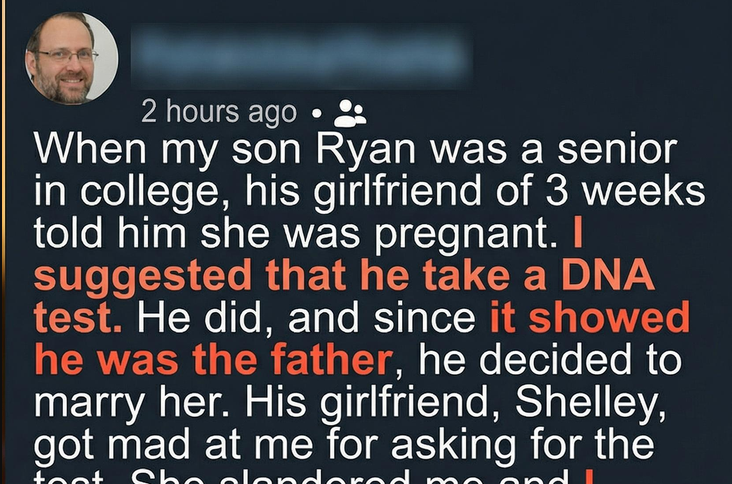
When my son Ryan entered his senior year of college, he found himself facing a major life change. He had been dating Shelley for only a few weeks when she shared the news that she was expecting. What followed was a season of tension, misunderstanding, and hurt between our families, until one honest conversation changed everything.
A Difficult Suggestion
Wanting to help Ryan approach the situation responsibly, I encouraged him to take a DNA test to ensure clarity for everyone involved. My intentions were practical: a young man facing fatherhood after a brief relationship deserved certainty before making life altering commitments. Clarity, I believed, would protect everyone.
He agreed, and when the results confirmed he was the father, he committed to supporting Shelley and preparing for the future. The test did what tests do. It answered the question. But it also asked one nobody had prepared for: at what cost?
My suggestion caused tension. Shelley felt hurt, believing I had questioned her character. From her perspective, she had shared vulnerable news with a man she'd known only weeks, and his mother's first response was to verify her honesty. The sting was understandable. Before long, misunderstandings led to distance between us. The most painful part was learning that I would not be attending their upcoming wedding.
The Silence Between Families
As the days passed, I hoped Ryan understood that my intentions came from care and a desire for him to make informed decisions. But hope is not communication, and in the absence of real conversation, everyone filled the silence with their own version of events.
This is how family rifts form. Rarely from a single dramatic betrayal. More often from a reasonable action, interpreted through fear, left unaddressed until the interpretation hardens into fact. I thought I was being responsible. Shelley thought I was calling her a liar. Both of us were responding to the same event through completely different emotional realities.
The wedding approached, and I was on the outside of it. For a mother, there are few pains sharper than being excluded from your child's wedding. But I told myself that pushing back would only make things worse, so I waited.
The Invitation That Changed Everything
Two weeks before the ceremony, everything shifted unexpectedly. Shelley's mother, Jen, reached out and asked me to visit her.
That call took courage. Jen had every reason to stay on her daughter's side of the divide and let the distance stand. Instead, she chose to build a bridge. When I arrived, she spoke with calm honesty about the early days of Shelley's pregnancy. She explained that her daughter had been overwhelmed and unsure how to handle the sudden change in her life. Jen emphasized that communication had been difficult for everyone and that clarity was important before the wedding moved forward.
Her sincerity helped ease the tension that had built between our families. She apologized for the misunderstandings, and I appreciated her openness. There was no defensiveness, no scorekeeping, just two mothers trying to understand each other.
The Conversation
Later that evening, Ryan joined us, unsure of what to expect. As we all talked, Shelley shared more about the pressure she had felt and how my request for clarity had been misinterpreted. She admitted that fear had made her defensive. A young woman, pregnant, in a new relationship, facing an uncertain future: of course she was afraid. And fear, as it so often does, had disguised itself as anger.
Ryan listened quietly, taking in everything with patience and empathy. I watched my son, the boy I'd raised, sit with discomfort instead of rushing to fix it, and I felt something shift in my understanding of who he had become.
By the end of the conversation, the atmosphere had changed completely. The honesty we shared brought a sense of relief, the particular lightness that comes when people finally say the true thing out loud.
A Wise Decision
Ryan and Shelley decided to postpone the wedding to give themselves time to communicate better and strengthen their relationship. It was a mature choice, and not an easy one. Postponing a wedding invites questions and judgment. But rushing into marriage to meet a deadline, especially with a baby on the way and unresolved family tension, would have been far riskier.
Shelley offered a heartfelt apology, and I apologized as well for adding to her stress, even unintentionally. Those mutual apologies mattered. They weren't about who was right. They were about acknowledging impact regardless of intent, which is the foundation of every repaired relationship.
Rebuilding
In the months that followed, our families developed a healthier, more understanding relationship. The distance faded, replaced by open conversations and genuine respect. I was welcomed back into their lives with warmth, and we began moving forward together.
Looking back, that challenging period taught all of us the value of communication and compassion. Difficult moments can bring families closer when handled with patience and honesty. Through this experience, I watched my son grow into a young man who approaches life's complexities with maturity and grace.
What This Story Teaches About Family Conflict
- Intent doesn't erase impact. I meant to be responsible. Shelley felt judged. Both were true simultaneously.
- Someone has to go first. Jen's phone call broke the stalemate. Without it, the distance might have become permanent.
- Fear masquerades as anger. Shelley's defensiveness was fear. Recognizing that changed everything.
- Slowing down is often the bravest choice. Postponing the wedding took more courage than rushing ahead.
- Apologies are bridges. Mutual, specific apologies rebuilt what assumptions had torn down.
- Listening is an action. Ryan's quiet patience during the conversation was as important as anything said.
For Families Facing Similar Tensions
If you're navigating conflict with your child's partner or their family, consider what worked here: a neutral party initiating contact, honest conversation without defensiveness, willingness to hear how your actions felt regardless of your intentions, and patience with the timeline of repair. Blended and extended families are built as much by these hard conversations as by celebrations.
Frequently Asked Questions
Why did the narrator suggest a DNA test?
Her son Ryan had been dating Shelley only a few weeks when she announced her pregnancy. The mother wanted him to have certainty before making major life commitments.
Why was Shelley hurt by the suggestion?
She felt it questioned her character and honesty at an already vulnerable moment, which created distance between the families and led to the mother being uninvited from the wedding.
What changed two weeks before the wedding?
Shelley's mother Jen reached out and invited the narrator to talk. That honest conversation, joined later by Ryan and Shelley, cleared up misunderstandings on all sides.
Why did they postpone the wedding?
Ryan and Shelley decided they needed more time to communicate better and strengthen their relationship before marrying, a mature decision made with clearer heads.
What is the main lesson?
Difficult moments can bring families closer when handled with patience, honesty, and compassion. Communication, not assumptions, resolves conflict.