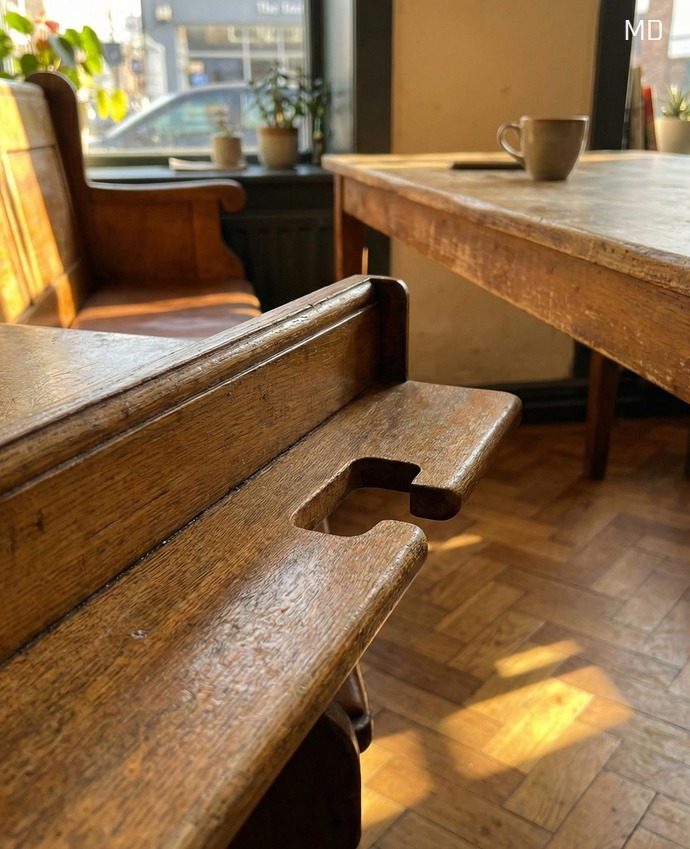
At first glance, a wooden church pew may appear to be nothing more than a simple bench placed in rows for seating. However, many traditional pews contain subtle design features that reveal how carefully these spaces were planned. One such detail is a carved opening or slot along the back or side of the pew—an element that often sparks curiosity among modern visitors. Far from being decorative, these small features reflect generations of thoughtful craftsmanship aimed at serving both comfort and purpose.
Churches have long functioned as gathering places for worship, reflection, and community connection. Every element inside these buildings was typically designed with intention, including the seating. The smooth, polished wood found on older pews tells a story of decades—sometimes centuries—of use. Over time, countless individuals have sat, stood, and knelt in the same spaces, sharing moments of prayer, celebration, and quiet contemplation. These signs of wear are not flaws but markers of history.
The carved openings found in many pews served practical functions during traditional services. In many cases, they were designed to hold hymnals, prayer books, or service guides, keeping them easily accessible. Some openings allowed for better movement between rows or provided space for kneeling during prayer. These features helped worshippers remain comfortable and focused throughout long services, showing how church furniture evolved alongside religious practices.
Beyond functionality, church pews often carry deep emotional and cultural significance. Families may return to the same church generation after generation, occupying the same pew during weddings, baptisms, holiday services, and memorials. The wood, shaped and softened over time, becomes a quiet witness to these shared moments. Unlike modern seating designed for efficiency, traditional pews emphasize durability, warmth, and a sense of belonging.
Today, as many buildings prioritize minimalist or temporary designs, historic church furnishings remind us of the value of thoughtful construction. Each small detail—no matter how easily overlooked—plays a role in shaping the experience of the space. The carved slot in a pew is one example of how design can support both physical comfort and spiritual focus.
Ultimately, this simple detail encourages us to look more closely at the everyday objects around us. What appears ordinary often holds layers of meaning shaped by tradition, craftsmanship, and human connection. In a fast-paced world, places created for reflection remain important, and traditional church pews continue to symbolize the lasting power of community and shared experience.