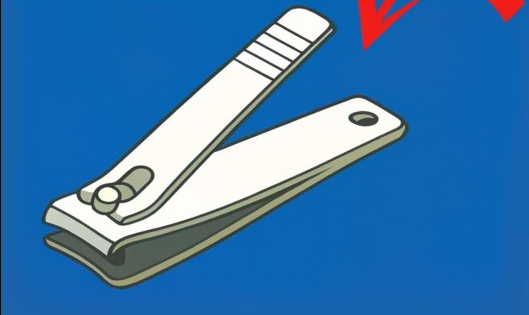
Nail clippers are one of those everyday tools we use without much thought. They sit quietly in bathroom drawers, travel kits, or bedside tables, ready whenever they are needed. Simple, reliable, and familiar, they rarely invite curiosity.
Yet there is one small detail that almost everyone notices sooner or later: the tiny round hole near the end. It looks basic and easy to overlook, but it is not there by accident. In fact, this small feature has a surprisingly practical purpose that has stood the test of time.
That round opening has remained part of nail clipper design for decades because it solves real, everyday problems. Once you understand why it exists, the tool itself begins to feel far more thoughtfully designed than it first appears.
At its most basic level, the hole helps prevent nail clippers from getting lost. Because clippers are small and lightweight, they are easy to misplace. The opening allows them to be attached to keychains, zipper pulls, lanyards, or small metal rings. This simple option turns nail clippers into a portable item that stays connected instead of disappearing into pockets, bags, or suitcases.
For travelers and commuters, this feature is especially useful. Keeping clippers attached to keys or a toiletry bag ensures they are always easy to find when needed. It eliminates the frustration of searching through clutter or realizing a small but essential item has gone missing.
The hole also plays a role in organization at home. Many people use it to hang nail clippers on hooks inside bathroom cabinets or wall organizers. Hanging them keeps the tool clean, visible, and within reach while reducing drawer clutter. Some households even connect multiple clippers together—such as separate ones for fingernails and toenails—using a small ring through the holes. This keeps grooming tools grouped without requiring extra storage containers.
In addition to storage and portability, the hole can offer added control during use. Some users place a finger through the opening while trimming, particularly when cutting thicker nails or working at an awkward angle. This can improve grip and stability, helping prevent slips or uneven cuts. While not everyone uses the hole this way, it shows how one small design element can serve different needs.
This feature is not a modern invention. Early grooming tools from the late nineteenth and early twentieth centuries often included similar openings. At a time when people carried tools in pockets or travel pouches without modern organizers, securing small items was essential. The hole allowed clippers and other tools to be tied with string, leather straps, or metal loops to prevent loss.
As nail clippers evolved with better materials and more ergonomic shapes, the hole remained. Designers understood that truly effective features do not need to be complicated. This single opening adds virtually no cost, requires no extra parts, and never interferes with the main function of the tool. Its value lies in how effortlessly it improves everyday use.
This small detail also reflects a broader truth about common household objects. Many items we use daily include features refined through years of observation and problem-solving. Because they work so well, we stop noticing them. The hole in nail clippers is a quiet example of design responding to real human habits—losing things, needing organization, and valuing convenience.
The next time you pick up a pair of nail clippers, that tiny opening may catch your attention in a new way. It represents generations of practical thinking packed into a simple design choice. It is proof that good design does not need to be flashy. Sometimes, it just works—day after day—without asking for attention.