The Red Cardigan: A Timeless Gift That Carried a Hidden Message of Love
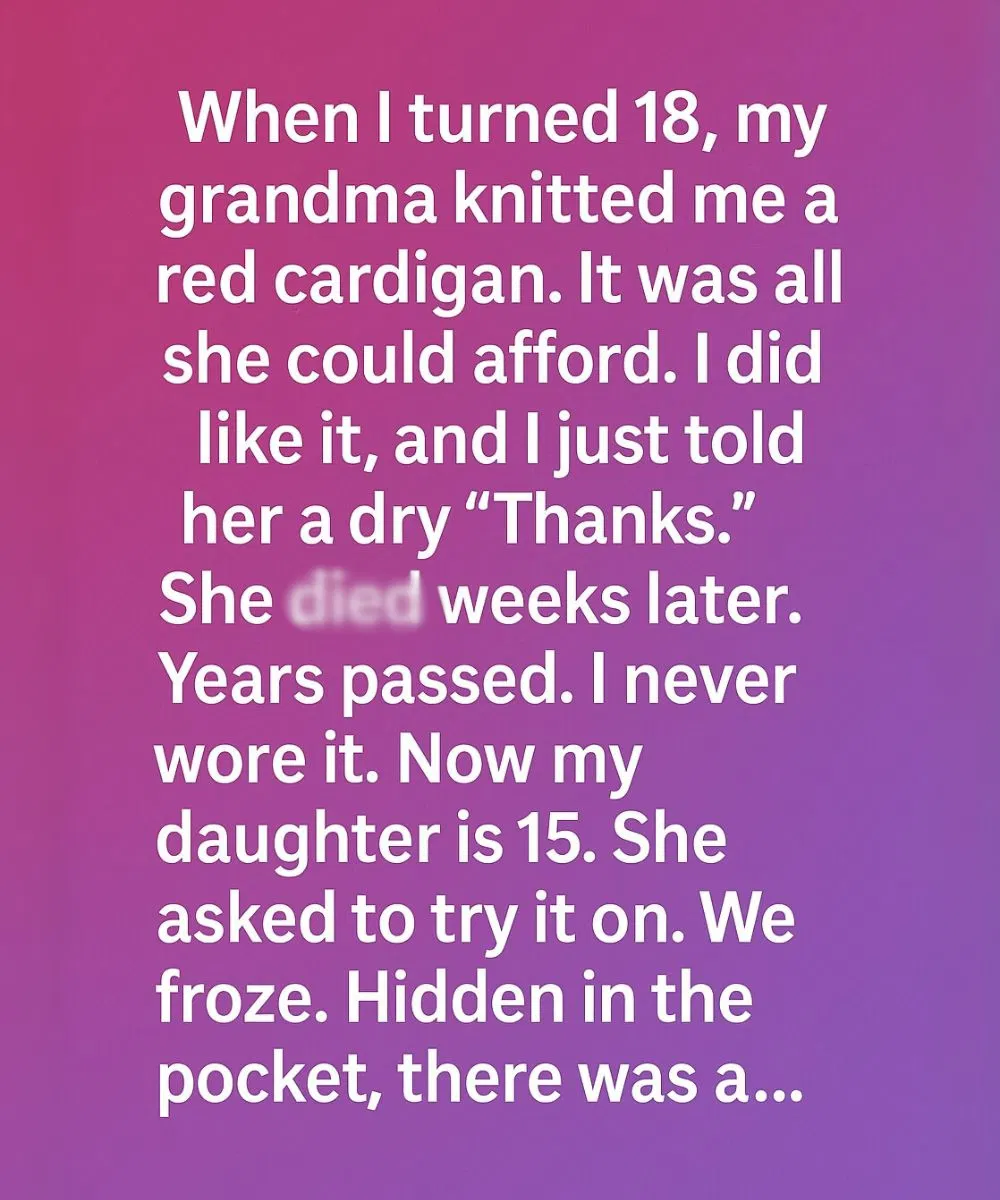
When she turned eighteen, her grandmother gave her a handmade red cardigan. At first, it seemed like just another birthday gift, something warm and practical. She remembered unwrapping it quickly, offering a brief thank you, and rushing out the door to meet her friends. At that age, she did not fully recognize the love and care stitched into every loop of yarn.
Just a few weeks later, her grandmother passed away. The cardigan stayed folded in her closet, untouched. Every time she looked at it, she felt a quiet guilt for not appreciating the gift when she had the chance. It was not just an item of clothing. It was a piece of her grandmother's heart. And yet, she could not bring herself to wear it.
A Forgotten Gift Resurfaces
Life moved on. College, marriage, and eventually motherhood filled her days. The cardigan stayed tucked away, like a memory she was not ready to revisit. One afternoon, while cleaning the house with her fifteen-year-old daughter, her daughter discovered the cardigan. Without hesitation, she slipped her arms into its sleeves.
That simple act stopped her in her tracks. Then her daughter said, "Mom, something's in the pocket." Her heart raced as she reached inside. There, folded neatly, was a small piece of paper, yellowed with age yet carefully preserved. Her hands trembled as she unfolded it and saw her grandmother's elegant handwriting. The words read: "To my dear girl, may this keep you warm when I can no longer. Never forget how much you are cherished."
Love That Transcends Time
Tears blurred her vision as she read the message. It was as though her grandmother had been waiting all those years to comfort her at just the right moment. Her daughter stood silently beside her, holding her hand. Together, they felt the love that had traveled across time, hidden in both yarn and ink.
From that day on, the red cardigan was no longer just fabric. It became a legacy: a reminder of resilience, sacrifice, and the deep love her grandmother had for her family. She shared stories of her grandmother's strength with her daughter, explaining how, even with little, she always gave so much. Now, her daughter wears the cardigan with pride. For her, it is more than clothing. It is a piece of family history, a symbol of love that endures across generations.
The red cardigan taught her something powerful: our loved ones may leave this world, but their love never truly fades. Sometimes it waits quietly for us to discover it again, in a memory, a keepsake, or even a hidden note in an old sweater. Love, once given, finds its way back to us. Always.
Why Handmade Gifts Carry So Much Meaning
A handmade gift is never just an object. Each stitch represents time a person chose to spend thinking about you. Researchers who study family traditions often note that handmade items become "memory objects": physical anchors that carry stories, identity, and belonging across generations. Unlike store-bought gifts, they are one of a kind, and they carry the imperfections and character of the hands that made them.
If you have a handmade item from someone you love, consider it a small archive of their care. Taking the time to learn its story, who made it, when, and why, turns a simple sweater into family history.
How to Preserve Heirloom Clothing
Keepsake garments like a handmade cardigan need a little care to survive decades. Here is how to protect them:
- Clean before storing. Wash gently according to the fiber type, or take delicate wool pieces to a cleaner experienced with knitwear. Stains and body oils left in fabric attract moths and cause yellowing over time.
- Fold, never hang. Knitwear stretches under its own weight on a hanger. Fold items loosely and store them flat in a breathable cotton bag or an acid-free box.
- Use acid-free tissue. Place sheets of acid-free tissue paper between folds to prevent creases from becoming permanent and to reduce fiber stress.
- Control the environment. Store in a cool, dry, dark place. Avoid attics and basements where heat and moisture swing. Cedar blocks or lavender sachets can help deter moths, but keep them from touching the garment directly.
- Check in yearly. Take heirloom pieces out once a year, let them air briefly, inspect for damage, and refold along different lines so creases do not set.
- Repair with love. A small mend done by hand keeps the story going. Many communities have visible-mending workshops where you can learn simple techniques.
Leaving a Message for Someone You Love
The hidden note is what transformed the cardigan into a treasure. You can create the same magic for your own family with a legacy letter: a short, heartfelt message written to be found later. Some practical tips:
- Keep it short and honest. A few sentences about what you love and admire about the person matter more than perfect prose.
- Say the thing you assume they know. People rarely say "I am proud of you" or "you are cherished" as often as the other person needs to hear it. Write it down.
- Date it. A date turns a note into a time capsule and gives future readers context about where life stood when you wrote it.
- Choose a hiding place with intention. A coat pocket, a jewelry box, the back of a framed photo, or inside a book they love. Make sure someone will eventually find it: tell one trusted person where it is, or place it somewhere tied to a future milestone.
- Write more than one. Consider letters for birthdays, graduations, weddings, or hard days. Some parents write one letter a year and keep them in a box to give all at once.
A legacy letter does not require beautiful handwriting or fancy stationery. What makes it priceless is that it exists at all.
Sharing Family Stories With the Next Generation
The cardigan's story only came alive because a mother told her daughter who her great-grandmother was. Passing down family history is one of the most meaningful gifts you can give children. Try these simple approaches:
- Tell one story at a time, tied to an object, a photo, or a place. Children remember stories better when they can touch or see something connected to them.
- Record the storytellers. A short phone video of a grandparent describing their childhood is worth more than any written record.
- Cook the recipes. Family dishes carry memory in a way nothing else does, and making them together turns history into a shared activity.
- Let children ask questions, even hard ones about loss. Honest, age-appropriate answers build trust and resilience.
Frequently Asked Questions
How do I find out the story behind an old family garment?
Ask the oldest relatives first, and be specific: who made it, when, for what occasion. Check for labels, monograms, or notes tucked inside. Even small details, like the type of buttons, can help date a piece.
What if the keepsake is damaged?
Minor damage rarely ruins the meaning. Gentle cleaning, careful mending, or professional textile conservation can stabilize most items. For very fragile pieces, consider framing them behind UV-protective glass instead of wearing them.
I feel guilty for not appreciating a gift sooner. What can I do?
Guilt after a loved one's death is extremely common. Try channeling it into action: use the gift, care for it, and tell its story. Honoring the item now is a genuine way to honor the giver, and sharing the story keeps their memory alive.
How can I make sure my own gifts carry meaning forward?
Include a note with handmade gifts explaining why you chose the color, the pattern, or the occasion. Years from now, that context will matter more than the object itself.