
The Unbreakable Bond: A Soldier, His German Shepherd, and a Mysterious Airport Incident
Airports are places of controlled chaos: announcements overhead, travelers rushing to gates, the low hum of anxiety that accompanies every departure board. But one morning, in one quiet corner of a busy terminal, something unfolded that stopped people in their tracks. A soldier lying on the cold tile floor. A German Shepherd standing guard over him, barking at anyone who came too close. And a crowd of onlookers asking the same question: what is happening here?
The Scene That Stopped the Terminal
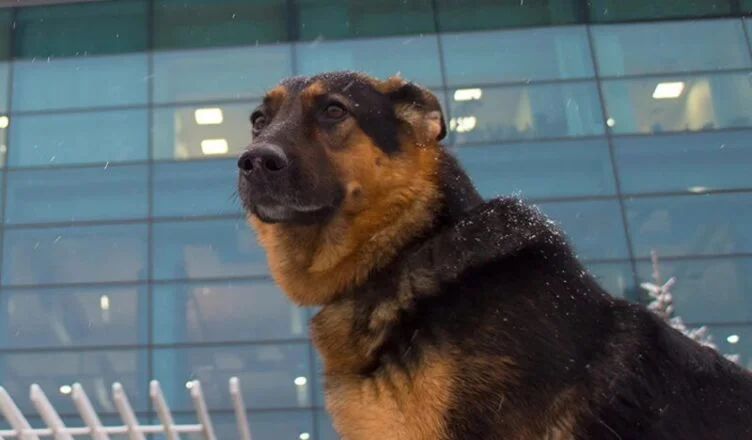
As people made their way through the terminal, they started to notice a man in military uniform lying on the floor. The sight was unusual enough to raise eyebrows, but what truly drew attention was the German Shepherd sitting by his side. The dog, usually a symbol of loyalty and discipline, was acting out of the ordinary, barking and growling at those who dared to come too close.
The man appeared to be in his mid-twenties, curled up on the floor with a small, worn blanket placed underneath him for comfort. His face was pale, his eyes shut, and his breathing was heavy and irregular. Something was clearly wrong.
As more people gathered, pulling out their phones to capture the moment, whispers began to circulate. Some speculated that the man might have fallen ill. Others wondered if he had suffered an accident or a medical emergency. But the dog's protective stance raised even more questions. Was the man unconscious? Was the dog trained to respond this way? Nobody knew, and the dog was not letting anyone close enough to find out.
Reading the Dog's Behavior
To the untrained eye, a growling German Shepherd looks like a threat. To anyone who knows working dogs, the behavior told a different story. This was not aggression. This was a job.
German Shepherds are among the most commonly used breeds for military and service work, and for good reason:
- They are intensely loyal to their handler, often to the point of placing themselves between their person and perceived danger.
- They are trained to read distress, and many service dogs are specifically taught to respond when their handler collapses, has a seizure, or experiences a medical episode.
- They create a perimeter. Barking and positioning are textbook behaviors for a dog trained to keep strangers away from a vulnerable handler.
- They do not abandon their post. A well-trained working dog will stay with its handler through noise, crowds, and chaos.
Viewed through that lens, the "mysterious" incident becomes legible. The dog was not malfunctioning. It was doing exactly what it had been trained to do: protect a soldier in distress until help could reach him safely.
The Bond Between Soldiers and Their Dogs
The military working dog partnership is one of the most profound bonds in service life. These are not pets who happen to wear vests. They are highly trained professionals who deploy alongside their handlers, detect explosives, track targets, and provide security in environments where trust is a matter of survival.
Handlers and their dogs train together for months, live together, and depend on each other in situations most people will never face. Research on human-animal bonding shows that these partnerships produce measurable effects:
- Reduced stress hormones in handlers who work closely with their dogs.
- Improved emotional regulation, particularly for service members coping with trauma.
- A sense of purpose and companionship that persists long after active duty ends.
Many veterans describe their service dog as the reason they made it through the hardest periods of their lives. The airport scene, whatever its specific cause, was a public glimpse of a private devotion that usually unfolds far from cameras.
Why Airports See These Moments
Airports are uniquely stressful environments, and they concentrate the conditions that can trigger medical episodes:
- Exhaustion. Soldiers traveling on leave or between assignments are often running on very little sleep.
- Dehydration and low blood sugar from long travel days with irregular meals.
- Sensory overload. Crowds, announcements, and security procedures can overwhelm anyone, particularly service members managing PTSD or anxiety.
- The letdown effect. After sustained periods of high alert, the body sometimes collapses the moment it perceives safety.
Any of these, or a combination, could explain a soldier ending up on a terminal floor. The presence of the service dog suggests a known condition the handler manages with canine assistance, which makes the dog's protective behavior not mysterious at all, but medically purposeful.
What Onlookers Should Do
If you ever witness a scene like this, the dog's behavior is actually giving you instructions. Here is how to help:
- Give them space. The dog is keeping the area clear for a reason. Do not try to pet or shoo it.
- Alert airport staff or medical personnel rather than intervening directly.
- Do not film the person's face. A medical episode is not content.
- Stay calm. Your composure helps keep the surrounding crowd calm too.
- Follow the handler's lead once they recover; they know their dog and their condition.
The Takeaway
What looked like a mystery was, in the end, a demonstration of one of the most reliable partnerships in the world. A soldier in distress. A dog who refused to leave his side. A crowd that watched, wondered, and eventually understood.
The unbreakable bond between a service member and their dog is not built in a moment. It is built in training fields, in deployments, in quiet rooms where a veteran finally sleeps through the night because a warm weight is pressed against their leg. The airport incident was just one visible chapter in a story that plays out, mostly unseen, every single day.
Frequently Asked Questions
Why was the German Shepherd barking at people?
The dog was exhibiting protective behavior consistent with a trained service or military working dog guarding a handler in medical distress. It was keeping strangers at a distance until the situation was under control.
Was the soldier seriously ill?
Onlookers observed pale skin, closed eyes, and irregular breathing, but the specific cause was not publicly confirmed. Episodes like this can result from exhaustion, dehydration, or a managed medical condition.
Are German Shepherds commonly used as service dogs?
Yes. German Shepherds are one of the most popular breeds for military, police, and service work due to their intelligence, loyalty, trainability, and protective instincts.
What should you do if you see a service dog acting protectively?
Give the team space, alert staff or medical help, and do not interfere with the dog. It is performing a trained task.



