
The Unexpected Lesson I Learned After Fixing the Office Coffee Machine
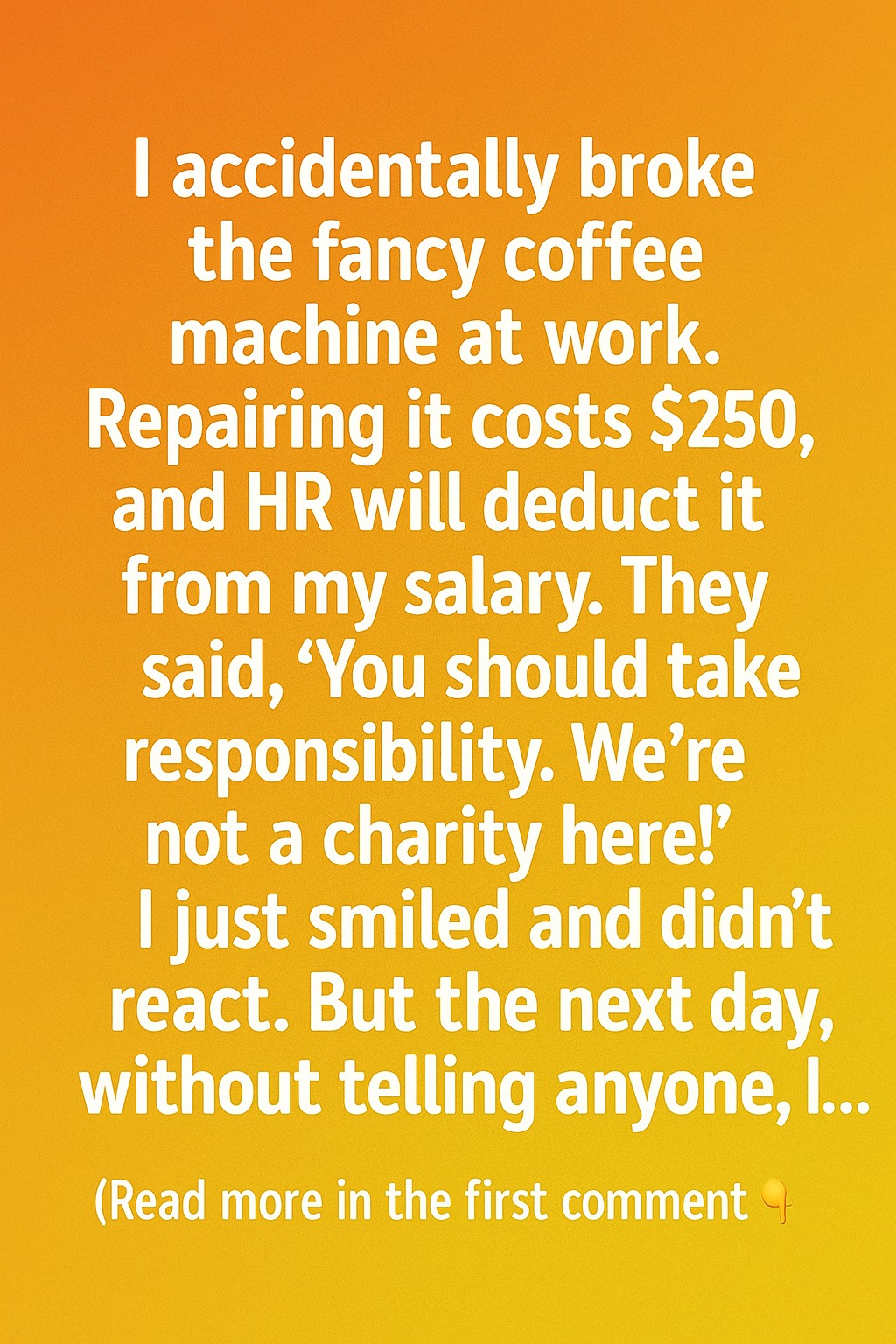
Accidents happen, even on an ordinary workday. When I unintentionally damaged our office's high-end coffee machine, HR quickly notified me that the $250 repair cost would be taken from my salary. What happened next taught me something about responsibility, initiative, and the surprising power of fixing what you broke.
The Accident
It started like any other Tuesday. I was refilling, wiping down, doing the small maintenance tasks that keep a shared office kitchen functional, when something went wrong with the machine. The details of exactly what happened matter less than the result: the high-end coffee machine, the one the whole office depended on, stopped working properly.
The message from HR was clear and professional, but it still felt discouraging. A $250 deduction from my paycheck for an accident. Not misconduct, not negligence, just one of those things that happens when humans interact with machinery. I understood the policy. I did not love the policy.
The Choice: Complain or Act
Instead of arguing, I spent the evening thinking about how I could make things right. This was the pivotal decision, and I want to be honest about how tempting the other path was. I could have complained to coworkers, drafted a careful email questioning the fairness of the deduction, or simply absorbed the cost with quiet resentment. Many people would have. Many people do.
But something about the situation nagged at me. The machine was broken. I had broken it. Whether or not the deduction was fair, the broken machine was a fact, and facts can sometimes be addressed more productively than policies can be debated.
That evening, I watched several repair guides online, trying to understand how the machine worked and what might have gone wrong. I went to bed with diagrams in my head and a plan forming.
The Repair
The next morning, I arrived early with a plan. After watching several repair guides the night before, I carefully opened the machine to see what was wrong. To my surprise, the issue was simple: a loose component that only needed a quick adjustment.
With a bit of patience, the machine powered back on, sounding as good as new. I cleaned up, closed everything properly, and left it exactly as I found it.
There is a particular satisfaction in fixing something with your own hands that no email chain can replicate. The machine hummed. The lights came on in the right sequence. It was, by every measure I could observe, fine.
The Office Reacts
When my coworkers arrived, the office instantly brightened. Everyone was relieved to have their morning coffee again, and HR was pleasantly surprised. I let them know that the problem was not as serious as we first thought.
The response was better than I expected. Later that day, an email was sent out acknowledging the importance of teamwork and initiative. The deduction that had been planned for my paycheck quietly disappeared.
Before I left for the day, a colleague handed me a warm cup of coffee, thanking me for getting things running smoothly again. It was a small gesture, but it landed. That cup of coffee tasted like something more than coffee.
What I Actually Learned
In that moment, I realized something meaningful: responsibility is not only about accepting a mistake, it is also about taking action to make things right. Here is what that breaks down into:
- Owning a mistake is step one, not the whole journey. Acknowledging fault is necessary but passive. Fixing the problem is active.
- Initiative changes how people see you. HR saw an employee with a deduction. After the repair, they saw someone who solves problems.
- Competence is built in off-hours. Those evening repair videos were an investment that paid off by morning.
- Small repairs build big reputations. Nobody promotes someone for complaining well. People remember who fixed the thing.
- The deduction disappearing was a bonus, not the goal. I fixed the machine because it was broken and I broke it. The reversed deduction was the organization recognizing the behavior it wants to encourage.
The Broader Lesson for Work Life
This experience maps onto working life more broadly than coffee machines:
- When you break something, fix it if you can. The instinct to hide mistakes or shift blame is strong. Resist it.
- Learn visibly. Letting people know you researched the problem signals seriousness, not weakness.
- Document what you did. I told HR the problem was minor. Keeping the organization informed turns a solo fix into a team win.
- Accept consequences gracefully. I never argued the deduction. That grace made the eventual reversal feel earned rather than extracted.
- Look for the loose component. Most workplace problems, like most machine problems, are simpler than they first appear. Start with the obvious before assuming the catastrophic.
Why Initiative Beats Complaint
I am not suggesting employees should silently absorb unfair policies. There are times to push back, to organize, to insist on better treatment. But there is a difference between a systemic injustice and a solvable problem. The coffee machine was solvable. Spending my energy on the solution rather than the grievance produced a better outcome on every axis: the machine worked, the deduction vanished, my reputation improved, and I learned something.
Complaint asks the world to change. Initiative changes the world, or at least the break room, yourself.
Frequently Asked Questions
What happened with the coffee machine?
The narrator accidentally damaged the office's high-end coffee machine and was told the $250 repair cost would be deducted from their salary.
How was it fixed?
After watching repair guides the night before, the narrator arrived early, opened the machine, found a loose component, adjusted it, and restored the machine to working order.
Was the salary deduction reversed?
Yes. After the successful repair, HR acknowledged the initiative in a team email and the planned deduction quietly disappeared.
What is the main lesson?
That responsibility means more than accepting blame; it means taking action to fix what you broke. Initiative, competence, and grace under pressure build the kind of reputation that no policy can give or take away.



