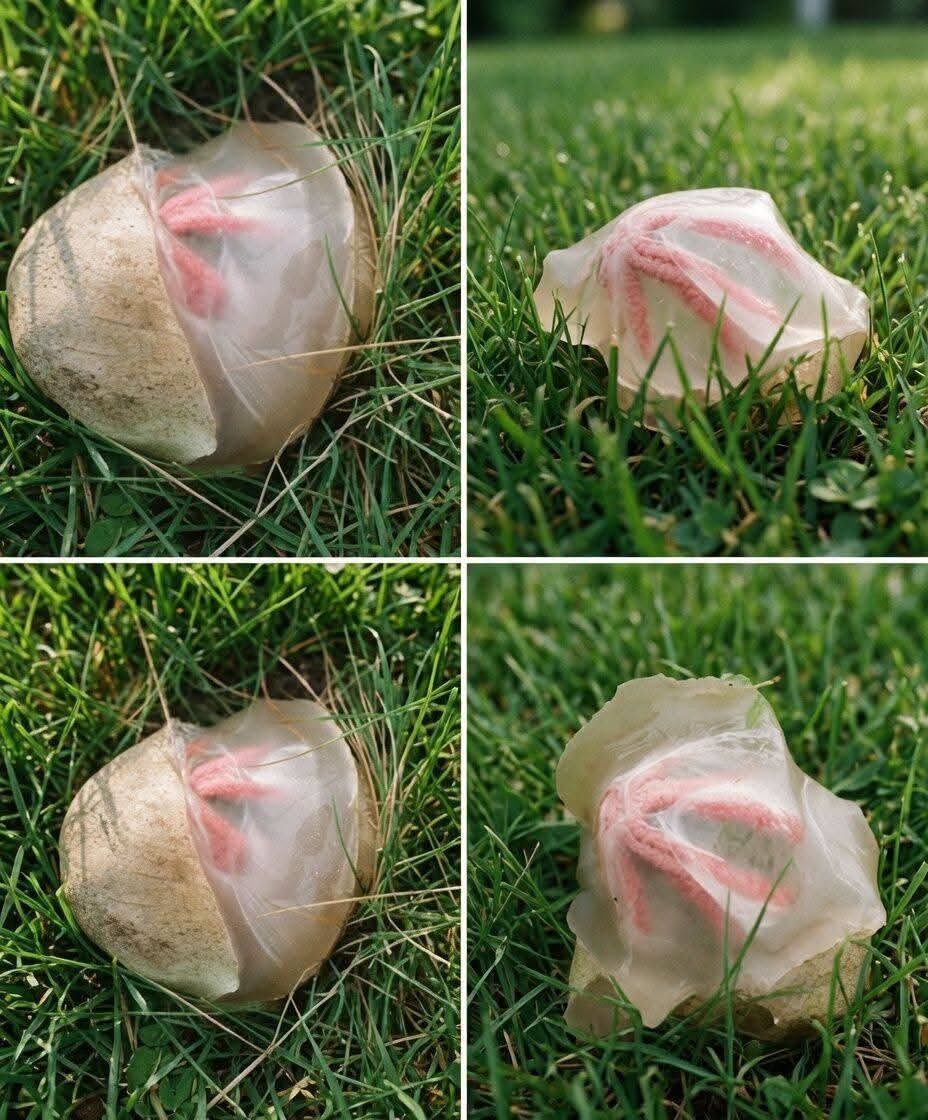
One ordinary morning, while watering my garden, I noticed something unusual near the edge of a flower bed. A bright red, glossy object stood out against the soil, immediately catching my attention. Its unusual appearance made it look like something that didn’t belong in the garden.
At first, I wasn’t sure what I was looking at. Because it looked so different from anything I had seen before, I hesitated to get any closer. Like many people, I wondered if it could be harmful to my plants, my pets, or even my family.
After taking a closer look without touching it, I decided to search online for answers. Within minutes, I discovered that the mysterious object was actually a type of fungus. Although its appearance was striking, reliable sources explained that it was generally harmless and simply a natural part of the environment.
Learning the truth completely changed my perspective. What had seemed alarming only moments earlier turned out to be an interesting example of nature’s incredible diversity. Instead of feeling worried, I found myself curious about how it had appeared and the role it plays in the ecosystem.
Many fungi emerge after periods of moisture and help break down organic material, returning valuable nutrients to the soil. While some species should never be touched or eaten without proper identification, many unusual-looking fungi are simply performing an important ecological function.
The experience also served as a reminder that appearances can sometimes be misleading. When we encounter something unfamiliar, it’s easy to assume the worst before gathering the facts. Taking a moment to learn more often replaces uncertainty with understanding.
If you discover an unfamiliar plant, mushroom, or fungus in your yard, it’s best to avoid handling it until you’ve identified it through a trusted gardening guide, local extension service, or nature expert. Observing from a safe distance and researching before acting is usually the wisest approach.
That unexpected discovery transformed an ordinary gardening session into a valuable lesson about curiosity, patience, and the importance of learning before jumping to conclusions. Sometimes nature surprises us not with danger, but with an opportunity to better appreciate the fascinating world growing just outside our doors.