
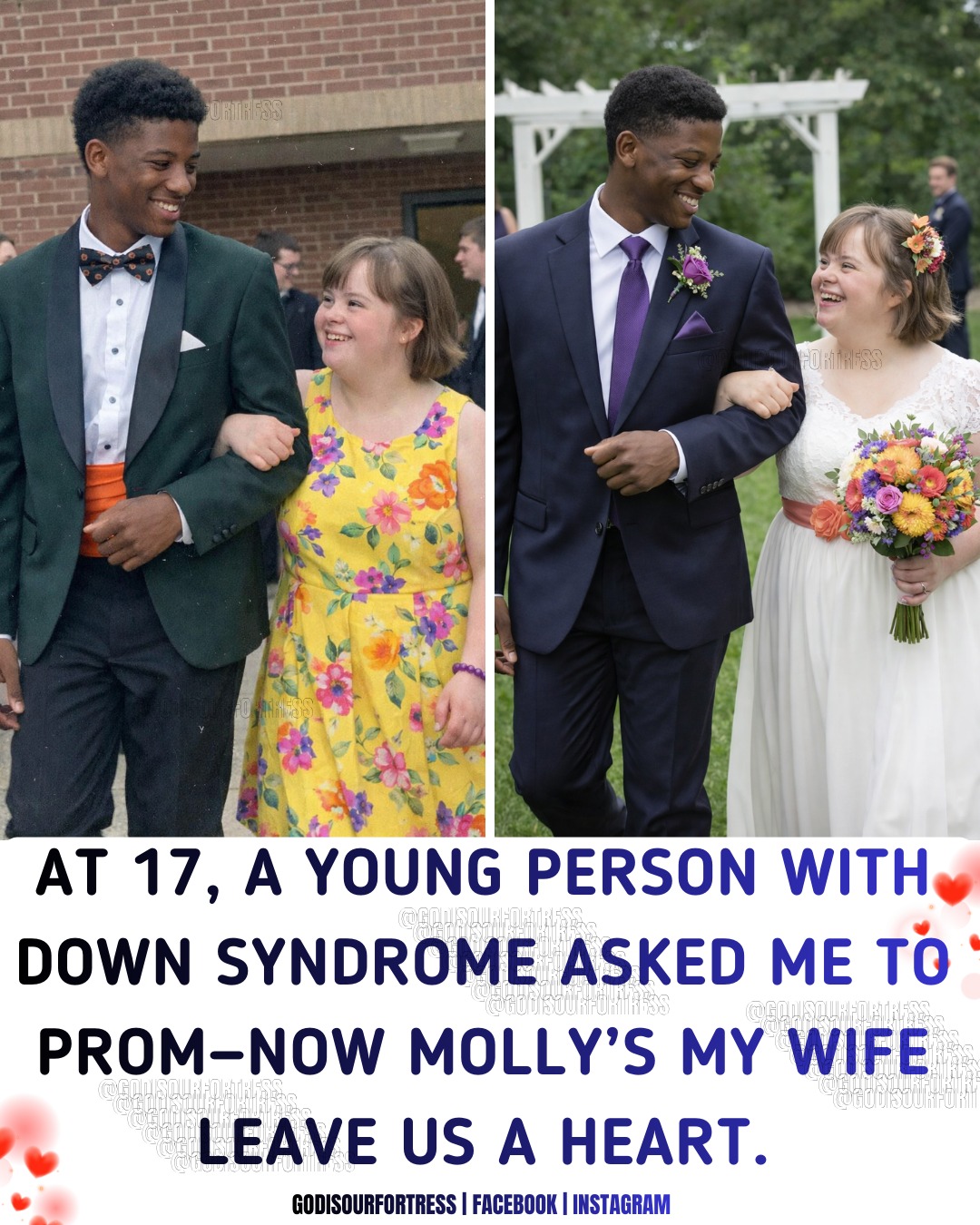
They Said It Was a Pity Date Years Later, We Realized It Was a Beginning
When Molly asked me to prom, people talked. Some called it sweet. Others called it brave. A few whispered that it was just a "pity date." They assumed it was a gesture, a kind moment that would fade once the music stopped and the lights came on.
They were wrong.
Molly didn't hesitate when she asked me. There were no games, no pressure, no overthinking. Just courage. Just intention. She knew what she wanted, and she moved with confidence. I said yes not because I felt sorry for anyone, but because I respected her boldness. That kind of clarity stands out at any age.
The Night Itself
Prom came and went like it does for most people: pictures, laughter, a dance floor full of memories. It felt natural. Easy. Like something that was meant to happen, even if we didn't fully understand why at the time.
There was no awkwardness of mismatched expectations, no sense of obligation hanging over the evening. We simply enjoyed it, two people sharing a milestone night without the weight of other people's narratives. The whispers about pity faded into the background, drowned out by music and genuine fun.
Looking back, the evening's ease was itself significant. Forced gestures feel forced. This did not. It felt like the beginning of something, though neither of us would have said so at the time.
Going Our Separate Ways
After graduation, life did what life does. We followed different paths. I went to trade school. She enrolled in a program across the city. There wasn't drama or heartbreak, just distance. We were young, building separate futures, learning who we were.
This is the part of the story that often gets overlooked, but it matters. We did not cling to a high school moment. We grew up separately, made our own choices, and became our own people. The years apart were not wasted time. They were the necessary space in which two teenagers became adults capable of recognizing something real.
Too many young relationships fail because they try to freeze a moment instead of allowing growth. We did the opposite without even planning it. We lived our lives, and life, in its own way, kept a thread connecting us.
The Reunion Nobody Planned
And then, years later, life surprised us. We both signed up to volunteer at the same community center. No planning. No coordination. Just two people showing up to serve, and finding each other sitting across the same folding table.
It didn't feel awkward. It didn't feel forced. It felt familiar. Like time had folded in on itself and returned us to where we were always supposed to be, except now we were ready.
There is something meaningful in the setting. We did not reconnect at a bar or through a dating app. We reconnected while volunteering, while giving our time to others. The values that had drawn us together years earlier, courage, kindness, showing up, were still there, now tested and proven by adult life.
We started talking. Then we kept talking. And slowly, the story that everyone had dismissed as a pity date revealed itself as something else entirely: a beginning that had simply needed time.
Why People Called It a Pity Date
It is worth examining why the label stung, and why it was wrong. "Pity date" implies a power imbalance: one person doing a favor for another, an act of charity disguised as romance. The label says more about the observers than the participants.
People reach for cynical explanations when they see something they do not understand. A girl asking a boy to prom with total confidence, without games or hesitation, did not fit the expected script. Rather than admire the boldness, some diminished it with a label.
But pity requires condescension, and there was none. Molly's invitation was direct and genuine. My acceptance was based on respect, not gratitude. From the inside, it never felt like charity. It felt like two people choosing each other, plainly and honestly.
The lesson extends beyond prom. How often do we mislabel other people's sincerity because it makes us uncomfortable? How often does cynicism masquerade as wisdom?
What the Years Taught Us
The distance between prom night and the community center table taught us things we could not have learned together at eighteen:
- Identity first: We each needed to become someone before we could truly choose someone.
- Values endure: The qualities that attracted us as teenagers, courage and kindness, proved to be the same qualities that matter as adults.
- Timing is real: The same connection at eighteen might not have survived. Years later, it flourished.
- Service connects: Shared purpose creates bonds that shared history alone cannot.
- Other people's narratives don't define you: The "pity date" label belonged to the whisperers, never to us.
The Quiet Power of Showing Up
Both the prom invitation and the volunteer reunion share a theme: showing up. Molly showed up with courage when she asked. We both showed up years later to serve our community. And in showing up, we found each other again.
So much of life comes down to this simple act. Ask the question. Take the shift. Sit at the table. Most meaningful connections begin not with grand strategy but with the willingness to be present and be brave.
Frequently Asked Questions
What is a "pity date"?
It is a dismissive label for a date that observers assume was motivated by charity or obligation rather than genuine interest. In this story, the label was applied by others but never reflected the reality of the relationship.
Can high school connections become real adult relationships?
Yes, though it is uncommon. What made this story work was not clinging to the past but growing separately and reconnecting as mature adults with shared values.
Why is volunteering a good place to meet people?
Volunteering brings together people with shared values and a service mindset. Connections formed through shared purpose tend to be grounded in character rather than circumstance.
How do you know if someone's interest is genuine?
Genuine interest shows in consistency, directness, and ease. Molly's invitation had no games or pressure, and the evening itself felt natural rather than forced, both signs of sincerity.
What should you do if people misjudge your relationship?
Trust your own experience over others' narratives. The people inside a relationship know its truth. Outside labels say more about the labelers than about the relationship.
They said it was a pity date. Years later, sitting across a folding table at a community center, we realized it was never that. It was a beginning, patient enough to wait until we were ready for it. Some stories take years to tell properly. This one was worth the wait.



