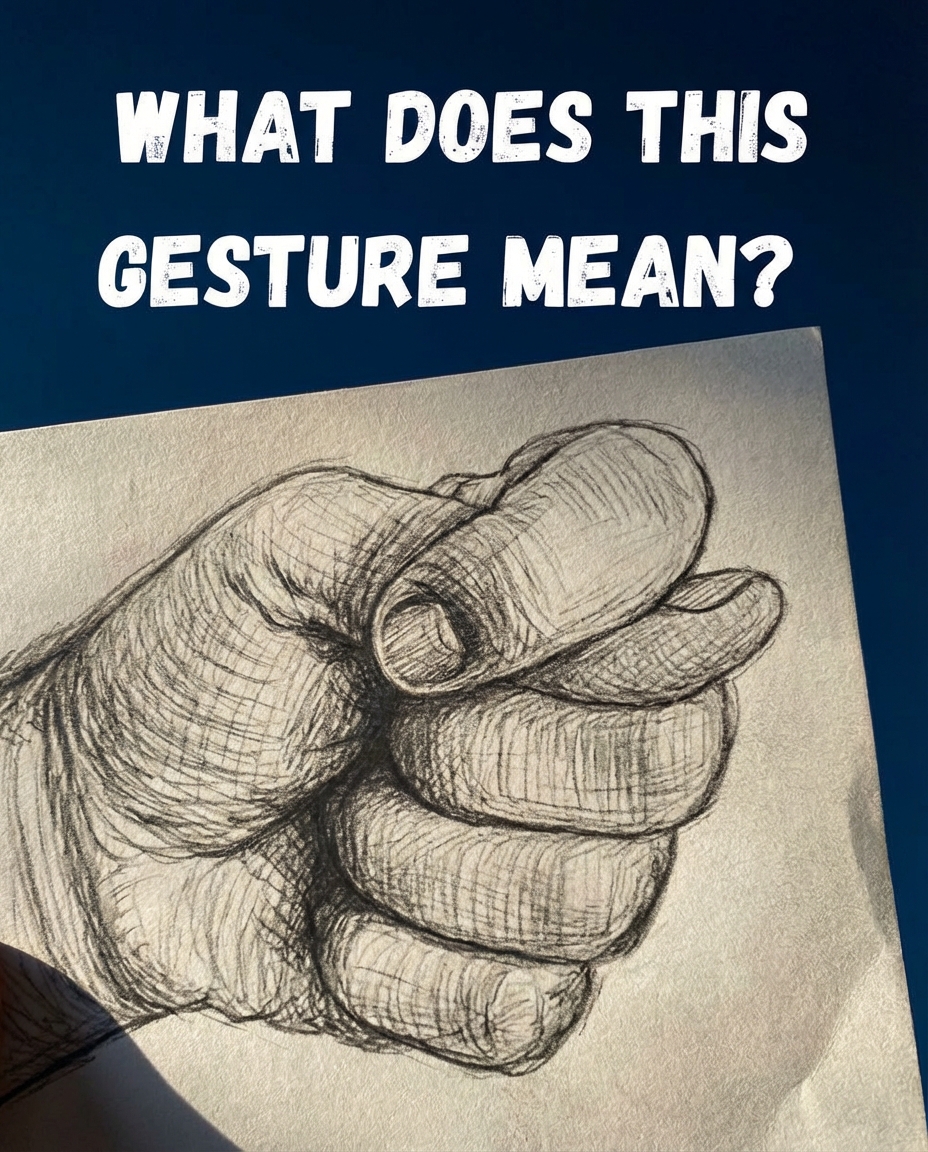
At first glance, it appears to be an ordinary clenched fist. But a closer look reveals a small detail that changes everything—the thumb tucked neatly between the fingers. This subtle variation turns a common hand position into a gesture once known across many cultures as “making a fig.” Long before digital communication and instant reactions, this quiet sign carried clear meaning without the need for words.
In everyday life centuries ago, gestures like this played an important role in communication. With one small movement, a person could politely refuse a request, express disagreement, or signal light-hearted defiance. It allowed people to communicate boundaries without raising their voice or creating conflict.
During the 19th century in parts of Europe, the gesture became especially popular in rural communities. It offered a discreet way to respond to authority or unfair demands while maintaining social harmony. Rather than open confrontation, the hidden thumb delivered a message with humor and restraint. In folklore, the closed fist symbolized inner strength, while the concealed thumb was believed to serve as a protective sign, often associated with good fortune and warding off negativity.
The meaning of the gesture gradually found its way into family traditions and childhood games. Elders passed it down as a playful response to teasing or as a gentle way to stand firm. For some families, it became a comforting symbol used during moments of uncertainty, travel, or separation—small, familiar, and reassuring.
Today, gestures like this are rarely used, replaced by emojis, messages, and quick digital reactions. Still, its story lives on as a reminder of how creative human communication once was. Simple, quiet, and easy to miss, the fig gesture reflects a timeless truth: meaningful messages don’t always need words—sometimes, subtlety speaks loudest.