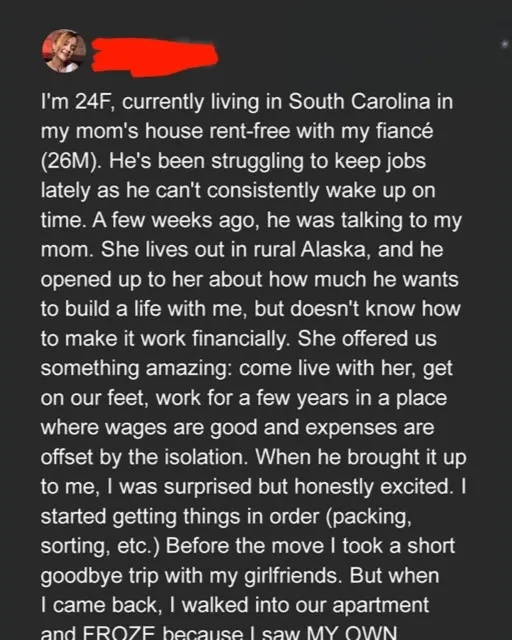
We Planned a Fresh Start in Alaska, But Moving Day Revealed the Truth
Starting over in a new place often feels like the beginning of a dream. That's exactly how it felt when Jake first suggested we move to Alaska. He painted the picture perfectly: we'd save money, work hard, and finally build the future we'd always talked about. With my mom already living there, I believed it was the perfect chance to start fresh.
For weeks, I held onto that hope. I imagined our small home surrounded by mountains, the crisp air reminding us every day of the life we were building together. I packed boxes with excitement, telling myself this was the step that would finally bring stability and happiness.
But then, everything shifted, on the very day we were supposed to leave.
The Moment Everything Changed
When I came home from a short trip, I noticed something strange. My boxes were stacked neatly by the door, ready to be loaded. But Jake's belongings were still scattered throughout the house, untouched. My heart sank even before he opened his mouth.
With a calmness that felt almost cold, Jake told me he had changed his mind. He wasn't moving to Alaska anymore. He said I could still go if I wanted, but he wouldn't be joining me.
At first, I thought it was fear or hesitation. Moving across the country is terrifying, and cold feet would have been understandable. But then came the truth that cut deeper than I could have imagined, he had already moved on with his life, and I wasn't part of his future anymore.
When the Plan Was the Relationship
That moment shattered me. All the plans, the hope, the excitement for a new beginning, suddenly gone. It wasn't just about Alaska; it was about realizing that the life I thought we were building together had ended before it even began.
Looking back, the Alaska plan had become something more than a move. It was proof, or so I thought, that we were committed. Planning a future together felt like the relationship itself was solid. Psychologists note this is a common pattern: couples sometimes use big plans, a move, a wedding, a new house, as evidence of commitment, when the commitment itself was already quietly eroding.
The boxes by the door told the real story. While I was packing our future, he was unpacking himself from it.
Why People Leave Without Warning
Jake's calm delivery was almost harder to bear than anger would have been. It suggested the decision had been made long before moving day, that he had been living with the ending while I was still living in the beginning.
People end relationships without warning for reasons that rarely excuse the behavior but help explain it:
- Conflict avoidance. Some people would rather endure months of quiet detachment than have one difficult conversation.
- Emotional checkout. The decision often happens gradually, long before it is announced. By the time it is spoken, the person has already grieved the relationship privately.
- A new attachment. Sometimes, as here, someone else is already in the picture, which accelerates the exit and deepens the betrayal.
- Fear of being the villain. Delaying the conversation can feel, to the person leaving, like kindness. It is not. It robs the other person of honesty and time.
None of these reasons make the behavior okay. But understanding them can help the person left behind stop asking "what did I do wrong" and start recognizing that the failure was in communication, not in their worth.
The Hardest Journeys
Moving day didn't just change our plans. It changed everything I thought I knew about love, commitment, and trust. Sometimes, the hardest journeys aren't the ones across states or countries, they're the ones you face when your future takes a turn you never saw coming.
There is a particular grief in losing a future. It is not just the loss of a person but the loss of every imagined morning, every planned holiday, every version of yourself you had pictured in that new life. Grieving a future requires acknowledging that those dreams were real to you, even if the person sharing them had already let go.
Rebuilding After the Shattering
What comes after a moment like this? The road is not quick, but it is walkable:
- Let yourself grieve the plan, not just the person. The Alaska dream deserves its own goodbye.
- Resist the urge to beg for explanations. You may never get a satisfying one. Closure is something you build, not something you receive.
- Lean on the people who stayed. Her mother was already in Alaska. Sometimes the fresh start you planned with the wrong person becomes the fresh start you take for yourself.
- Watch for the lessons, not just the wounds. This experience teaches something invaluable about the difference between planning a future and building one, between words and follow-through.
- Consider going anyway. The most powerful response to a canceled plan is sometimes to keep the parts that were always yours. Alaska was her dream too.
The Truth About Fresh Starts
Here is what moving day revealed, beyond Jake's betrayal: a fresh start was never really about Alaska. It was about the courage to build a life intentionally. That courage does not require a partner. It never did.
The boxes are still packed. The mountains are still there. And the woman who packed those boxes, hopeful, brave, ready for something better, is still her. Jake's departure changed the plan. It did not change her capacity to begin again.
Sometimes the universe cancels your plans to protect your future. Moving day didn't just reveal the truth about Jake. It revealed the truth about her: she was always the one brave enough to start over. She just doesn't need his permission anymore.
Frequently Asked Questions
Why do people end relationships without any warning?
Often due to conflict avoidance or gradual emotional detachment. The person leaving may have processed the ending privately over months, making the announcement feel sudden to their partner even though the decision was not sudden to them.
How do you cope when a partner leaves right before a big life change?
Allow yourself to grieve both the person and the lost future. Lean on supportive family and friends, avoid making major decisions in the immediate shock, and consider counseling to process the betrayal. Give yourself permission to still pursue the parts of the plan that were yours.
Is it normal to feel blindsided even when there were signs?
Yes. Hindsight makes signs obvious, but in the moment, trust and hope can mask them. Feeling blindsided does not mean you were foolish. It means you were committed, and you expected the same.
Should you still go through with the move alone?
It depends on your reasons. If the destination appealed to you independently, if you have support there, and if the practical factors still make sense, going alone can be empowering. Make the decision based on your own desires, not as a reaction to the breakup.
How long does it take to recover from this kind of betrayal?
There is no fixed timeline. Recovery depends on the depth of the relationship, the nature of the betrayal, your support system, and whether you seek help. Most people find the acute pain eases within months, with deeper healing continuing over a year or more.
Can a relationship survive one partner secretly planning to leave?
Rarely. Trust, once broken this fundamentally, is extremely difficult to rebuild. The secrecy itself, living a double reality while a partner plans a shared future, is often more damaging than the departure. Honest communication, even when painful, is the only foundation that works.