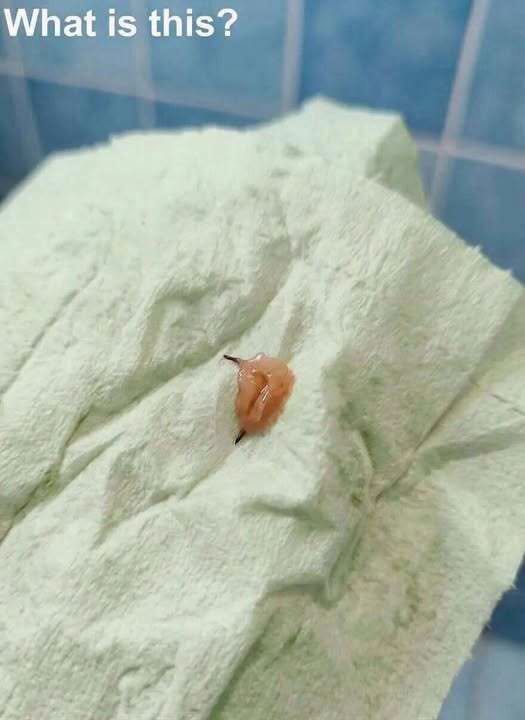
Finding something unfamiliar in an unexpected place can be surprisingly unsettling. A small object near a shower drain may look completely ordinary in daylight, yet under dim lighting or from an unusual angle, it can appear mysterious or even alarming.
That is exactly what happened when an unusual-looking object was noticed near a bathroom shower drain. At first glance, its pale shape and unusual position made it difficult to identify. A single dark bristle sticking out from it only added to the confusion.
The first reaction was understandable: What could it possibly be?
Why Ordinary Objects Can Look Strange
Our brains are constantly trying to make sense of the world around us. When we see something unfamiliar, especially when the lighting is poor or we only have a partial view, the brain attempts to connect what we see with familiar patterns.
This can sometimes lead to harmless misunderstandings.
A coat hanging in a dark room might briefly resemble a person. A shadow on the wall can appear unusual when viewed from the corner of your eye. Even an ordinary household item can look completely different when it is partially hidden.
The same principle applied to the mysterious object beside the shower drain.
Because the object was in an unexpected location, it was difficult to immediately recognize it. The unusual shape encouraged the imagination to come up with different possibilities before the object could be examined properly.
The Importance of Looking More Closely
Instead of relying on the first impression, the object was examined more carefully.
Changing the viewing angle and getting a better look revealed details that were difficult to notice initially. What seemed unusual began to make much more sense.
The pale material was simply a small food fragment that had somehow ended up near the bathroom area, while the dark piece sticking out of it was identified as a bristle from a cleaning brush.
Suddenly, the mystery disappeared.
There was no unusual creature or unexplained object involved. It was simply an everyday combination of materials that happened to look strange when viewed from a particular angle.
How Lighting Can Change What We See
Lighting plays a surprisingly important role in how objects are perceived.
Bathrooms can contain areas where shadows form around fixtures, drains, cabinets, and corners. When a small object is partly hidden in one of these areas, its shape may become difficult to recognize.
Low light can also reduce the amount of visual information available to the eyes. When details are unclear, the brain has to make assumptions about what it is seeing.
That is why turning on a brighter light or using a different viewing angle can sometimes completely change the appearance of an object.
Why Our First Impression Isn’t Always Correct
People naturally make quick judgments about unfamiliar things. This ability is useful in everyday life because it helps us react quickly to situations that might require attention.
However, quick judgments are not always accurate.
When information is incomplete, the brain may fill in the missing details. If an object looks unusual and appears somewhere unexpected, it can be easy to imagine a more complicated explanation than the simple truth.
The shower-drain discovery was a good example of this process.
The object itself did not change. The interpretation changed once more information became available.
A Simple Reminder for Everyday Situations
Unexpected discoveries around the home do not always require complicated explanations. Sometimes an object has simply been moved, dropped, carried in on clothing, or left behind after cleaning.
Before jumping to conclusions, it can be helpful to take a few simple steps: improve the lighting, look from another angle, and inspect the object carefully.
If something still cannot be identified, it is better to avoid touching it unnecessarily and ask a trusted adult or another responsible person for help.
The Mystery Had a Very Ordinary Answer
What initially looked strange near the shower drain turned out to have a surprisingly simple explanation.
A small food fragment combined with a cleaning-brush bristle had created an unusual shape. Once the individual parts were recognized, there was nothing mysterious about the discovery.
The experience is a useful reminder that appearances can sometimes be misleading. An unfamiliar object may seem concerning simply because we do not have enough information to identify it immediately.
In many everyday situations, a closer look provides the answer.
The most interesting part of this story was not the object itself, but how quickly an ordinary household discovery could seem mysterious when viewed under the wrong circumstances. Once the facts became clear, the mystery disappeared just as quickly as it had appeared.
Sometimes, the simplest explanation really is the right one.