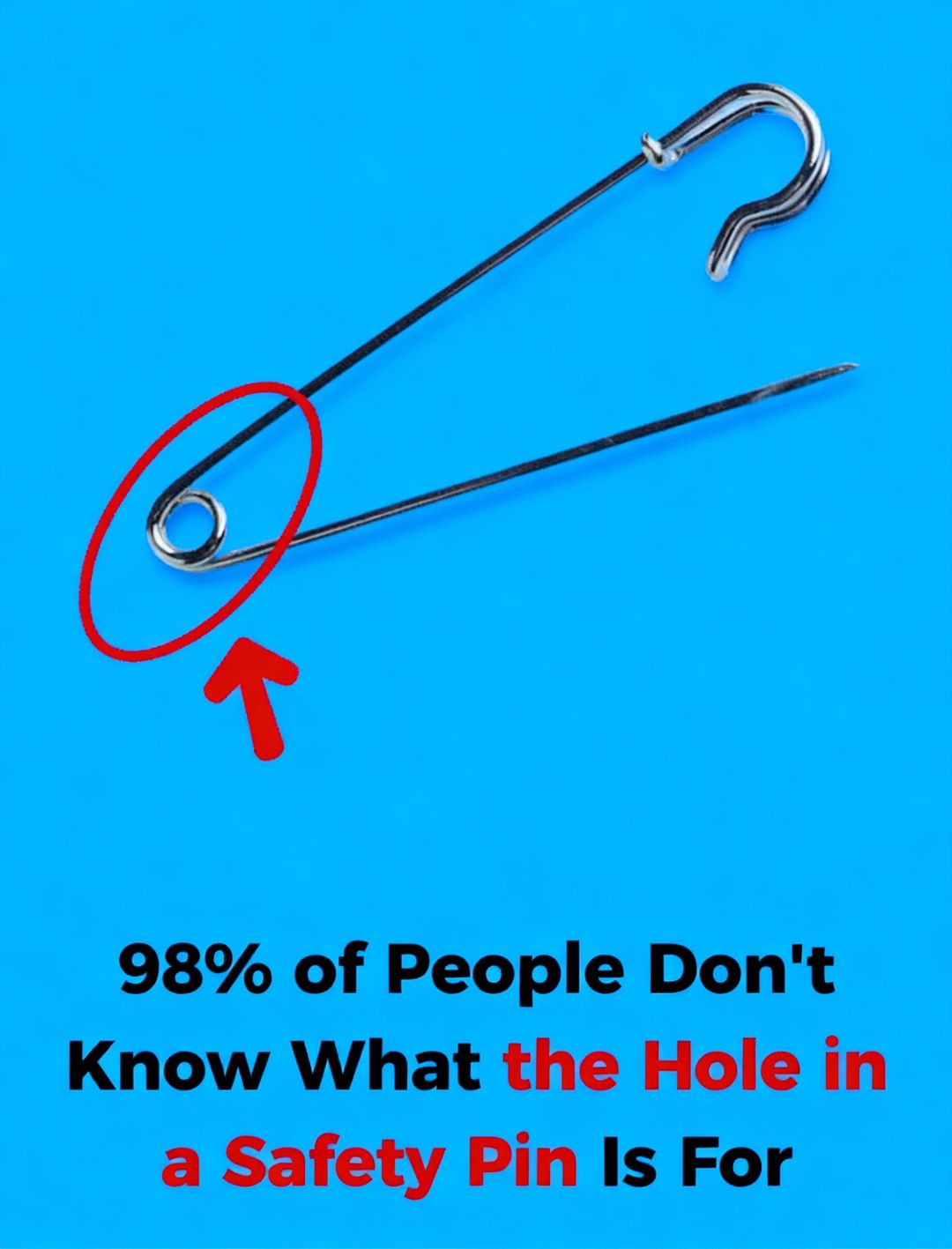
At first glance, a safety pin looks like one of the simplest tools around—just a bent piece of metal with a clasp. But if you take a closer look, you’ll notice a small detail many people overlook: a tiny hole at one end of the pin. This feature isn’t decorative, and it’s not a design flaw. It serves a practical purpose that has helped people sew and repair clothing for generations.
Traditionally, seamstresses and tailors used safety pins for more than temporarily fastening fabric. The small hole is especially useful when guiding elastic, ribbon, or drawstrings through fabric casings, such as waistbands or sleeves. By threading a piece of string, yarn, or thin cord through the hole, you can pull the pin through fabric with much better control. This reduces the chances of the pin twisting, slipping out, or getting stuck halfway through—a common frustration during simple repairs.
This thoughtful detail highlights how many traditional tools were designed with versatility in mind. Before modern, specialized gadgets became widely available, everyday items were often created to solve multiple problems efficiently. The safety pin’s hole works alongside other classic sewing techniques that focus on precision and ease, helping users achieve better results with minimal effort.
Using these time-tested methods today doesn’t mean avoiding modern tools. Instead, it’s about understanding how everyday items are meant to work and using them more effectively. Whether you’re fixing a loose waistband, replacing a drawstring, or doing basic clothing repairs, knowing the purpose behind small design features can save time and reduce frustration.
The tiny hole in a safety pin is a simple reminder that even ordinary objects can hide clever solutions. Sometimes, the smartest ideas are right in front of us—we just need to look a little closer.