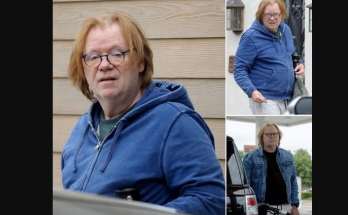
Before a Life-Changing Face Transplant, I Lived Under Constant Stares: Today, It Feels Like an Incredible Gift
For years, Derek, now 58, lived with challenges most people can hardly imagine. Following multiple medical procedures over a six-year period, his appearance and daily life were deeply affected. Simple things many take for granted, speaking clearly, breathing comfortably, or eating normally, became difficult. Still, through every setback, Derek chose gratitude and perseverance.
Living Under Constant Stares
Before the transplant, Derek lived a life defined by other people's reactions. His mother, Lisa, later shared how meaningful it was to walk beside her son in public without seeing people stare, something they had grown used to over the years.
That single detail captures an entire world of experience. To be stared at constantly is to be reminded, dozens of times a day, that you are different. It affects where you go, who you talk to, and how you feel about yourself. Many people with severe facial differences describe withdrawing from public life, not because they want to, but because the weight of constant attention becomes unbearable.
Derek endured this for years. Through multiple procedures across six years, each bringing hope and then new challenges, he kept going. Speaking, breathing, and eating, the most basic human functions, required effort and concentration. Yet those who know him say he met every setback with gratitude rather than bitterness.
The Decision: A Face Transplant
After doctors explored every possible treatment option, they introduced one final possibility: a face transplant. It was a decision filled with uncertainty, but also hope.
Face transplantation is one of the most complex procedures in modern medicine. Fewer than 50 have been performed worldwide. The surgery involves transplanting skin, muscles, nerves, blood vessels, and sometimes bone from a deceased donor to the recipient. It requires:
- Finding a compatible donor, matching blood type, tissue type, and physical characteristics like skin tone and face size.
- Extraordinary surgical precision, reconnecting tiny blood vessels and nerves under a microscope over many hours.
- Lifelong immunosuppression, powerful medications to prevent rejection, which carry their own risks.
- Intensive rehabilitation, relearning to move facial muscles, speak, and eat with transplanted tissue.
It is never a first option. It is offered only when all conventional reconstructions have been exhausted and the patient's quality of life is severely compromised. For Derek, after six years of procedures, it was the last door still open.
The Wait and the Surgery
After a nine-month wait, a donor was found. Nine months of hoping the phone would ring. Nine months of knowing that someone else's tragedy would become his second chance, a emotional complexity every transplant recipient carries.
The procedure, carried out at the Mayo Clinic, was among the most complex the medical team had ever performed. Surgeons worked carefully to restore both function and appearance, focusing on helping Derek regain everyday abilities such as blinking, smiling, and speaking.
The surgery took place over several days and marked a turning point in Derek's life. Face transplants routinely last 20 hours or more, involving teams of dozens of surgeons, nurses, and specialists working in rotation. Every millimeter matters. The goal is not just a face that looks natural, but one that works: eyelids that close, lips that form words, muscles that smile.
Seeing His New Face
About a month later, he saw his new face for the first time, an emotional and unforgettable moment.
Imagine that moment. Years of staring into a mirror at a face shaped by trauma and failed procedures. Then bandages, swelling, waiting. And finally, a reflection that is both unfamiliar and profoundly relieving. Transplant recipients often describe complex emotions at this stage: gratitude mixed with strangeness, joy mixed with grief for the donor. It takes time for the new face to feel like one's own.
For Lisa, his mother, the transformation was equally profound. Walking beside her son in public without seeing people stare, after years of enduring those stares together, was a gift she had stopped daring to hope for.
A New Life and a New Purpose
Today, Derek can speak more comfortably and smile with confidence. Those two abilities, speaking and smiling, are easy to take for granted. For Derek, they represent the return of fundamental human connection: the ability to be understood and the ability to express joy.
He has embraced a new purpose as a motivational speaker, using his journey to raise awareness about mental health and suicide prevention. Together, Derek and his mother have helped reconnect families, inspire conversations, and offer hope to people who feel alone.
This choice of mission is telling. People who survive severe facial difference often experience depression, isolation, and despair. Derek knows that darkness from the inside. By speaking openly about mental health and suicide prevention, he is reaching back toward people still in the place he once was, offering living proof that transformation is possible.
Dreams for the Future
Looking ahead, Derek dreams of building a future filled with love, finding a partner, getting married, and starting a family. These once-distant hopes are now possible thanks to the generosity of a donor's family and the dedication of his medical team.
There is something deeply moving about the ordinariness of these dreams. Not fame, not wealth, just love, partnership, and family. The things most people assume will simply happen. For Derek, they are not assumptions. They are goals reclaimed from years when they seemed impossible.
The Gift Behind the Gift
None of this would have been possible without the donor's family. In the midst of their own devastating loss, they said yes to donation. That yes gave Derek his face, his smile, his future.
"You are not alone," Lisa often says, a message at the heart of their mission, to bring people together, encourage compassion, and remind others that even after the hardest chapters, hope can still begin again.
Organ donation is often described as the gift of life. In Derek's case, it was the gift of a life worth living fully: speaking clearly, smiling freely, walking through the world without flinching. An incredible gift indeed.
Frequently Asked Questions
What is a face transplant?
A face transplant is a complex surgical procedure in which skin, muscles, nerves, blood vessels, and sometimes bone are transplanted from a deceased donor to a recipient with severe facial disfigurement. It is performed only when conventional reconstructive options have been exhausted.
How many face transplants have been performed?
Fewer than 50 face transplants have been performed worldwide since the first one in 2005. It remains an extremely rare procedure, offered only at a small number of specialized medical centers.
How long does it take to find a donor?
It varies widely. Donors must match on blood type, tissue compatibility, and physical characteristics. Derek waited nine months. Some patients wait longer; the process cannot be rushed because compatibility is critical to success.
What is recovery like after a face transplant?
Recovery involves intensive care, lifelong immunosuppressant medications to prevent rejection, and extensive rehabilitation including physical therapy, speech therapy, and psychological support. Regaining movement and sensation in transplanted tissue takes months to years.
What are the risks?
The major risks include organ rejection, infection due to immunosuppression, side effects of lifelong medications (including increased cancer and kidney risks), and the psychological challenge of adjusting to a new face. It is a life-altering commitment, not just a surgery.
How can I become an organ donor?
In the United States, you can register as an organ donor through your state's donor registry, usually when getting or renewing a driver's license, or online through the national registry. Discuss your wishes with your family so they can honor them. One donor can save or transform many lives.