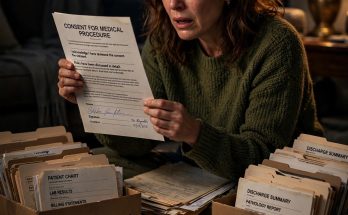
His Family Wanted the House He Built, But My One Condition Changed Everything
When you lose the person who made your world feel whole, even the simplest things, like breathing or waking up, can feel heavy. My partner and I shared fifteen beautiful years together. He wasn't just the person I loved; he was my best friend, my constant support, and the calm that kept me steady through every storm.
A Life Built From Nothing
Life hadn't been kind to him in his youth. At seventeen, he was left to fend for himself, with nothing but determination and a dream. He worked tirelessly, saving every penny until the day he bought a small house. It wasn't grand, but it was his, built with sweat, hope, and pride.
Think about what that means. Seventeen years old, alone in the world, and instead of giving up, he built. Year after year, job after job, saving what he could until he could buy four walls and a roof to call his own. That house was not just property. It was proof of everything he had overcome.
Together, we painted every wall, filled the rooms with laughter, and promised each other that this little home would always be our safe place.
Fifteen years of shared life leaves its mark on a home. Every room holds a memory. The kitchen where we cooked together. The walls we painted on a bright Saturday. The quiet evenings when the world outside felt far away. A house becomes a home through the love poured into it, and this one had fifteen years' worth.
The Loss
When he passed away unexpectedly, the house became my sanctuary, the only space that still carried his presence.
Grief experts describe this phenomenon well. After losing someone, physical spaces connected to them can feel like the last remaining link. The scent of a room, the creak of a floorboard, the way light falls through a familiar window, these become precious. Leaving the house would have felt like leaving him.
But before I could even begin to heal, his family, the same ones who had turned their backs on him years ago, appeared at my door. They said the house rightfully belonged to them.
The Confrontation
For a moment, my heart ached with anger and disbelief. The irony was crushing: the people who had abandoned him at seventeen, when he needed them most, now wanted the house he had built without them.
Property disputes after a death are among the most painful conflicts families face. Grief and money are a volatile combination, and when the deceased left no clear legal instructions, competing claims can tear families apart permanently. In this case, the moral claim seemed clear: the family that had turned its back had no standing to demand the fruits of his solitary labor.
But beneath that pain was a quiet understanding. That house wasn't just bricks and wood, it was the story of his strength, his love, and everything he had overcome.
The One Condition
So I looked at them and said, gently, "You can have the house, but only if you promise to fill it with the same love he poured into it."
Silence filled the room.
Then, his mother's eyes softened, and tears began to fall. "We failed him," she whispered.
That single sentence changed everything. It was an admission, an apology, and a beginning, all at once. The mother who had turned her back years ago finally faced what she had done. And in that moment of honesty, the bitterness melted away, replaced by shared memories, laughter, and stories I had never heard before.
This is the power of responding to conflict with grace instead of matching anger with anger. A demand met with a demand creates a war. A demand met with a condition rooted in love creates a reckoning.
An Evening of Healing
That evening, we sat together in his favorite room, the one he had built with his own hands. And for the first time since losing him, I felt peace again.
Imagine that scene. The woman who loved him for fifteen years, sitting with the family who had abandoned him, sharing stories in the room he built. The house doing what houses built with love do: holding people together.
The stories she heard that night were ones she had never heard before, pieces of his childhood, his youth, the years before they met. In sharing them, his family gave her something no legal document could: a fuller picture of the man she loved.
What the House Teaches
Today, I still live in that little house. It no longer feels like a place of sorrow, but a living memory of everything we built together.
Love, I've come to realize, doesn't end when a person is gone, it lingers, grows, and finds new ways to fill the empty spaces. It turns pain into healing, and walls into warmth. Because when a home is built with love, it never truly belongs to just one person, it belongs to the hearts it touches.
Several truths emerge from this story:
- Forgiveness can be strategic and sincere at once. Her condition was not naive generosity. It was a moral challenge that forced accountability, and it worked because it was genuine.
- Grief shared is grief transformed. The evening of shared stories did more healing than months of solitary mourning could have.
- A home is more than property. Legal ownership and emotional belonging are different things. The house's true value was never in its deed.
- It's never too late for remorse. His mother's tears, years overdue, still mattered. Acknowledgment of failure, even late, can open doors that anger keeps shut.
- Love outlives the lover. Fifteen years of devotion did not end at his death. It continued in her, in the house, and now in the reconciled family.
Protecting What Matters
This story also carries a practical lesson. When partners build a life together without marriage, legal protections matter enormously. Wills, property titles, and estate planning documents prevent exactly the kind of dispute this family faced. Love should be backed by paperwork, not because love is insufficient, but because grief makes everything harder.
Anyone in a long-term partnership should consider:
- A valid will specifying who inherits property.
- Clear property titles reflecting actual ownership intentions.
- Beneficiary designations on accounts and policies.
- Powers of attorney for medical and financial decisions.
These documents do not diminish romance. They protect it.
Frequently Asked Questions
What rights does an unmarried partner have to a shared home after a death?
It depends on jurisdiction, how the property is titled, and whether a will exists. Without legal documentation, an unmarried partner may have limited rights, which is why wills and proper titling are essential for unmarried couples.
How can families avoid property disputes after a loved one dies?
Clear estate planning is the best prevention: a valid will, updated beneficiary designations, and open family conversations about intentions before death. Mediation can help resolve disputes that do arise without destroying relationships.
Is it possible to reconcile with family after years of estrangement?
Yes. This story shows that honest acknowledgment of past failures can open the door to healing. Reconciliation requires accountability from those who caused harm and willingness from those who were hurt. It is rarely quick, but it is often worth attempting.
Why do homes feel so emotionally significant after losing someone?
Psychologists explain that familiar spaces become intertwined with memories and attachment. A shared home holds sensory reminders, routines, and the feeling of the person's presence. This is a normal part of grief, and the attachment to the space often eases gradually over time.
What is the best way to handle a family member demanding property?
Stay calm, know your legal rights, and consult an estate attorney before agreeing to anything. Responding with dignity rather than aggression, as in this story, can sometimes transform conflict into resolution. But never surrender legal rights under pressure without advice.
Can grief bring estranged families back together?
Sometimes. Shared loss can create common ground where none existed. Funerals and memorial gatherings often become unexpected venues for reconciliation, as the finality of death puts old grievances in perspective. It does not always happen, but when it does, it can be profoundly healing.