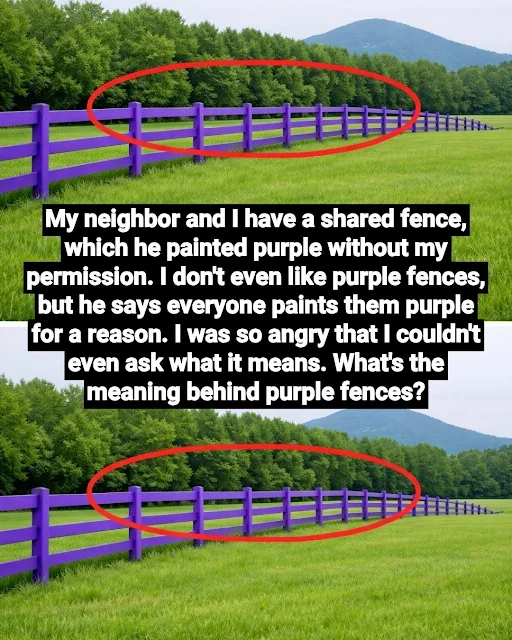
If you ever spot purple paint on a fence post, tree, or boundary marker while hiking or exploring outdoors, it is important to know what it means. In many U.S. states, purple paint is more than just a color choice — it serves as an official warning that the property is private and unauthorized entry is not allowed.
Known as the “Purple Paint Law,” this system helps landowners clearly mark property boundaries without relying only on traditional “No Trespassing” signs.
What Is the Purple Paint Law?
The Purple Paint Law allows property owners to use colored paint markings instead of printed signs to indicate restricted access. In most states, purple paint carries the same legal meaning as a “No Trespassing” notice.
The law was introduced to provide a more durable and cost-effective way to mark private land. Unlike paper or metal signs that can fade, blow away, or become damaged, paint markings are easier to maintain and remain visible for long periods.
States That Use Purple Paint
Several states recognize purple paint as an official trespassing warning, while a few states use different colors such as orange, blue, red, or yellow.
Examples of State Designated Colors
| State | Designated Color |
|---|---|
| Alabama | Purple |
| Arizona | Orange |
| Arkansas | Purple |
| Florida | Purple |
| Idaho | Orange |
| Illinois | Purple |
| Indiana | Purple |
| Iowa | Purple |
| Kansas | Purple |
| Kentucky | Purple |
| Louisiana | Purple |
| Maine | Purple |
| Maryland | Blue |
| Missouri | Purple |
| Montana | Orange |
| Nebraska | Blue or Red |
| Nevada | Orange |
| New Hampshire | Purple |
| North Carolina | Purple |
| Pennsylvania | Purple |
| South Carolina | Purple |
| Tennessee | Purple |
| Texas | Purple |
| Utah | Orange or Yellow |
| Virginia | Purple or Aluminum |
| West Virginia | Purple |
Keep in mind that state laws may change over time, so checking local regulations is always recommended.
Why Was Purple Chosen?
Purple was selected for several practical reasons:
- It stands out clearly against natural backgrounds like trees, grass, and rocks.
- It remains visible to many people with common forms of color blindness.
- It is not commonly used for forestry or utility markings.
- Paint tends to last longer than traditional signs.
Because of these advantages, purple became an effective and recognizable way to mark property boundaries.
Common Rules for Purple Paint Markings
Although regulations differ slightly between states, most laws include similar requirements for paint markings.
Typical Guidelines Include:
- Vertical paint stripes
- At least 1 inch wide
- At least 8 inches tall
- Positioned about 3 to 5 feet above the ground
- Placed at visible intervals along the property line
- Clearly noticeable from approaching directions
Landowners may place the paint on trees, fence posts, rocks, or other permanent surfaces.
What Happens If Someone Ignores Purple Paint?
Entering marked private property without permission can lead to legal consequences depending on local laws. Possible penalties may include:
- Fines
- Trespassing citations
- Misdemeanor charges
- Increased penalties for hunting or property damage violations
In many areas, claiming unfamiliarity with the purple paint system may not be accepted as a defense.
What Should You Do If You See Purple Paint?
If you encounter purple markings outdoors, the safest approach is to respect the boundary and avoid entering the area unless you have permission.
Here are a few helpful steps:
- Stop and confirm whether you are approaching private property.
- Watch for additional signs or fencing nearby.
- Avoid crossing the marked boundary if uncertain.
- Contact the property owner if access is needed.
- Review local laws before hiking, hunting, or exploring unfamiliar areas.
Tips for Landowners
Property owners who want to use paint markings should first review their state’s specific requirements.
Helpful practices include:
- Using weather-resistant outdoor paint
- Repainting faded markings when necessary
- Combining paint with occasional signs for extra visibility
- Keeping records or photos of boundary markings
Clear markings can help reduce misunderstandings and improve safety for both visitors and landowners.
Final Thoughts
The Purple Paint Law is designed to create a simple and recognizable way to mark private property boundaries. Whether you are spending time outdoors or managing private land, understanding these markings can help prevent confusion and encourage respectful use of shared spaces.
When you see purple paint on a fence or tree, it is best to treat it as a clear signal that the property beyond the marker is privately owned and restricted without permission.