Picture puzzles have become one of the most popular ways to challenge your brain while having fun. Spot-the-difference games encourage careful observation, attention to detail, and concentration while providing a relaxing mental exercise.
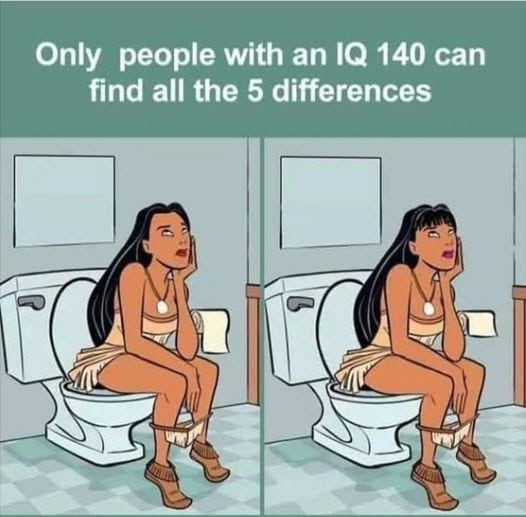
The image above presents two nearly identical illustrations of a person sitting in a bathroom. At first glance, both pictures appear the same, but there are five small differences hidden between them. Your challenge is to find every one without scrolling for hints.
Why People Love Spot-the-Difference Puzzles
These visual puzzles are entertaining for people of all ages. They encourage you to slow down and examine every part of an image instead of relying on first impressions. Many people enjoy them because they improve attention to detail, exercise visual memory, encourage patience and focus, and provide a fun break from daily routines.
While these puzzles are often shared with captions claiming that only people with a certain IQ can solve them, there is no scientific evidence that completing a spot-the-difference puzzle measures intelligence or IQ. Success usually depends on observation skills, practice, and careful comparison.
Take a Close Look
Before reading further, spend a few moments comparing the two images. Pay attention to facial features, hair, clothing, bathroom fixtures, accessories, and small background details. Sometimes the smallest change is the easiest to overlook.
Common Differences in These Puzzles
Puzzle creators often modify tiny details such as a missing object, a different hairstyle, changes in clothing, altered facial expressions, missing or added accessories, or small background adjustments. Carefully scanning the image from top to bottom is often the best strategy.
Challenge Your Friends
Once you’ve finished, share the puzzle with family or friends and see who can find all five differences the fastest. Comparing results can make the activity even more enjoyable.
Whether you found every difference or missed a few, visual brain teasers are a fun way to keep your mind engaged and sharpen your observation skills over time. Keep practicing—each new puzzle offers another opportunity to improve your attention to detail while enjoying a quick mental workout.