
A Man's Final Request Was to See His Loyal Dog: What Happened Next Left Everyone Speechless
The heavy steel door closed with a deep echo, and the room fell silent. No one spoke. The atmosphere felt different, as if everyone present understood they were about to witness something unforgettable.
A Life of Quiet Loneliness
Ethan stood quietly in the center of the room. Life had taken him down a difficult path, and he had spent years feeling isolated from the world around him. Family connections had faded, friendships had disappeared, and visits had become rare. There was only one companion who had never left his side: his dog.
That reality is more common than many people realize. For people who are incarcerated, institutionalized, or in long term care, outside relationships often erode over time. Letters slow down, visits stop, and the outside world moves on. In those circumstances, a single bond can carry enormous weight. For Ethan, that bond was his dog, a source of comfort through some of the hardest moments of his life.
The Final Request
As a special request, Ethan was allowed one final visit with the loyal animal. Special requests of this kind are not automatic. Facilities weigh security, logistics, and policy, and approvals often depend on staff willing to go out of their way. The fact that this visit was granted at all speaks to someone, somewhere, deciding that compassion mattered more than routine.
The Reunion
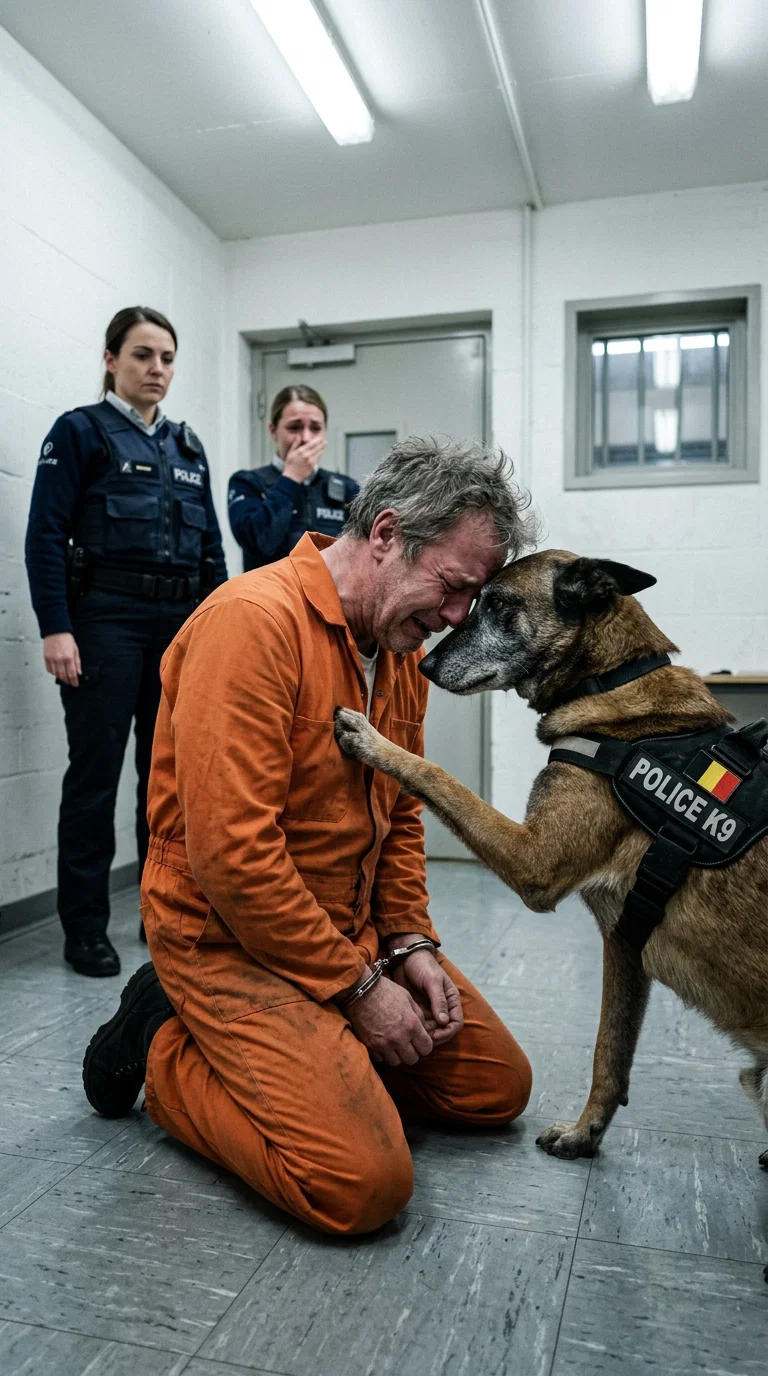
When the dog entered the room, Ethan's emotions immediately surfaced. The aging Belgian Malinois walked slowly across the floor. Gray fur surrounded his muzzle, but his eyes remained bright and focused. He paused briefly before making his way directly toward Ethan. Without hesitation, the dog gently placed a paw on Ethan's knee and rested his head against his chest.
Ethan lowered his head and wrapped his arms around his longtime companion. Years of sadness, loneliness, and regret seemed to pour out in that single moment. "You still found me," he whispered softly.
Older dogs often move with deliberate care, and there is something especially moving about a senior dog who knows exactly where to go. Belgian Malinois are known for their intense loyalty to their person, and this dog needed no direction. He paused, assessed, and went straight to Ethan, as if no time had passed at all.
An Unexpected Moment
Around the room, observers watched quietly. Even those accustomed to difficult situations appeared moved by the powerful bond unfolding before them. The room itself felt cold and impersonal, with gray walls, bright lights, and little warmth. But the connection between Ethan and his dog changed everything.
Then something unexpected happened. The dog suddenly became alert. His ears lifted. His posture stiffened. He stepped forward and positioned himself directly in front of Ethan. A sharp bark broke the silence. Everyone in the room looked up.
The dog was not acting aggressively. Instead, he appeared determined to stay close to the person he cared about most. As staff members cautiously approached, the dog refused to move. He remained firmly by Ethan's side, focused entirely on protecting and comforting his longtime friend. Handlers attempted to guide him away, but the dog resisted. His paws slid against the floor as he tried to stay where he believed he was needed most.
Dogs read human emotion with remarkable sensitivity. Changes in breathing, posture, tension, and even scent tell a dog when their person is distressed. What looked like protectiveness may well have been the dog responding to Ethan's emotional state, choosing to place himself between his person and the unfamiliar people approaching. It was not defiance. It was devotion.
The Farewell
The emotional scene left many witnesses struggling to hold back tears. Eventually, the dog was gently led from the room. Even then, he continued looking back toward Ethan, unwilling to break the connection they had shared for so many years.
As the door closed and the room grew quiet once more, one powerful thought remained: true loyalty knows no conditions. Sometimes, the bond between a person and a devoted dog can leave a lasting impression on everyone fortunate enough to witness it.
Pet Visits at the End of Life: Why They Matter
Ethan's story is unusual in its setting, but the idea behind it is widely recognized in end of life care. Hospice and palliative care programs around the world have learned that saying goodbye to a beloved pet can be one of a patient's deepest needs.
Many hospice organizations now run formal pet visit programs or make special arrangements for a patient's own animal to visit. The benefits are well documented in general terms:
- Emotional comfort. A familiar animal can reduce anxiety and provide a sense of normalcy during a frightening time.
- Unfinished business. For many patients, the worry is not about themselves but about who will care for the pet. A final visit can open the conversation about the animal's future.
- Connection. When human visitors have faded away, as they had for Ethan, a pet may be the one relationship still intact. Honoring it honors the patient's whole life.
- Grief support for families. Witnessing a peaceful goodbye can help loved ones, too.
These programs require planning: health screenings for the animal, behavior assessments, designated visiting areas, and staff coordination. But hospices that offer them consistently report that pet visits are among the most meaningful moments families remember.
What Happens to Pets Left Behind
One question Ethan's story raises, without answering, is what becomes of a devoted animal when their person is gone. This is a practical concern every pet owner should plan for, and it is worth thinking about long before a crisis:
- Name a caregiver. Talk to a trusted friend or family member now about taking your pet if you cannot care for them.
- Put it in writing. Wills and pet trusts can include provisions for a pet's care and funds for their expenses.
- Contact rescues early. Breed specific rescues and senior dog rescues often help rehome older dogs, who are the hardest to place.
- Keep records together. Vet records, medication lists, and feeding routines make any transition easier for the animal.
How You Can Help
Stories like Ethan's remind us that the human animal bond runs deeper than convenience. If it moved you, here are general ways to support animals and the people who love them:
- Adopt a senior dog. Older dogs are overlooked in shelters and often the most grateful companions. A gray muzzle is not a drawback; it is proof of a life lived loyally.
- Foster. Short term fosters keep dogs out of kennels and give rescues time to find permanent homes.
- Donate. Senior dogs often need dental work, joint care, and medication. Donations to rescues cover exactly these costs.
- Volunteer. Shelters need walkers, drivers, and people willing to sit quietly with a nervous dog.
- Spay and neuter. Preventing unwanted litters keeps pressure off the shelter system.
True loyalty knows no conditions. The least we can do is return a fraction of it.
This article is for informational purposes only. If your pet shows concerning symptoms, please consult a licensed veterinarian.



