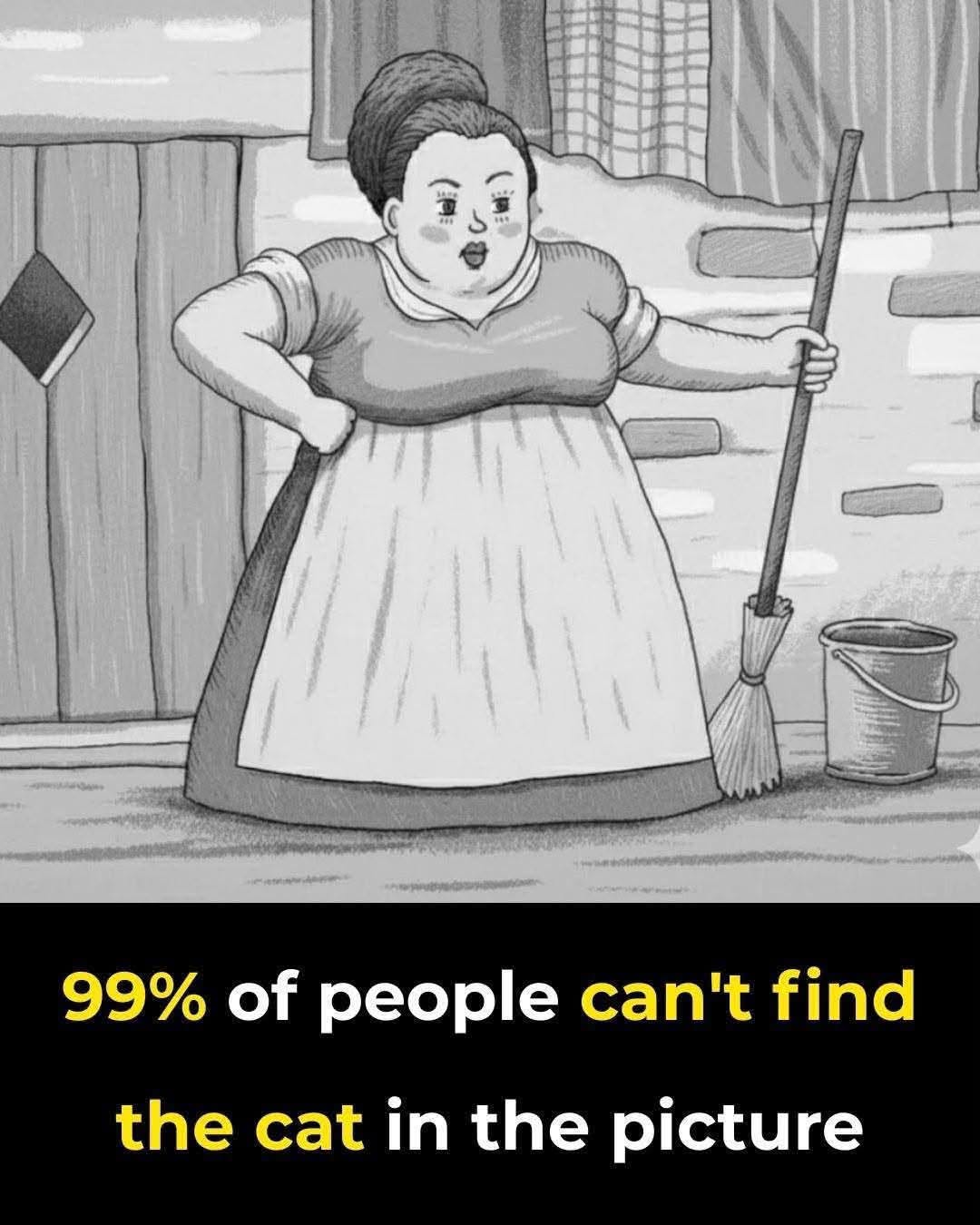
Can You Spot the Hidden Cat in This Picture?
Some pictures are easy to understand at first glance. Others make you stop, look again, and wonder how you missed something that was right in front of you.
Hidden-image puzzles are popular for exactly that reason. They turn an ordinary-looking picture into a small observation challenge, encouraging you to slow down and pay attention to details that might otherwise go unnoticed.
Today's puzzle has one simple goal: find the hidden cat.
At first, the image may not seem to contain anything unusual. You might scan it quickly and decide that there is no cat there at all. But somewhere in the picture, a feline is cleverly blended into the scene. The challenge is to find it before looking at the solution.
Why Our Eyes Miss What Is Right in Front of Us
It can feel surprising when you stare at a picture for a full minute and still cannot see the hidden animal. But there is a real reason this happens, and it has to do with how human vision works.
Your brain is constantly deciding what matters in a scene and what can be ignored. Psychologists call this "figure-ground perception": you focus on the figure (the main subject) and treat everything else as background. In a hidden-cat puzzle, the cat is deliberately placed in the "ground" part of the image, so your brain files it away as unimportant scenery.
There is also a phenomenon called inattentional blindness. In a well-known experiment, people asked to count basketball passes in a video completely missed an unexpected figure walking through the scene. The lesson is the same one hidden-picture puzzles teach: we tend to see what we are looking for, and we overlook everything else.
Cats are also natural masters of camouflage. A tabby's stripes break up its outline among shadows and branches. A ginger cat's coat melts into autumn leaves. A black cat disappears into dark corners. The puzzle you are looking at uses the same tricks nature uses, which is why it works so well.
Proven Strategies to Spot the Hidden Cat
Before scrolling any further, spend a little time examining the image with these techniques. They are the same methods people use for everything from spotting wildlife to finding lost objects at home.
1. Scan the picture in sections. Instead of sweeping your eyes across the whole image, divide it mentally into four quarters and examine each one slowly. Our eyes naturally skip over familiar shapes, so a slow, section-by-section search forces you to notice more.
2. Check the edges and corners first. Hidden objects are often placed where people look last. The center of a photo grabs our attention automatically, while the borders get only a quick glance.
3. Squint or zoom out. This sounds strange, but blurring the details can help. When fine detail disappears, larger shapes and outlines stand out. A cat's silhouette, its ears, or the curve of a tail may suddenly appear when the rest of the image softens.
4. Look away, then look back. Your first impression of an image sets up expectations about what it contains. Stepping away for a few seconds and returning with fresh eyes resets those expectations, and you may notice a detail you overlooked the first time.
5. Search for parts, not the whole cat. Do not look for a complete cat. Look for cat pieces: a pointed ear, a round eye reflecting light, whiskers, a curled tail, or a patch of fur with a texture that does not match its surroundings.
6. Notice textures that do not belong. If most of the image is smooth but one area is slightly fuzzy, or if a pattern breaks for no obvious reason, that spot deserves a closer look.
7. Try a different angle. Tilt your phone, lean back from the screen, or view the image from across the room. Changing your viewing angle changes how shapes group together in your vision, and the hidden cat may pop out immediately.
Have you found the cat yet? If you think you know where it is, remember its location before continuing.
Do Not Give Up Too Quickly
This type of visual puzzle is meant to be enjoyed at your own pace. There is no need to rush toward the answer.
Look around the entire image rather than concentrating on just one section. Pay attention to unusual outlines, patterns, and shapes that might form part of the hidden feline. You may even think you have found the answer, only to realize that you were looking at an unrelated shape.
That is part of what makes hidden-picture puzzles so interesting. Every false alarm teaches your eyes to be a little sharper the next time.
Still cannot see it? Give yourself one final attempt before checking the solution. This is your last chance to find the hidden cat without any help. Look closely at the picture one more time.
The Answer
Ready to see where the cat was hiding? The solution is shown below.
Once you see the correct location, the hidden shape may suddenly become much easier to recognize. What initially looked like an ordinary part of the picture can take on a completely different appearance once you know what to look for. That moment of recognition, sometimes called the "aha moment," is one of the most satisfying feelings a puzzle can give you.
If you spotted the cat on your own, well done. And if you needed the answer, that is perfectly fine too. Hidden-image puzzles are designed to make you look twice, and sometimes the most difficult part is simply knowing where to focus.
Why Puzzles Like This Are Good for You
Beyond being fun, hidden-object puzzles give your brain a light workout. They train sustained attention, which is the ability to stay focused on one task without getting distracted. They also sharpen visual discrimination, the skill of telling similar shapes apart, which is useful in everyday life, from proofreading a document to noticing a road sign in time.
Teachers sometimes use "find the hidden object" pictures with children to build concentration and patience. Adults benefit too: taking a two-minute break to solve a visual puzzle can reset a tired mind better than scrolling through another feed.
Share the Challenge
Did you find the cat before seeing the answer? Share the puzzle with someone else and see how quickly they can spot it.
Try turning it into a friendly contest. Show the image to a friend without telling them what to look for, and time how long it takes them to find the cat. Most people are surprised by how long it takes, and the winner earns serious bragging rights.
Frequently Asked Questions
Why do some people find hidden objects faster than others?
It usually comes down to strategy, not eyesight. People who scan systematically, check the edges, and look for parts instead of the whole object tend to find hidden items much faster than people who stare at the center of the image.
Are hidden-picture puzzles good for kids?
Yes. They build patience, attention to detail, and visual problem-solving skills. Many children's books are built entirely around hidden-object illustrations for exactly this reason.
Why is the cat so hard to see even after I know it is there?
Because your brain had already labeled that area as "background." It takes a moment for your perception to reorganize the image. Once it does, you will probably wonder how you ever missed it, and you will spot it instantly the next time.