
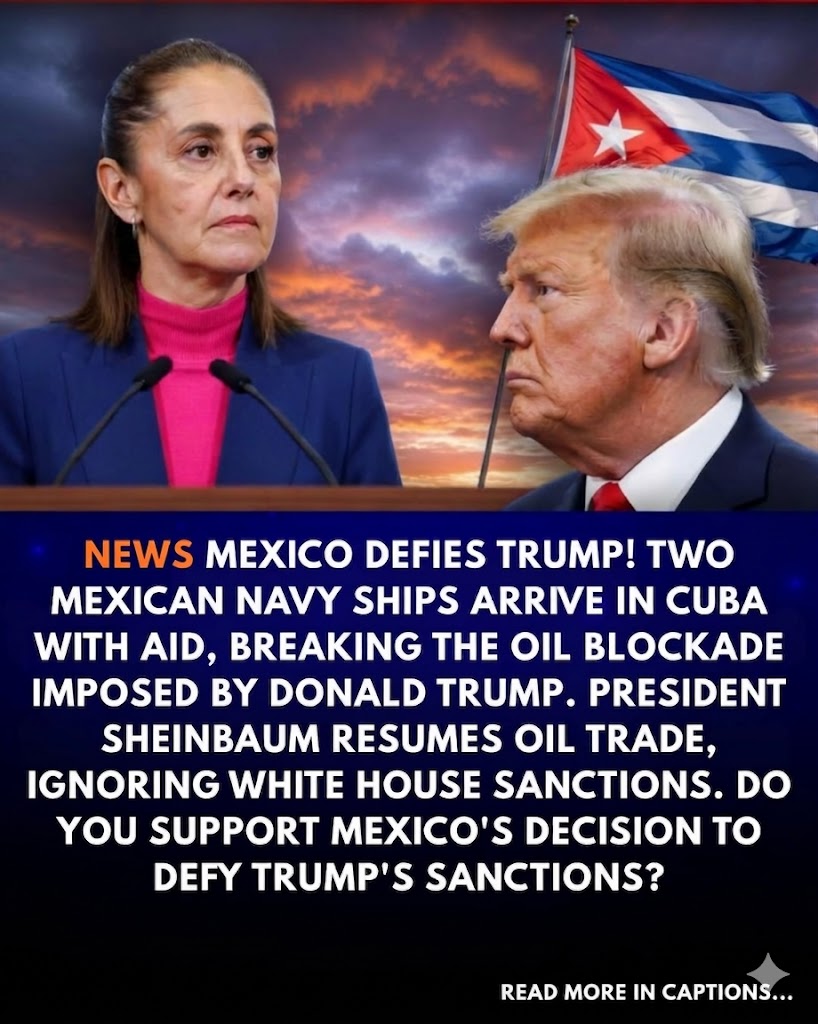
Caribbean Tensions Rise as Mexico Sends Humanitarian Aid to Cuba
A developing situation in the Caribbean is attracting growing international attention, as Mexico takes steps that could influence regional diplomacy and economic relations. Mexico has recently dispatched naval vessels carrying humanitarian supplies to Cuba, a move that comes at a time when U.S. policies continue to restrict certain types of trade with the island, particularly in the energy sector.
The shipment is being framed by Mexican officials as part of an effort to provide support to communities facing shortages of essential resources. This single decision sits at the intersection of humanitarian concern, national sovereignty, and great-power politics, making it one of the most closely watched developments in the region.
Mexico's Humanitarian Mission
The decision was made under the leadership of Claudia Sheinbaum, who has reiterated Mexico's commitment to maintaining an independent foreign policy. According to official statements, the aid shipments are intended to address humanitarian concerns, including access to fuel and basic goods, while also reinforcing Mexico's long-standing diplomatic approach of non-intervention and cooperation.
Cuba has faced persistent shortages of essential resources, with energy supplies among the most critical. When a nation struggles to keep its power grid running and its people supplied with basic goods, humanitarian aid becomes a matter of daily survival for ordinary citizens. Mexico's naval vessels carrying supplies represent a tangible response to that need.
Mexico's approach reflects a diplomatic tradition that stretches back decades. The country has long maintained relations with Cuba even during periods when other nations in the hemisphere did not, positioning itself as a bridge-builder rather than a participant in isolation strategies. This shipment continues that tradition.
The U.S. Policy Context
On the other hand, policies associated with Donald Trump have emphasized economic pressure on Cuba, including measures affecting oil and energy flows. These actions are part of a broader framework aimed at encouraging political and economic changes on the island. U.S. officials have historically viewed such restrictions as a strategic tool, though they have also been the subject of international debate.
The U.S. embargo on Cuba is one of the longest-standing trade restrictions in modern history, and debates over its effectiveness and humanitarian impact have continued for generations. Supporters argue that economic pressure is necessary to push for democratic reforms. Critics contend that the restrictions primarily harm ordinary Cuban citizens while doing little to change the government.
Mexico's aid shipment exists within this contested landscape. By providing humanitarian supplies, Mexico is not directly challenging U.S. policy, but it is demonstrating that nations can pursue independent approaches to the same situation.
A Delicate Balance
Mexico's latest move highlights a complex balance between humanitarian priorities and geopolitical considerations. Analysts suggest that while the shipments may not immediately lead to a major escalation, they do represent a significant moment in regional relations. Actions like these can influence how countries navigate sovereignty, cooperation, and compliance with international expectations.
For Mexico, the calculation involves multiple factors. There is the genuine humanitarian concern for Cuban communities facing shortages. There is the principle of an independent foreign policy, which resonates strongly with Mexico's political identity. And there is the practical reality of managing relations with the United States, Mexico's largest trading partner and most important bilateral relationship.
Navigating these competing pressures requires careful diplomacy. Mexico must demonstrate that humanitarian aid is just that, aid, while reassuring Washington that it is not undermining broader regional strategies. So far, Mexican officials have framed the shipments squarely in humanitarian terms.
Broader Global Trends
The situation reflects broader global trends, where nations are increasingly asserting their autonomy in foreign policy decisions, even when those decisions intersect with the interests of larger powers. Mexico's approach may resonate with other countries that prioritize humanitarian engagement while maintaining independent diplomatic positions.
Around the world, middle powers are becoming more assertive in charting their own courses. From Latin America to Southeast Asia to Africa, nations are resisting binary choices between competing powers and instead pursuing policies based on their own interests and values. Mexico's Cuba shipment fits squarely within this trend.
This assertion of autonomy doesn't necessarily mean confrontation. Often, it means finding space for independent action within existing relationships. Mexico can maintain its deep economic partnership with the United States while still pursuing its own diplomatic priorities in the Caribbean.
What Comes Next
Experts point out that the long-term impact will depend on how all parties respond. Diplomatic channels, economic measures, or public statements could shape the next phase of this situation. Historically, similar developments have sometimes led to negotiations and adjustments rather than immediate escalation.
Several scenarios are possible. The shipments could proceed without incident, establishing a precedent for ongoing humanitarian cooperation. They could prompt diplomatic discussions between Mexico and the United States about the boundaries of acceptable engagement with Cuba. Or they could become a flashpoint if any party decides to escalate.
For now, the international community continues to observe closely, with attention focused on potential responses, the stability of regional trade relationships, and the ongoing needs of people affected by resource shortages.
The Human Stakes
Behind the diplomatic analysis are real people. Cuban families dealing with power outages, fuel shortages, and limited access to basic goods are the ultimate stakeholders in this situation. Whatever the geopolitical implications, the immediate effect of Mexico's shipment is that supplies reach communities that need them.
This human dimension is worth keeping in focus. International relations can feel abstract, but humanitarian aid is concrete: fuel for generators, goods for families, relief for communities under strain. Whatever one's views on the broader policies involved, the value of easing human suffering is hard to dispute.
As global dynamics evolve, situations like this underscore the importance of dialogue, cooperation, and carefully balanced policy decisions in addressing both humanitarian concerns and international relations.
Frequently Asked Questions
Why is Mexico sending aid to Cuba?
Under President Claudia Sheinbaum's leadership, Mexico has dispatched naval vessels with humanitarian supplies to address shortages of fuel and basic goods in Cuba. Mexican officials frame this as humanitarian support consistent with Mexico's long-standing policy of non-intervention and independent diplomacy.
How does this relate to U.S. policy toward Cuba?
U.S. policies, particularly those associated with Donald Trump, have emphasized economic pressure on Cuba, including restrictions affecting oil and energy flows. Mexico's shipment represents an independent approach that prioritizes humanitarian engagement alongside these existing restrictions.
Could this lead to a major escalation?
Analysts suggest the shipments are unlikely to cause immediate escalation but represent a significant moment in regional relations. The long-term impact depends on how all parties respond through diplomatic channels, economic measures, or public statements.
What is Mexico's historical relationship with Cuba?
Mexico has long maintained diplomatic relations with Cuba, even during periods when other hemispheric nations did not. This reflects Mexico's tradition of an independent foreign policy and non-intervention, which the current aid shipment continues.
What are the broader implications?
The situation reflects a global trend of nations asserting foreign policy autonomy. It highlights the ongoing tension between humanitarian priorities and geopolitical strategies, and underscores the importance of dialogue in managing complex international relationships.



