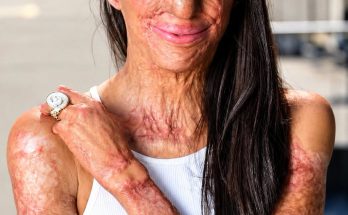
Exploring the Fascinating Transformation of 'Cat Man': His Journey Before and After Extreme Plastic Surgeries
Few body transformations have fascinated and unsettled the public quite like the man known as "Cat Man." Starting from a conventional appearance, he underwent a series of extreme procedures aimed at giving him feline features, and the result became one of the most discussed examples of extreme body modification in modern culture. His story raises questions that go far beyond one individual: why do people reshape their bodies so radically, what are the risks, and how does society respond?
Before the Transformation
Before his surgeries, "Cat Man" reportedly had a conventional appearance, unremarkable in the way most people's looks are unremarkable. What changed was a deep desire to alter his appearance toward a feline-inspired aesthetic. That desire eventually led him to pursue numerous extensive procedures, including facial modifications, skin treatments such as tattooing and piercings, and surgical alterations intended to reshape features like the eyes, nose, and lips.
The "before" photos that circulate online show the starting point, but they tell us almost nothing about the motivation. Was it art? Identity? A wish for fame? The honest answer is that observers cannot know for certain, and responsible coverage of this story should not invent a backstory. What we can do is look at what research and the body modification community itself say about why people pursue such transformations.
Extreme Body Modification: A Wider Culture
"Cat Man" did not emerge from nowhere. He is part of a broader body modification culture that has existed for decades, alongside tattoo artists, piercers, suspension practitioners, and surgical body artists. Within this culture, the body is treated as a canvas, and radical alteration is seen as a form of self expression as legitimate as any art form.
Famous examples of extreme modification include people who have altered themselves to resemble tigers, lizards, parrots, and even fantasy creatures. Some practitioners pursue animal-inspired looks through tattooing, subdermal implants, ear shaping, tongue splitting, and facial surgery. Each case is different, but certain themes recur:
- Identity. For many, modification is about aligning the outer body with an inner sense of self.
- Artistic expression. The body becomes a living project, developed over years with different artists.
- Community. The modification community offers belonging and recognition to people whose appearance sets them apart from mainstream society.
- Attention and fame. Extreme appearance can bring media coverage, and some individuals welcome it while others resent it.
It is important not to reduce every case to a single motive. Psychologists who study body modification emphasize that motivations are usually layered and personal, and armchair diagnosis of strangers is neither accurate nor fair.
The Procedures Involved
While the exact list of procedures in any extreme transformation is rarely confirmed publicly in full, the types of modifications associated with feline-inspired looks generally include:
- Extensive tattooing, including facial tattoos that mimic fur patterns.
- Piercings and implants, such as whisker-like facial piercings.
- Cosmetic surgeries aimed at reshaping facial features, sometimes repeated over many years.
- Dental and lip modifications to suggest feline facial structure.
Each of these carries medical risks, and the risks multiply when procedures are repeated. Infections, scarring, nerve damage, and complications from anesthesia are real concerns with any surgery, and extreme or experimental procedures can carry additional dangers when performed outside mainstream medical practice.
The Psychological Side
The public often asks whether wanting such an extreme transformation indicates a psychological problem. Mental health professionals generally caution against simple answers. Body modification, even extreme, is not in itself a mental illness. However, researchers note that it is worth distinguishing between thoughtful, long-planned modification carried out with informed consent and impulsive decisions driven by distress, identity crises, or a desire to shock.
Some relevant psychological concepts that come up in discussions of extreme appearance change include:
- Body image and self perception. Most people have some gap between how they look and how they wish to look. For most, the gap is small. For some, it is large enough to drive major change.
- Body dysmorphic concerns. When preoccupation with appearance causes significant distress or interferes with daily life, professional support can help, regardless of whether modification is pursued.
- Sensation seeking and identity exploration. Some people are drawn to radical self reinvention as a way of testing limits and asserting autonomy.
None of this can be applied to a specific person without a clinical assessment. The point is that extreme transformation exists at the intersection of art, identity, medicine, and psychology, and each case deserves more nuance than a headline gives it.
Public Reaction: Fascination and Judgment
"Cat Man" became a media figure precisely because his appearance provokes strong reactions. Talk shows, documentaries, and online forums have discussed his transformation for years, often swinging between fascination and mockery. This is a consistent pattern: people with extreme modifications report that strangers stare, photograph them without permission, and assume the right to ask invasive questions.
Media coverage itself becomes part of the story. For some modified individuals, attention is a welcome validation of their project. For others, it is an exhausting side effect. Either way, the public conversation tends to say more about society's relationship with bodily norms than about the person being discussed.
The Risks Worth Taking Seriously
Whatever one's view of extreme body modification as art or identity, the medical risks deserve honest discussion:
- Surgical complications. Every surgery carries risks of infection, bleeding, scarring, and anesthesia reactions. Multiple procedures compound these risks.
- Irreversibility. Many extreme modifications cannot be undone. What feels right at thirty may feel different at fifty.
- Unregulated practitioners. Procedures performed by unlicensed providers or in unsafe settings dramatically increase the danger.
- Social and economic costs. Visible extreme modification can affect employment, relationships, and daily social life in ways that are hard to reverse.
- Mental health. Anyone considering radical, permanent change should have space to explore their motivations, ideally with a professional who is neither judgmental nor encouraging by default.
This is not an argument for or against modification. It is an argument for informed, careful decision making and for access to safe medical care for those who choose it.
How Attitudes Are Changing
Public attitudes toward body modification have shifted considerably. Tattoos and piercings, once stigmatized, are now mainstream in much of the world. Even more extreme modifications are discussed with greater nuance than they once were, though they remain controversial. The internet has allowed modified individuals to find community, share experiences, and push back against mockery in ways that were impossible a generation ago.
At the same time, the rise of cosmetic surgery as a consumer industry has blurred the line between "normal" enhancement and "extreme" transformation. When millions of people get filler, implants, and facelifts, the question of where self improvement ends and radical reinvention begins becomes harder to answer, and arguably less interesting than the question of whether each person made their choice freely and safely.
Frequently Asked Questions
What procedures did "Cat Man" have?
Public reports describe facial surgeries, extensive tattooing, piercings, and other modifications aimed at a feline appearance. A complete, verified list has never been published.
Why do people pursue extreme body modification?
Motivations vary widely and can include identity, artistic expression, community belonging, and personal meaning. Researchers emphasize that each person's reasons are individual.
Is extreme body modification safe?
Any surgery carries risk, and extreme or repeated procedures carry more. Choosing qualified, licensed practitioners and understanding the permanence of the changes are essential.
Can extreme modifications be reversed?
Some, like certain piercings, can be reversed. Many surgical modifications and extensive tattoos are permanent or only partially reversible.
A Story That Keeps Asking Questions
The "Cat Man" transformation endures in public memory because it sits at the boundary of so many debates: art versus excess, identity versus impulse, acceptance versus concern. Whatever one thinks of the result, the story is a reminder that bodies carry meaning, and that the decision to rewrite that meaning permanently deserves to be understood in all its complexity rather than reduced to a spectacle.