He Asked Me to Split a Costly Valentine's Dinner, Then Left a Note That Changed Everything
Valentine's Day often comes with high expectations. For many couples, it is a chance to celebrate their relationship with a memorable evening together. A story shared online recently captured this tension perfectly: one woman expected nothing more than a romantic dinner when her boyfriend invited her to an upscale restaurant. Instead, the night took an unexpected turn that left her questioning everything, until a handwritten note changed her perspective.
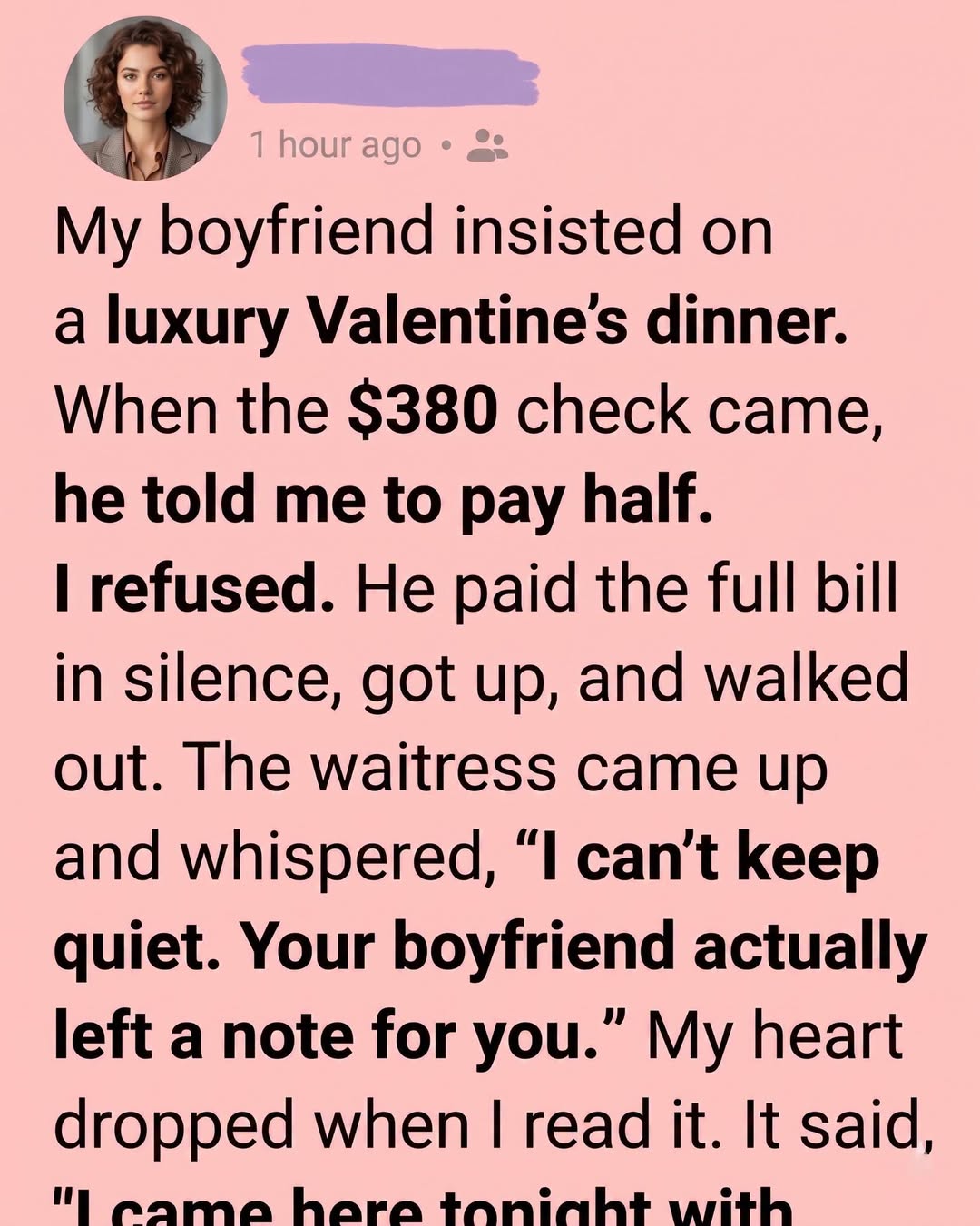
According to the story she shared, her boyfriend insisted on celebrating at a luxury restaurant. She was excited and assumed he had planned a special evening. The restaurant had an elegant atmosphere, the food was excellent, and their conversation flowed naturally. Everything seemed to be going perfectly until the bill arrived at the end of the meal. The total came to $380. She expected him to take care of the bill since he had suggested both the restaurant and the Valentine's celebration. Instead, he calmly looked at her and asked if she would pay half.
The request caught her completely by surprise. She explained that she had not planned for such an expensive dinner and had never expected to split the cost. Feeling uncomfortable, she politely refused. Rather than arguing, her boyfriend quietly paid the full amount, thanked the restaurant staff, stood up, and walked out without saying another word. She remained seated, confused about what had just happened, wondering whether the evening had ended their relationship or something else was going on.
A few moments later, the waitress approached her table and explained that her boyfriend had left behind a handwritten note. The note revealed that the evening had never been about the money. Instead, he wanted to understand how they handled unexpected situations together. He explained that healthy relationships require honest communication, teamwork, and the ability to discuss difficult topics openly. He admitted that asking her to split the bill had been a spontaneous decision and apologized if it had caused embarrassment or discomfort, ending with the hope that they could keep building something honest together.
Whether or not every detail of a story like this happened exactly as told, it struck a nerve because it touches on something real: money is one of the most sensitive topics in any relationship, and how couples handle it says a lot about their future.
Why Money Conversations Are So Hard for Couples
Money is rarely just about money. It is tied to values, upbringing, security, and pride. One partner may have grown up in a household where the man always paid, while the other believes deeply in splitting everything evenly. Neither view is wrong, but unspoken assumptions can turn an ordinary dinner into an emotional minefield.
Research on relationships consistently finds that financial disagreements are among the strongest predictors of relationship stress. The problem is usually not the dollar amount but the surprise: discovering mid-relationship that you and your partner have completely different expectations about spending, saving, and sharing costs.
The Real Lesson: Communication Before the Bill Arrives
The most useful takeaway from this story is not about who should pay. It is about the value of talking openly before assumptions collide. Here are practical ways couples can handle money with less friction:
- Talk about money expectations early. You do not need a spreadsheet on the third date, but honest conversations about who pays, how you split costs, and what feels fair should happen long before a $380 bill lands on the table.
- Set a comfort range for dates. Agree on what "a nice dinner out" means financially for both of you. If one partner suggests an upscale restaurant, it is fair to clarify expectations in advance.
- Never use money as a test. Springing a surprise "test" on a partner, even with good intentions, breeds resentment rather than insight. If you want to know how someone handles difficult conversations, start one directly instead of staging one.
- Respect a "no" without punishment. In the story, the boyfriend's silent walkout was what truly stung, more than the bill itself. Disagreeing about money is normal; withdrawing affection as a consequence is not healthy communication.
- Apologize when a spontaneous decision lands badly. To his credit, the note acknowledged that the request was impulsive and apologized for the discomfort. Owning a misstep quickly is a genuinely strong relationship skill.
Who Should Pay? There Is No Single Right Answer
Different couples land in different places, and all of them can work:
- The inviter pays. A classic and simple rule: whoever suggests the outing covers it, or at least offers to.
- Splitting evenly. Many modern couples default to 50/50 and find it fair and uncomplicated.
- Taking turns. Alternating who treats keeps things balanced without turning every meal into accounting.
- Proportional to income. When there is a big earnings gap, splitting costs proportionally can feel more equitable than a strict half-and-half.
- One shared approach. Some couples pool resources or designate one person to handle dining out while the other covers something else.
The "right" system is whichever one both partners discuss and agree on without resentment.
Red Flags vs. Normal Friction
A single awkward moment over a bill is not a verdict on a relationship. But patterns matter. Watch for these warning signs:
- Financial secrecy: hiding purchases, debts, or accounts from a partner.
- Control through money: using income as leverage to dictate decisions.
- Repeated "tests": manufacturing situations to judge a partner instead of communicating directly.
- Disrespect after disagreement: silent treatment, public embarrassment, or walking out as a response to a money discussion.
Occasional discomfort while figuring out shared finances is normal. A pattern of manipulation or contempt is not.
How to Have the Money Talk Without a Fight
If this story inspires you to bring up finances with your own partner, keep it constructive:
- Choose a calm moment, not the middle of a restaurant or during an argument.
- Use "I" statements: "I feel anxious when spending is unplanned" lands better than "You always overspend."
- Share your background: explaining how money worked in your family growing up helps your partner understand your instincts.
- Focus on the future: frame it as building a system together, not auditing the past.
- Write it down: even a simple shared note about your agreements prevents future misunderstandings.
Final Thoughts
A handwritten note cannot undo an awkward evening, but honest words after a misstep can genuinely change a relationship's direction. The deeper truth in this story is one worth keeping: healthy relationships are not built on perfect evenings or perfectly split bills. They are built on honest communication, teamwork, and the willingness to discuss difficult topics openly, even when it is uncomfortable. Talk about money before the bill arrives, treat your partner's perspective with respect, and you will find that the dinner matters far less than the conversation around it.