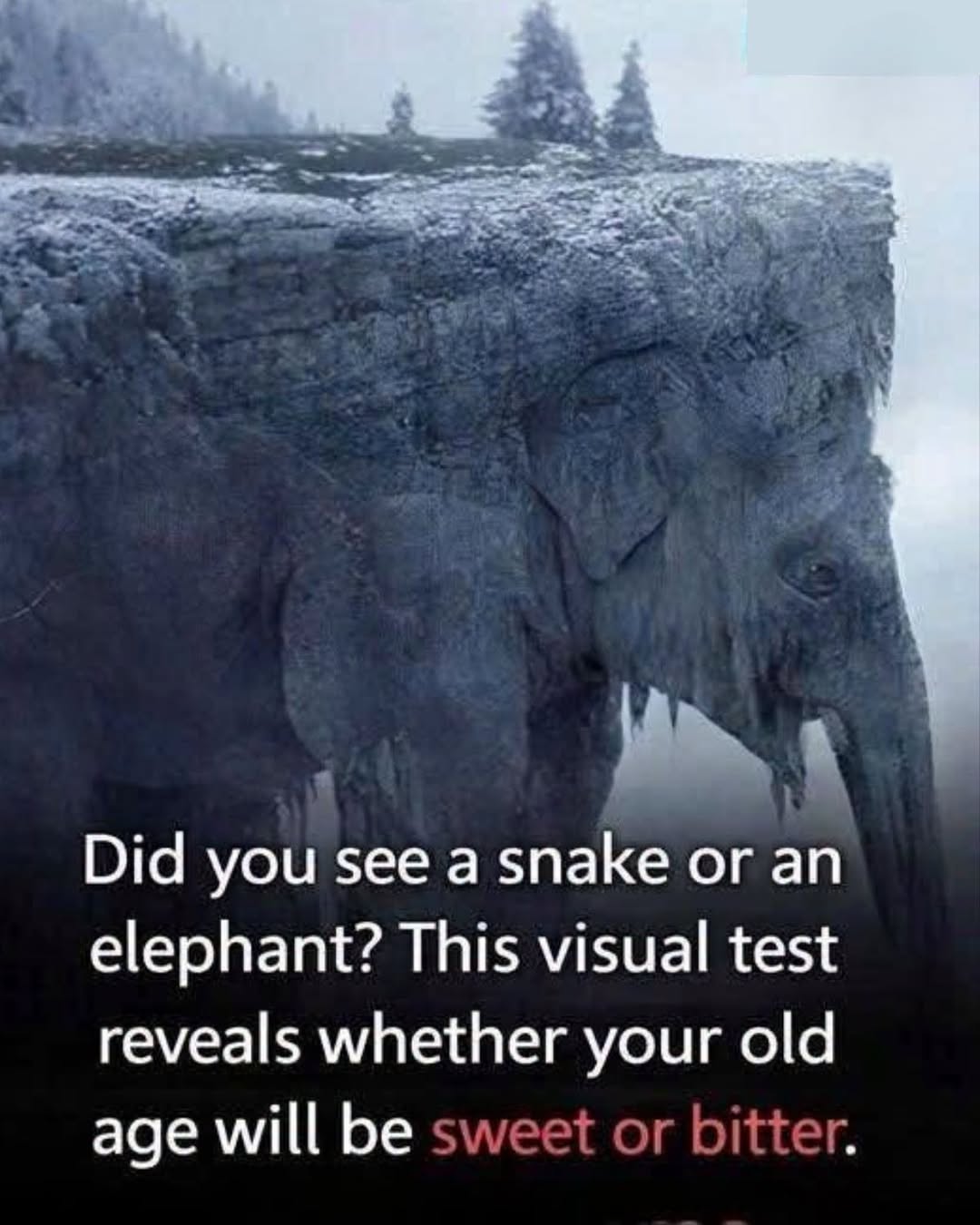
Optical illusions have fascinated people for generations because they remind us that our brains don’t always interpret images in the same way. A single picture can contain more than one recognizable object, and what catches your attention first often depends on how your brain processes visual information.
One illusion that has recently gained attention invites viewers to find either a snake or an elephant hidden within the same image. Some people notice the snake immediately, while others instantly recognize the elephant. A few viewers even spot both images within seconds.
While many posts online suggest that your first impression reveals personality traits or predicts how you think about the future, there is no scientific evidence that a single optical illusion can accurately measure personality or forecast behavior. Instead, these images are best enjoyed as entertaining brain teasers that demonstrate how perception works.
If You Saw the Snake First
If the snake stood out before anything else, it may simply mean that your eyes were drawn to the image’s curves, patterns, or fine details before recognizing the larger picture.
Many people enjoy interpreting this result as a sign of being observant and attentive to small details. Although this isn’t scientifically proven, it can be a fun way to reflect on your own thinking style.
People who notice smaller features first often enjoy solving puzzles, spotting hidden objects, and carefully examining information before reaching a conclusion.
If You Saw the Elephant First
If the elephant appeared first, your brain may have focused on the overall shape instead of the smaller details.
Some people associate this with seeing the “big picture” or quickly recognizing familiar forms. Again, this interpretation is for entertainment rather than a scientific assessment.
Recognizing large patterns before fine details is simply another way the brain can process visual information, and neither approach is considered better than the other.
If You Saw Both Images
Some viewers quickly notice both the snake and the elephant.
This usually shows that once the brain recognizes one image, it becomes easier to switch between different interpretations. Many optical illusions are designed to encourage this type of flexible visual processing.
Being able to alternate between both images demonstrates how adaptable our perception can be when presented with the same visual information.
If You Didn’t See Either Image
Don’t worry if neither image appeared right away.
Optical illusions affect everyone differently. Factors such as viewing distance, screen brightness, image size, lighting, and even how long you look at the picture can all influence what you notice first.
Sometimes taking a short break or looking at the image from a different angle makes the hidden figures much easier to recognize.
Why Do Optical Illusions Work?
Optical illusions take advantage of the way the brain organizes visual information. Rather than examining every detail individually, the brain quickly searches for patterns that make sense based on previous experiences.
In images containing more than one possible interpretation, the brain may settle on one version before recognizing another. This phenomenon is known as ambiguous figure perception, where a single image can be understood in multiple valid ways.
Several factors can influence what someone notices first. Viewing distance, image size, lighting conditions, screen quality, recent visual experiences, attention to detail, and individual differences in perception can all affect which image stands out first. These influences explain why two people can look at exactly the same picture yet describe completely different things.
The Symbolism Behind the Snake
Throughout history, snakes have carried many symbolic meanings in different cultures.
They are often associated with transformation because they shed their skin. In some traditions, they represent wisdom or knowledge, while in others they symbolize caution or protection. Medical symbols such as the Rod of Asclepius also feature a snake, representing healing and medicine.
These meanings vary widely across cultures and should be viewed as cultural symbolism rather than factual personality indicators.
The Symbolism Behind the Elephant
Elephants have long represented qualities such as strength, wisdom, patience, and loyalty in many parts of the world.
They are admired for their intelligence, remarkable memory, and strong social bonds. In several cultures, elephants are also considered symbols of prosperity, resilience, and good fortune.
Like snake symbolism, these interpretations are based on tradition and cultural history rather than scientific research.
What Can This Illusion Really Tell You?
The most interesting lesson from this illusion isn’t whether you saw a snake or an elephant first—it’s that our brains can interpret the same image in different ways.
Visual perception is influenced by many factors, and there is rarely one “correct” way to experience an optical illusion. These images remind us that people naturally notice different details and that our minds are remarkably flexible.
Rather than viewing the illusion as a personality test, think of it as a fascinating demonstration of how the human brain processes information.
Final Thoughts
Whether you spotted the snake, the elephant, both images, or neither at first glance, you’ve experienced one of the most interesting aspects of human vision: perception is not always the same for everyone.
Optical illusions continue to entertain millions of people because they challenge our assumptions and encourage us to look at familiar images from a different perspective.
So, what did you see first—the snake or the elephant? Share your answer with friends and compare your results. You may be surprised to discover how differently people interpret the very same image.