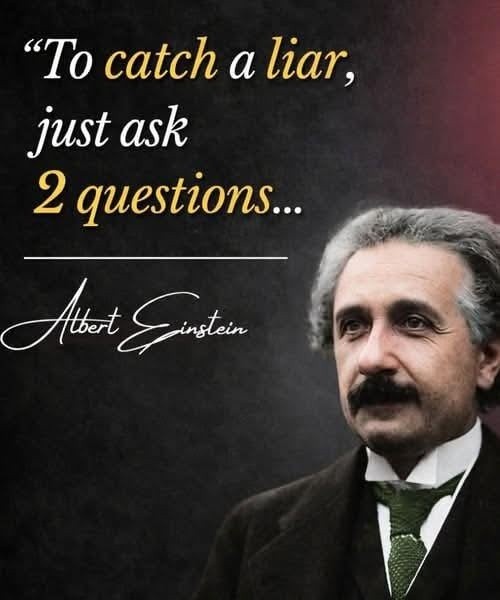
Trust is an important part of every relationship, whether personal or professional. While most people occasionally tell small untruths, some individuals develop a pattern of frequent and habitual dishonesty. Understanding the common signs associated with chronic lying can help you evaluate situations more carefully and make informed decisions about whom to trust.
1. Your Intuition Notices Inconsistencies
Have you ever had a conversation that simply didn’t feel right? Sometimes, before you can identify a specific issue, you may sense that something is off.
According to mental health professionals, people who engage in habitual lying may repeat their stories so often that they begin to believe their own version of events. Because they appear confident and convincing, it can be difficult to spot inaccuracies immediately.
However, subtle inconsistencies may trigger a feeling of uncertainty. Details may not fully align, explanations may seem incomplete, or facts may change over time. While intuition alone should not be considered proof, paying attention to these feelings can encourage you to look more closely at the information being presented.
When evaluating someone’s statements, it is helpful to focus on facts, patterns, and consistency rather than relying solely on a single conversation. Over time, repeated contradictions may provide a clearer picture of whether someone is being truthful.
Key Takeaway
A common early warning sign of chronic dishonesty is a persistent sense that details do not fully match up. If you frequently notice contradictions or changing stories, it may be worth examining the situation more carefully before placing complete trust in the information you receive.