Michael Hoskin Had Already Made a Remarkable Decision
One of the most moving details in the story happened while Pitt was still in intensive care.
According to accounts later reported by Australian media, Hoskin had purchased a diamond ring while Pitt was still fighting for her life.
He reportedly showed the ring to his father beside Pitt’s hospital bed and explained that if she survived, he intended to marry her.
Think about the uncertainty surrounding that moment.
Nobody could simply assume that everything would return to normal.
Nobody knew exactly what Pitt’s recovery would look like.
There was no guarantee that the athletic lifestyle she once enjoyed would ever be possible again.
Her physical appearance would change.
Her abilities would change.
Her daily life would change.
Yet Hoskin’s feelings did not depend on knowing what Pitt would look like afterward or what she would be able to do.
He was thinking about the person he loved.
Pitt survived.
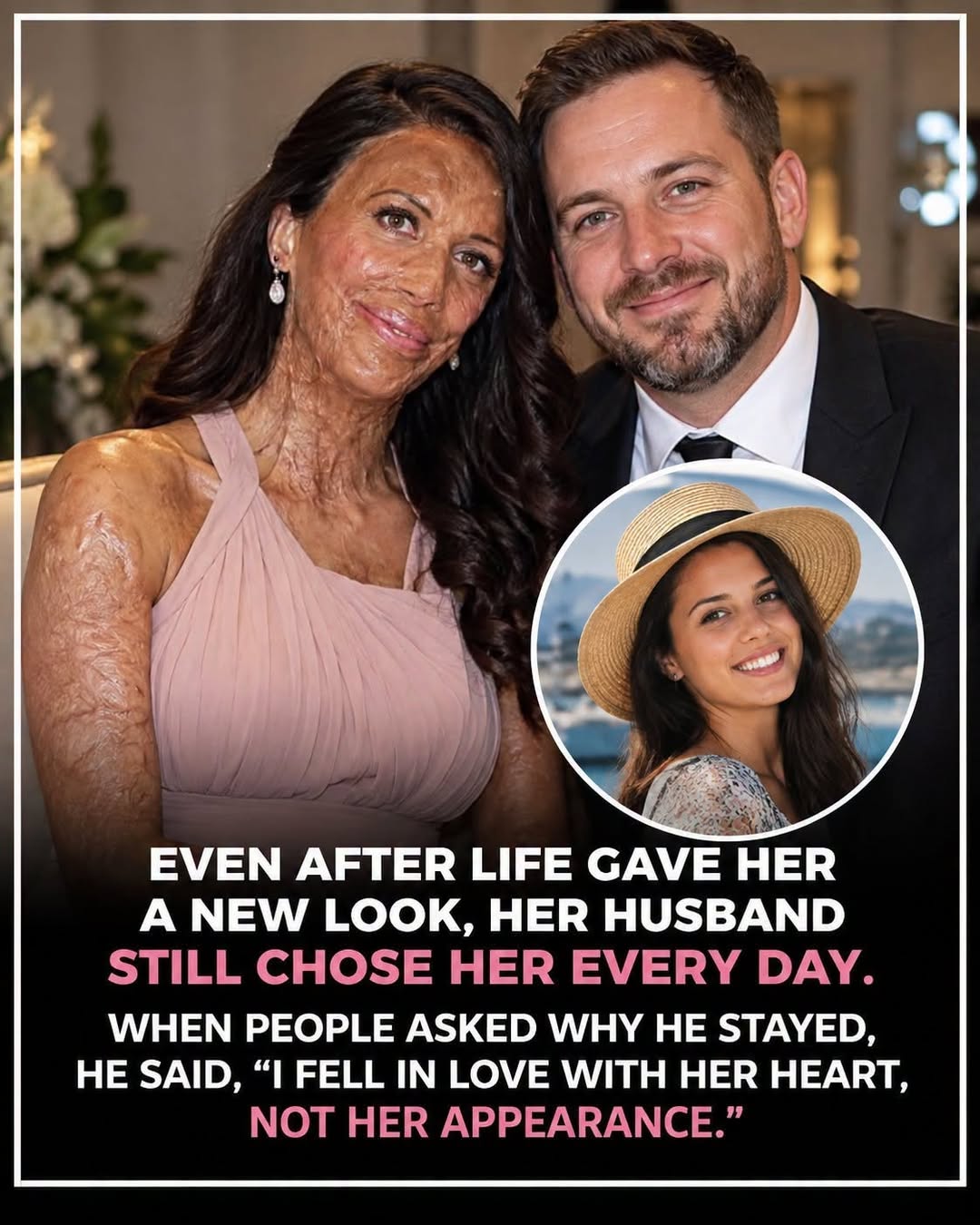
And in 2015, Hoskin proposed.
That decision has become one of the most powerful real-life details associated with their relationship because it demonstrates commitment through action rather than relying only on a memorable sentence.
Recovery Was a Long and Difficult Journey
Survival was only the beginning.
Pitt’s recovery was not a quick process in which she simply left the hospital and returned to her previous life.
She faced years of medical treatment and rehabilitation.
Her official biography describes roughly two years of intensive recovery and around 100 medical procedures. The National Portrait Gallery has documented more than 100 surgeries and hundreds of days spent in hospital. The exact figures can differ depending on how procedures are categorized, but the overall scale of her treatment is unmistakable.
For someone who had once been comfortable with running, training, and endurance activities, the physical challenges must have represented a dramatic change.
Tasks that many people perform without thinking could require patience and determination.
Recovery also involved learning to live with permanent changes.
There was no simple moment when everything suddenly became normal again.
Instead, progress came through countless smaller steps.
Some days could bring improvement.
Other days could bring frustration.
And after such a devastating experience, rebuilding confidence could be just as important as rebuilding physical strength.
She Refused to Let Her Accident Become the End of Her Story
One of the most remarkable parts of Pitt’s journey is what happened after the initial recovery period.
She gradually began returning to demanding physical challenges.
Rather than seeing her life as permanently defined by rehabilitation, she began looking for new goals.
She took part in fundraising adventures and walked sections of some of the world’s most famous trails.
Among them were parts of the Great Wall of China, the Inca Trail, and the Kokoda Track.
These efforts were connected to fundraising for ReSurge International, and the National Portrait Gallery reports that her efforts raised more than $1 million for the organization.
These accomplishments are especially meaningful when viewed alongside the severity of her earlier injuries.
Someone who had spent years undergoing medical treatment was once again taking on demanding physical challenges.
But Pitt’s story was about more than proving that she could physically complete difficult journeys.
She was also demonstrating that a life-changing event did not have to eliminate the possibility of future ambitions.
Then Came the Ironman
In 2016, Pitt reached another extraordinary milestone.
She competed in Ironman Australia and later participated in the Ironman World Championship in Hawaii.
For any athlete, an Ironman event is a serious test of endurance.
For Pitt, the achievement carried a completely different significance.
Years earlier, she had been fighting for survival in a hospital.
Now she was competing in one of the world’s most demanding endurance events.
The accomplishment did not mean that the past had disappeared.
It did not erase her injuries or the years of treatment.
Instead, it showed that her future could contain experiences that once seemed impossible.
Her story had moved beyond simply recovering.
She was creating a new version of her life.
Why the Story Is About More Than Physical Appearance
Much of the public discussion surrounding Pitt and Hoskin focuses on appearance.
That is understandable.
The accident caused profound physical changes, and Hoskin’s reported commitment during that period has naturally attracted attention.
But focusing only on appearance risks missing the bigger story.
Pitt was never simply a physical appearance.
She was a person with ambitions, intelligence, determination, humor, relationships, and goals.
Before the accident, she had studied engineering and science and worked in the mining industry.
She was also an athlete who had built her life around challenging herself physically.
After the accident, those qualities did not disappear.
They took on a different form.
The determination that once helped her prepare for endurance competitions became part of her recovery.
The discipline she had developed through sport helped her approach difficult physical challenges.
And eventually, her experiences became part of the message she shared with other people.
A New Career Emerged From an Unexpected Chapter
Pitt’s post-accident life developed into something much broader than rehabilitation.
She became an author, speaker, coach, and advocate.
Her official website says that she has written four bestselling books and coached tens of thousands of people through her programs. Her work has focused on areas including confidence, resilience, wellbeing, and navigating difficult circumstances.
That career represents another important part of her transformation.
Her story could have remained focused entirely on the accident.
Instead, she began using her experiences to communicate with people who were dealing with their own challenges.
The tragedy became one part of her history rather than the complete definition of who she was.
Love Was Only One Part of Their Story
The relationship between Pitt and Hoskin is often presented as a story about romantic love.
And it certainly is.
But there is another dimension to it: partnership.
When a person experiences a life-changing injury, the relationship around them can also change.
Plans may have to be reconsidered.
Daily routines can become more complicated.
Physical limitations can affect ordinary activities.
Emotional challenges can affect both people.
In that context, commitment means much more than saying the right thing.
It means being present.
It means adapting.
It means accepting that the future may not look like the future you originally imagined.
Hoskin’s decision to purchase a ring while Pitt was still in intensive care has become a powerful symbol of that commitment.
The Viral Quote May Not Be the Most Important Part
The phrase about marrying Pitt’s “soul” and “character” has traveled widely online.
It is easy to understand why.
It captures, in a few words, a deeply emotional idea: that genuine love should not disappear simply because someone’s appearance changes.
But because the precise source and wording of the quotation are difficult to establish, the story is stronger when it is told through documented events rather than presented as a perfectly verified quote.
The facts themselves are compelling.
Hoskin bought a ring during Pitt’s hospitalization.
He hoped to marry her if she survived.
Pitt survived.
He later proposed.
And Pitt went on to rebuild her life in ways that few people could have predicted during those darkest days.
Sometimes the real story is more powerful than the viral version.
Rebuilding Identity After Trauma
One of the biggest challenges after a major life-changing event can be figuring out who you are afterward.
Pitt had once been an athlete.
She had a career.
She had physical abilities that she had spent years developing.
After the accident, many of those things were suddenly affected.
But identity is not limited to appearance or physical ability.
Over time, Pitt developed new roles.
She became a writer.
She became a speaker.
She became a coach.
She became an advocate.
She became someone whose experiences could help others think differently about resilience and difficult circumstances.
Her journey therefore became less about returning to the exact person she had been before and more about discovering who she could become afterward.
A Different Definition of Strength
Pitt’s story also offers a broader lesson about strength.
Strength is often associated with physical ability.
For an endurance athlete, that definition can be particularly powerful.
But her experience shows that strength can take many forms.
Sometimes strength means completing a race.
Sometimes it means getting through another difficult medical procedure.
Sometimes it means learning a new way to perform an ordinary task.
Sometimes it means accepting help from someone you trust.
And sometimes it means deciding that your future can still contain meaningful goals after your life has changed dramatically.
Pitt experienced all of these forms of strength.
Her Story Continued Far Beyond the Hospital
The hospital was only one chapter.
Her return to challenging physical activities showed that recovery could lead to new opportunities.
Her fundraising work showed that her experiences could benefit other people.
Her books and public speaking created another avenue for sharing what she had learned.
Her coaching work allowed her to communicate directly with people looking for guidance and encouragement.
This is why describing Pitt simply as a survivor does not fully capture her story.
Survival was the beginning.
What came afterward was the process of rebuilding, adapting, and creating a meaningful life.
A Relationship That Became Part of a Larger Story
Michael Hoskin’s role in Pitt’s journey is one reason their relationship has received so much public attention.
But the story is ultimately not just about a man staying with a woman after a terrible accident.
It is about two people whose relationship continued while one of them went through an extraordinary transformation.
The popular quote focuses on the idea of loving someone’s inner qualities.
The documented story gives that idea a real-world context.
There were hospital rooms, medical procedures, uncertain days, rehabilitation, difficult decisions, and eventually new goals.
Their relationship developed alongside all of those changes.
The Lesson Behind the Headlines
The most important lesson from Pitt’s story may not be about beauty or appearance at all.
It may be about the difference between loving the life someone had planned and loving the person themselves.
Life rarely follows a perfect plan.
People become sick.
Careers change.
Accidents happen.
Bodies change with age.
Unexpected responsibilities appear.
The people we love can become very different from the people we first met.
A strong relationship has to be capable of adapting to those changes.
Pitt and Hoskin’s story has resonated with so many people because it illustrates that idea in an unusually dramatic way.
More Than a “Before and After” Story
It would be easy to look at Pitt’s life as two separate periods: before the fire and after the fire.
But her story is more complicated than that.
The woman before the accident and the woman afterward are not two different people.
The qualities she possessed before the tragedy — determination, ambition, curiosity, and athletic discipline — became part of how she approached the enormous challenges that followed.
Her life changed.
Her appearance changed.
Her career changed.
Her priorities evolved.
But her identity continued to develop.
That is perhaps one of the most meaningful aspects of her journey.
What Makes Her Story So Inspiring
Pitt’s story is inspiring not because everything eventually became easy.
It is inspiring because the difficult parts were real.
Recovery took years.
Medical treatment was extensive.
Her physical abilities were dramatically affected.
She had to adapt to a future she had never planned for.
And yet, she continued moving forward.
She eventually returned to demanding physical activities, participated in major endurance events, raised substantial funds for charity, became an author and speaker, and built a career centered around resilience and wellbeing.
Her journey demonstrates that resilience does not mean pretending something terrible never happened.
It means learning how to live meaningfully after it did.
The Real Meaning of Their Love Story
The famous phrase associated with Michael Hoskin may never be completely verified in the exact form in which it is repeated online.
But the broader story remains powerful.
His decision to buy a ring while Pitt was still in intensive care is documented in accounts of their relationship.
His intention to marry her was made when the outcome was still uncertain.
Pitt survived, recovered through years of treatment, and went on to build a remarkable second chapter of her life.
Their story therefore does not need an exaggerated quotation to be meaningful.
The actions are enough.
Love is sometimes expressed through words.
But in difficult moments, it is often expressed through patience, presence, loyalty, and the decision to stay.
Turia Pitt’s life after the fire became much more than a story of what she had endured.
It became a story about what she was still capable of doing.
And alongside her, Michael Hoskin’s commitment became one of the most memorable parts of that journey.
Together, their story continues to remind readers that a person’s value cannot be measured by appearance alone — and that surviving a life-changing event can be the beginning of a completely new chapter rather than the end of the story.