
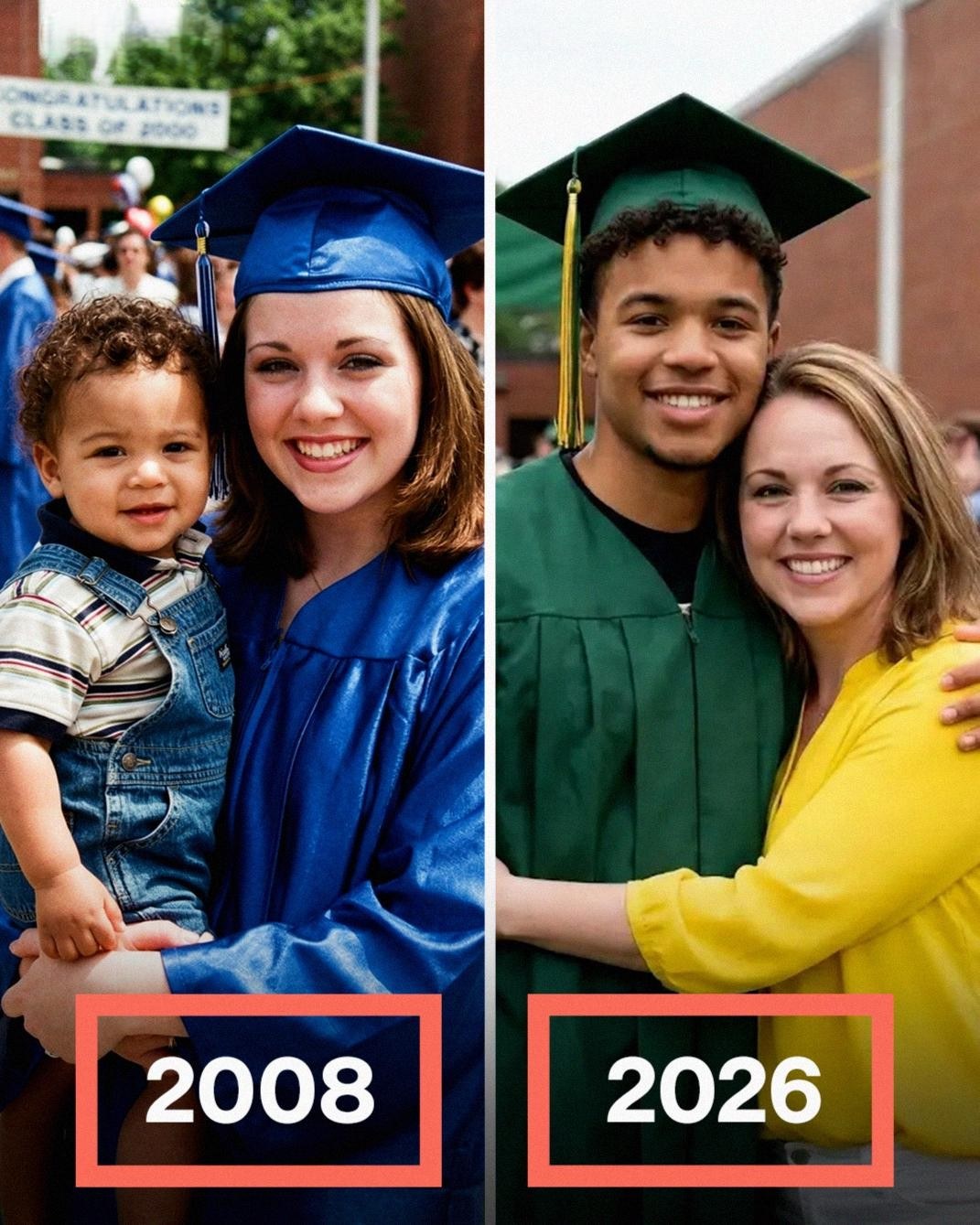
I Thought He Left A DNA Test Years Later Revealed a Different Truth
I was standing in my kitchen, carefully decorating a simple cake that read "Congrats Leo," when everything shifted. My son, now eighteen, walked in looking unusually tense. There was a seriousness in his expression that made me pause immediately. He asked me to sit down, and I could sense that something important was about to be shared.
He explained that he had recently taken a DNA test, hoping to learn more about the father he had never known. For years, I had believed that his father had simply walked away without explanation. That belief had quietly shaped how I understood our past and how I answered my son's questions as he grew up.
But what Leo told me next challenged everything I thought I knew. Through the test results, he had connected with a woman who said she was his aunt. At first, it felt hard to accept. The situation seemed sudden and unexpected. However, as we read her message more closely, certain details stood out in a way that felt genuine and difficult to ignore.
She shared that Leo's father had not chosen to disappear. According to her, he had been separated from us due to family pressure and circumstances beyond his control. Over the years, he had reportedly tried to reconnect, but those attempts never reached us.
This new perspective began to reshape a story I had believed for so long. Wanting clarity, we agreed to learn more, carefully and together.
The Story I Had Told Myself
For eighteen years, I carried a narrative: he left. It was simple, it explained the absence, and it protected me from more painful possibilities. When Leo asked about his father as a child, I gave him the version I believed true, that his father had walked away without explanation.
Narratives like this serve a purpose. They give shape to confusion. They let a single mother answer impossible questions with something coherent. But they also calcify. Over time, "he left" stopped being a hypothesis and became a fact in my mind, coloring how I saw the past and, subtly, how I saw myself.
Leo's DNA results cracked that narrative open. And with the crack came a disorienting mix of emotions: hope, anger, grief, and guilt. Hope that the truth might be kinder than I thought. Anger at the years lost. Grief for what could have been. Guilt for the story I had told my son.
How DNA Testing Rewrites Family Stories
Leo's experience is increasingly common. Millions of people have taken consumer DNA tests, and a significant number uncover surprises: unknown siblings, misattributed parentage, family secrets long buried.
The technology is straightforward. Autosomal DNA testing compares your genetic markers against vast databases of other testers, identifying relatives by shared DNA segments. A close match, like an aunt, is hard to dispute. The science does not lie, though interpreting what it means requires care.
What makes these discoveries so destabilizing is their authority. A DNA match is not a rumor or a suspicion. It is evidence. When it contradicts a long held family story, something has to give, and it is usually the story.
For families, the key lessons are:
- Prepare for surprises: Anyone taking a DNA test should consider the possibility of unexpected results before spitting in the tube.
- Verify before reacting: A single match deserves investigation, not instant conclusions. Details matter.
- Proceed slowly: Reaching out to newfound relatives is best done thoughtfully, with realistic expectations.
- Support the young: Teenagers like Leo need guidance processing revelations that reshape their identity.
The Aunt's Message: Another Side of the Story
The woman who contacted Leo described a very different history: a father who did not choose to leave, but was separated by family pressure and circumstances beyond his control. She claimed he had tried to reconnect over the years, but those attempts never reached us.
If true, this reframes everything. The villain of my story becomes a victim of his own circumstances. The abandonment becomes a separation. The eighteen years of silence become eighteen years of failed attempts.
It is natural to feel skeptical. After believing one story for so long, a contradictory account can feel like manipulation. But the details she shared felt genuine and difficult to ignore. Specifics have a way of ringing true: names, dates, descriptions of attempts that align with gaps in our own history.
We may never know the complete truth. Memory is imperfect, perspectives differ, and some witnesses are gone. But we owe it to Leo, and to ourselves, to investigate with open minds rather than clinging to the comfort of the old story.
What This Means for Leo
At eighteen, Leo stands at a threshold. He is old enough to understand complexity but young enough that this revelation will shape his emerging adult identity.
The questions he faces are profound:
- Who is my father, really? Not the absent figure of childhood stories, but a real person with his own history of pressure and loss.
- What do I want? Does he seek a relationship, answers, or simply the truth? All are valid.
- How do I hold both stories? His mother's experience of abandonment was real to her, even if the underlying facts were incomplete.
- Who am I now? Discovering new family reshapes identity. Leo is integrating a new branch into his sense of self.
Our job as his family is to support whatever he decides. The truth belongs to him now, and so does the choice of what to do with it.
Rewriting the Past Without Erasing It
One of the hardest parts of this journey is reconciling two truths: my experience of being left was genuine, and his experience of being kept away may also be genuine. Both can be true. I felt abandoned because, from my perspective, he was gone. He may have felt equally powerless, separated by forces he could not overcome.
This does not erase the hardship of raising Leo alone. Those years happened. The struggle was real. But it reframes the meaning: I was not discarded by someone who did not care. We were separated by circumstances that hurt everyone involved.
There is grief in this reframing, but also relief. It is easier, in some ways, to forgive circumstances than to forgive a person who chose to leave. And forgiveness, whether of him or of the past itself, is the path forward.
Moving Forward Together
We agreed to learn more, carefully and together. That means:
- Communicating with the aunt respectfully, asking questions without accusations.
- Verifying details where possible, without turning the process into an interrogation.
- Giving Leo space to process at his own pace, without pressure toward any particular outcome.
- Being honest with each other about our feelings, including the uncomfortable ones.
- Keeping the door open to whatever truth emerges, even if it is complicated.
The cake that day read "Congrats Leo." We never did cut it in the way we planned. But in a strange way, the congratulations still applied. Leo had done something brave: sought the truth, whatever it might be. That deserves celebrating.
Frequently Asked Questions
How reliable are consumer DNA tests for finding relatives?
Very reliable for close relationships. The shared DNA between an aunt and nephew, for example, produces a match that is extremely difficult to dispute. More distant relationships require more careful interpretation.
What should I do before taking a DNA test?
Consider the possibility of surprising results and decide in advance how you would handle them. Discuss with close family if appropriate, and remember that you can control the pace of any follow up.
How should I approach a newly discovered relative?
Start with a respectful, low pressure message. Share who you are and what you are hoping to learn. Be prepared for any response, including no response, and give people time.
Can family pressure really separate a parent from a child?
Yes. Cultural expectations, family disapproval, economic dependence, and controlling relatives have separated parents from children throughout history. These dynamics are painful but well documented.
How do I talk to my child about a newly discovered parent?
Honestly and age appropriately. Acknowledge what you previously believed, explain what you have learned, validate their feelings, and let them lead in deciding what kind of relationship, if any, they want.
I thought he left. A DNA test revealed a different truth, or at least the possibility of one. The story is not finished, and it may never be simple. But we are facing it together, with open minds and honest hearts. And that, after eighteen years, feels like the right beginning.



