
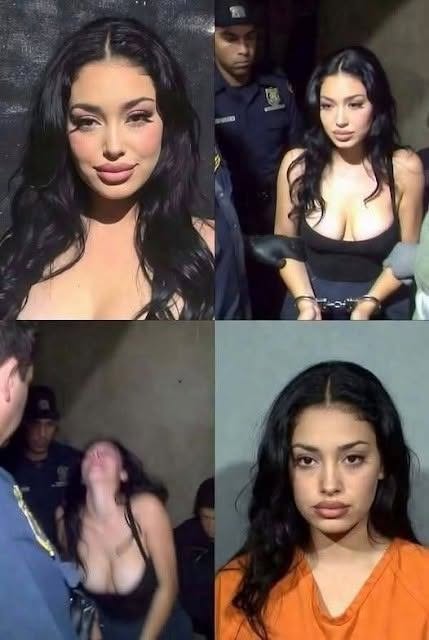
A quiet woodland area in the United States became the center of attention after witnesses reported unusual activity involving a young woman and a deceased wild animal.
What initially appeared to be an unusual report from people traveling through the remote area eventually led to the involvement of law enforcement and questions about wildlife regulations, public behavior, and the responsibilities people have when visiting natural environments.
The circumstances surrounding the incident have attracted interest because of the unusual setting and the limited information initially available to the public.
Authorities were called to the area after witnesses became concerned about what they had observed. Officers subsequently arrived to assess the situation and determine what had taken place.
At this stage, however, the available information does not establish every detail of the incident. Investigators must examine the evidence and determine whether any laws or wildlife regulations were involved before conclusions can be reached.
An Unusual Report in a Remote Area
The incident reportedly came to authorities’ attention after several people were traveling through a wooded area.
While passing through the location, the witnesses noticed activity that they considered unusual. Because the area was relatively remote, they were initially uncertain about what they were seeing or whether there was an innocent explanation.
Remote outdoor locations can sometimes make situations difficult to interpret.
Trees, uneven terrain, limited visibility, and distance can prevent witnesses from seeing an entire situation clearly. A person may observe only a few moments of an event without knowing what happened beforehand.
In this case, the witnesses eventually decided that contacting authorities was the appropriate step.
Their report prompted law enforcement officers to travel to the area and assess the circumstances directly.
Why Authorities Became Involved
When people report unusual activity involving wildlife, authorities may need to determine whether the situation involves a violation of local regulations or whether the incident can be explained by ordinary circumstances.
The presence of a deceased wild animal can raise several questions.
Investigators may need to determine how the animal died, when it died, and whether its death was connected to the activity reported by witnesses.
They may also need to determine whether the animal was protected under applicable wildlife laws.
These questions cannot necessarily be answered simply by observing the scene.
In many situations, investigators need to gather information from multiple sources before establishing a reliable account.
The First Priority: Establishing What Happened
According to the source material, investigators needed to focus on the basic facts surrounding the incident.
Among the questions they needed to consider were:
-
Who was present at the location?
-
What exactly happened?
-
What circumstances led to the report?
-
Were any laws potentially involved?
-
Did wildlife regulations apply?
-
Was additional evidence required?
-
Did other agencies need to become involved?
These questions are important because wildlife-related cases can involve specialized regulations and responsibilities.
The initial report alone may not provide enough information to determine whether any wrongdoing occurred.
Instead, investigators must examine the circumstances carefully and separate confirmed information from assumptions.
The Role of Witnesses
Witnesses can play an important role in investigations, particularly when an incident takes place in an isolated location.
People who happen to be nearby may provide investigators with information that would otherwise be unavailable.
They may be able to describe when they arrived, what they noticed, where people were located, and what prompted them to contact authorities.
However, witness observations are only one part of an investigation.
A person may misunderstand something they see, especially when an event occurs quickly or from a distance.
For this reason, investigators generally have to consider witness accounts alongside other available evidence.
The purpose is not simply to determine what someone thought they saw, but to establish what can be supported by the evidence.
Why the Location Matters
The remote setting is an important part of the circumstances described in the report.
Unlike an incident in a populated neighborhood or public building, an event in a wooded area may have very few witnesses.
There may also be limited records showing who entered or left the area.
Investigators may therefore have to reconstruct events using the information available after authorities arrive.
The physical location can become particularly important.
The position of objects, the surrounding environment, and the location where the animal was found may all help investigators understand the sequence of events.
Even seemingly minor details can become relevant when authorities are attempting to establish a timeline.
Understanding Wildlife Regulations
Wildlife is subject to regulations designed to protect animals and natural environments.
Depending on the jurisdiction, different rules can apply to different species and circumstances.
Some wildlife may have special protections, while other animals may be governed by hunting, conservation, or environmental regulations.
This means that an unusual encounter involving a wild animal can require more than a routine police investigation.
Wildlife officials or other specialized authorities may need to become involved to determine which rules apply.
The original report notes that wildlife investigations can require cooperation between different agencies because wildlife matters may fall under specialized regulations.
Investigators Must Separate Facts From Assumptions
Public interest can sometimes grow quickly when an unusual incident is reported.
People may begin discussing what happened before investigators have completed their work.
However, an investigation is specifically intended to determine which details are supported by evidence.
There is an important distinction between a witness report, an allegation, and an established fact.
A witness may report something that appeared unusual, but investigators still need to establish the circumstances independently.
Likewise, the presence of a person at an unusual scene does not by itself establish that the person committed an offense.
Authorities must determine what actually occurred and whether applicable laws were violated.
What Investigators May Need to Examine
A case involving an unusual wildlife incident can require investigators to examine several different types of information.
The Scene
The location may provide important clues about what occurred.
Investigators can document where the relevant people and objects were located and examine the surrounding environment.
Witness Accounts
Statements from people who reported the incident can help establish a timeline.
Investigators may compare different accounts to determine which details are consistent.
Wildlife Information
If the species involved is not immediately clear, specialists may need to identify the animal.
Its status under applicable regulations can then be determined.
Physical Evidence
Evidence found at the location may help authorities establish what happened before they arrived.
Timeline
Investigators may attempt to determine when the people involved arrived, how long they remained there, and what happened before witnesses contacted authorities.
Together, these elements can help authorities develop a more complete picture of an unusual incident.
Why Early Reports Can Be Incomplete
Initial reports are often based on information available at the moment authorities are contacted.
That means they may not contain every relevant detail.
A witness might describe what they observed without knowing what happened earlier.
Similarly, authorities arriving at a scene may initially have only limited information.
As an investigation progresses, additional evidence can change or clarify the initial understanding of an event.
For this reason, early reports should be treated carefully until officials have had an opportunity to establish the facts.
The Broader Issue of Wildlife Protection
Beyond the specific circumstances of this case, the incident highlights the importance of responsible behavior around wildlife.
Wild animals should generally be observed from a safe distance.
People who encounter an injured or deceased animal may not know what caused the situation or whether the animal could pose a risk.
Approaching or disturbing wildlife can also interfere with an investigation if authorities later need to examine the location.
In situations involving unusual wildlife activity, contacting the appropriate authorities can allow trained professionals to assess the circumstances.
Remote Areas Require Extra Caution
People visiting forests, wooded areas, and other remote locations may encounter situations they do not immediately understand.
Natural environments can contain hazards that are less common in populated areas.
There may be limited mobile coverage, difficult terrain, unpredictable wildlife, and few people nearby who can provide assistance.
For that reason, visitors are generally encouraged to remain aware of their surroundings and avoid interfering with unfamiliar situations.
If something appears dangerous or unusual, contacting the appropriate authorities can be safer than attempting to investigate personally.
Public Interest Grew Around the Incident
The unusual nature of the report helped attract attention.
Stories involving remote locations, wildlife, and unexpected investigations can naturally generate questions because readers want to understand what happened.
However, public curiosity should not be confused with confirmation of every detail circulating online.
As with other developing incidents, information may change as authorities gather additional evidence.
Readers should therefore distinguish between confirmed statements and claims that have not been independently established.
What Remains Unclear
Several important questions remain dependent on the outcome of the investigation.
The available source material does not provide a complete account of the final findings.
It also does not establish whether any charges were filed or whether authorities ultimately determined that a violation had occurred.
Those details would require confirmation from officials or reliable records.
Until such information becomes available, it is more accurate to describe the situation as an investigation rather than assume a particular outcome.
The Importance of Responsible Reporting
Unusual incidents can quickly become the subject of online discussion.
When that happens, headlines and social media posts may sometimes present speculation as established information.
Responsible reporting requires a distinction between what witnesses reported, what authorities confirmed, and what remains unknown.
This is especially important when private individuals are involved.
Avoiding unsupported accusations protects the accuracy of the story while allowing readers to understand the situation based on information that can actually be verified.
What Happens Next?
The next stage depends on what investigators discover.
Authorities may determine that no violation occurred, or they may conclude that additional action is necessary.
If wildlife regulations are relevant, specialized officials may also have a role in determining what happened and whether any rules were violated.
The available information does not establish a final outcome, so further details would need to come from official sources or later updates to the investigation.
For now, the central task remains straightforward: establish the facts.
A Reminder for People Visiting Natural Areas
The incident also serves as a general reminder about safety and responsibility when spending time outdoors.
People visiting wooded areas should respect wildlife and avoid disturbing animals or unfamiliar scenes.
If a person discovers a deceased or injured wild animal, it is generally safer to keep a reasonable distance and contact the relevant authorities when necessary.
Allowing trained professionals to handle unusual situations can help protect people, preserve evidence, and ensure that wildlife regulations are properly considered.
Final Thoughts
What began as a report from witnesses in a remote woodland area developed into an investigation involving law enforcement and questions about wildlife regulations.
The unusual circumstances attracted public attention, but the available information does not answer every question.
Investigators must consider witness accounts, the physical location, the circumstances involving the animal, and any applicable regulations before reaching conclusions.
Until more verified information becomes available, the most important distinction is between what was reported and what has actually been established.
The investigation therefore remains a reminder that unusual situations can require careful examination, particularly when wildlife, remote locations, and potentially applicable regulations are involved.
