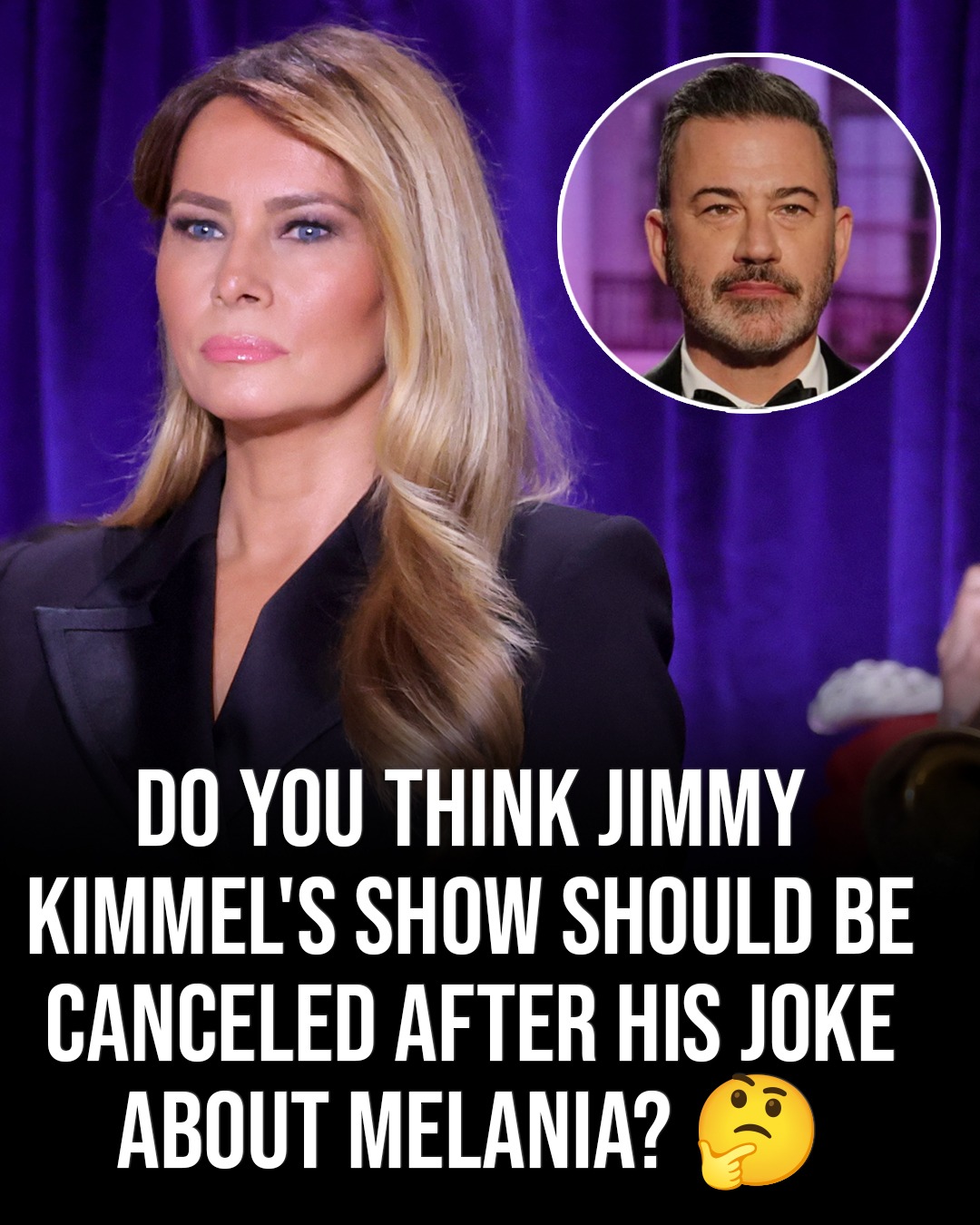
Melania Trump publicly criticized late-night television host Jimmy Kimmel after a joke made during an episode of Jimmy Kimmel Live! sparked widespread discussion online and across political circles.
The controversy emerged shortly before the annual White House Correspondents’ Dinner, when Kimmel delivered a satirical remark referencing Melania Trump. Some viewers interpreted the joke as inappropriate given the tense political climate, while others defended it as part of traditional late-night comedy.
Days later, concerns over security intensified after a reported incident near a security checkpoint in Washington, D.C. during a high-profile gathering connected to the event. According to reports, Secret Service agents quickly responded to the situation and escorted attendees to safety as authorities assessed the scene.
In response to the earlier joke, Melania Trump described the comments as “hateful” and criticized what she viewed as increasingly divisive political rhetoric in media and entertainment. She argued that public figures should be more mindful of their words during periods of heightened national tension.
Donald Trump also addressed the controversy, stating that the joke went too far and expressing disappointment that it was broadcast on network television. Supporters of the former president echoed similar concerns on social media and in political commentary programs.
Kimmel later defended the segment during his show, explaining that the joke was intended as satire and not as a reference to violence or harm. He maintained that political comedy has long played a role in American entertainment and public discourse.
The incident has renewed broader discussions about the boundaries of satire, freedom of expression, and the role of comedians in political commentary. Some critics believe jokes involving sensitive topics should be avoided during tense moments, while others argue that satire remains an important part of public conversation.
The debate also drew attention to ABC and the responsibilities of major media networks when airing politically charged content. As reactions continue online, the situation reflects the ongoing intersection of politics, entertainment, and media in the United States.