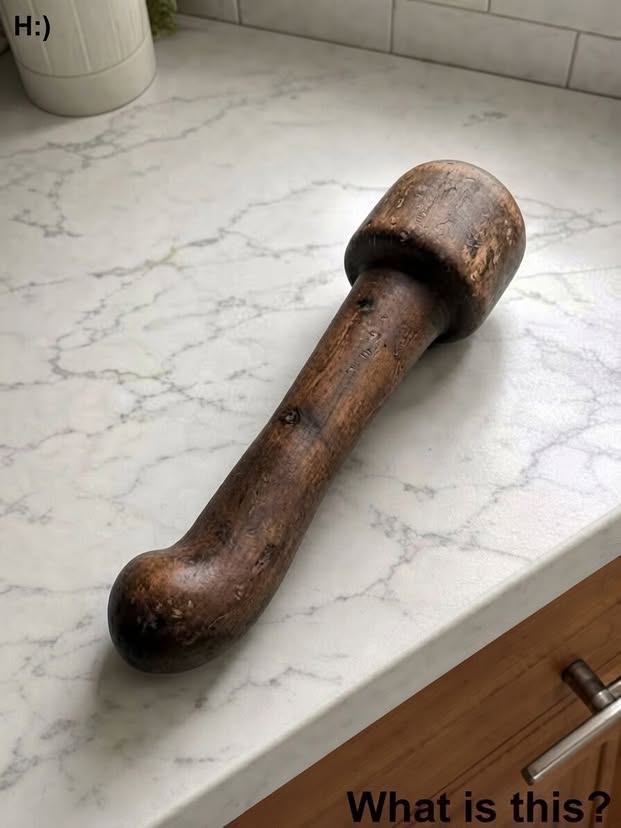
At first glance, an old wooden kitchen utensil can look almost impossible to identify.
Its unusual shape may make modern viewers wonder what it was designed to do, especially when compared with today’s kitchens filled with electric appliances and specialized tools. Yet many traditional utensils were created around a very simple idea: use basic physical force to prepare food efficiently.
This type of wooden tool is a good example of that principle.
A Simple Tool for Preparing Soft Foods
The utensil could be used with a variety of soft ingredients.
Cooked vegetables, fruits, and other foods could be pressed, crushed, or softened using a repeated downward or twisting motion. Depending on the exact design, the tool could also perform a function similar to a simple pestle.
That meant cooks could prepare ingredients without needing several specialized utensils.
For households where most food preparation was done by hand, having one sturdy tool that could perform multiple tasks was especially useful.
Why Was It Made From Wood?
Wood was an obvious material for traditional kitchen equipment.
A well-made hardwood utensil could be strong enough to withstand repeated use while remaining relatively lightweight. It also didn’t require electricity, batteries, or complicated mechanical parts.
There was very little that could suddenly stop working.
With proper cleaning and storage, a durable wooden utensil could remain useful for many years.
In some families, kitchen tools were kept for decades and could even be passed down through generations.
What may appear to be an ordinary piece of wood today could once have been an everyday part of someone’s cooking routine.
The Advantage Was Its Simplicity
Modern kitchens often make food preparation faster through technology.
Blenders can puree ingredients in seconds. Food processors can chop and mix large quantities, while electric mixers can perform tasks that once required considerable effort.
Older kitchen tools operated differently.
They relied on the person using them.
The cook provided the pressure and movement needed to change the texture of the food. Although this required more physical effort, it also meant the tool itself was extremely simple.
There were no motors to maintain, electrical components to repair, or complicated settings to understand.
One Tool Could Have Several Uses
Another interesting feature of traditional kitchen utensils is that they were often more versatile than their appearance suggests.
A single wooden implement could potentially be used for several related tasks depending on the food being prepared.
Soft vegetables could be crushed.
Fruit could be pressed.
Other cooked ingredients could be softened or broken down into a smoother consistency.
The exact function depended on the shape of the utensil and the technique used by the cook.
This practical versatility was valuable at a time when kitchens generally contained fewer specialized appliances.
Why Old Kitchen Tools Look So Mysterious Today
The reason these objects seem strange now is partly because cooking has changed.
Someone who has always used modern appliances may not immediately recognize a tool designed for a completely manual process.
Today’s kitchens are filled with objects that have very specific purposes. A blender blends, a food processor chops and mixes, and an electric mixer handles beating and mixing.
Traditional utensils were often much more basic.
Their purpose could be understood simply by considering the action they were designed to perform: pressing, crushing, grinding, stirring, or softening.
Once that principle is understood, the mysterious object becomes much easier to appreciate.
From Everyday Utensil to Historical Curiosity
For the people who originally used tools like these, there may have been nothing unusual about them.
They were simply kitchen equipment.
The tool’s value came from being dependable and available whenever food needed to be prepared.
Today, however, such utensils can offer an interesting glimpse into how previous generations approached everyday cooking.
They remind us that many tasks now completed with electricity were once accomplished through simple movements and durable handmade objects.
The Basic Principle Still Works
Despite all the changes in kitchen technology, the fundamental idea behind this type of utensil hasn’t disappeared.
Pressure changes texture.
A soft vegetable can be transformed into a mash. Fruit can be broken down. Cooked ingredients can be softened and combined.
Modern appliances may accomplish these tasks much faster, but they are still relying on the same basic physical principles.
The difference is that today’s machines provide the force.
With an old wooden utensil, the cook did.
Why These Tools Could Last for Generations
Durability was another major advantage.
A sturdy wooden kitchen tool didn’t contain many parts that could wear out. There was no motor, electronic control panel, or battery.
Its usefulness depended primarily on the quality of the wood and how carefully it was maintained.
That simplicity could allow a well-made utensil to remain in service for years.
For families that regularly prepared meals from scratch, replacing kitchen tools frequently wasn’t necessary. A reliable utensil could become a familiar part of the household and eventually acquire sentimental value.
A Reminder of How Much Cooking Has Changed
Looking at an unusual wooden utensil today can reveal just how dramatically kitchens have evolved.
Tasks that once required patience, physical effort, and basic hand tools can now be completed with the push of a button.
That doesn’t necessarily make the older methods inferior.
They simply reflect a different approach to cooking—one built around simplicity, durability, and making the most of whatever tools were available.
The strange-looking wooden object may therefore be less mysterious than it first appears.
Its purpose was practical: helping cooks press, crush, soften, and prepare food using nothing more complicated than a sturdy piece of wood and a little effort.
Final Thoughts
Old kitchen utensils can look puzzling when viewed without their original context.
But once their basic function is understood, their design often makes perfect sense.
This type of wooden tool demonstrates how effective a simple kitchen implement could be. It could help prepare soft foods, perform tasks similar to a basic pestle, and remain useful for years without electricity or complicated mechanisms.
Modern kitchens may be faster and more technologically advanced, but the underlying principle remains familiar.
Sometimes, the most effective tool is also the simplest one.