
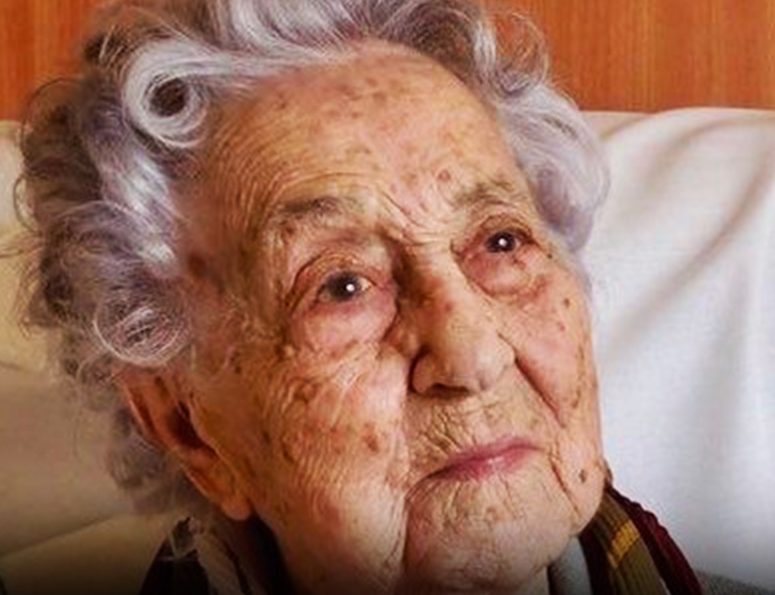
Researchers Unravel the Mystery of a 117-Year-Old Woman’s Longevity: Revealing the Everyday Food Tied to Her Extraordinary Lifespan
For generations, people have pursued the key to an extended, vibrant existence. Today, the remarkable DNA of one woman advances that quest further than before. As researchers examined the genetic makeup of Maria Branyas Morera, who reached the impressive age of 117, they discovered more than hints about growing older. They revealed a strong link between heredity, daily routines, and a single common food that might pave the way to prolonged vitality.
A Life Spanning Three Centuries of Change
Born in San Francisco in 1907, Maria experienced two world wars, 21 U.S. presidents, and over a hundred years of monumental shifts in science, culture, and daily life. At eight years old, she relocated with her family to Catalonia, Spain, a voyage shadowed by sorrow when her father succumbed to tuberculosis during the journey.
Maria flourished in her adopted homeland, building a family and leading a serene yet enriching life that positioned her among the eldest individuals ever documented. She lived through the Spanish Civil War, the Franco era, Spain's transition to democracy, and the digital revolution, all while maintaining the calm, steady routines that those around her came to see as her hallmark.
Prior to her passing in 2024, Maria extended an uncommon and altruistic invitation: she urged experts to analyze her DNA to understand her extraordinary endurance. It was a final gift to science from someone who had already given the world more than a century of living history.
What the Scientists Found
Scientists from the University of Barcelona and the Josep Carreras Leukaemia Research Institute embraced the opportunity, and their findings left them in awe. Lead researcher Dr. Manel Esteller noted that Maria's physiology appeared to "distinguish aging from illness." Even at her advanced years, she maintained cholesterol readings and inflammatory markers more typical of someone decades younger.
The research pointed to a combination of factors rather than a single secret:
- Exceptional genetics: Her genome carried variants associated with protection against age-related disease, efficient cellular repair, and healthy lipid metabolism. Some of these variants appear to have shielded her from conditions that commonly limit lifespan.
- A healthy gut microbiome: Analysis of her intestinal flora revealed a composition resembling that of much younger individuals, rich in beneficial bacteria associated with reduced inflammation.
- Everyday diet: Among her regular habits, researchers highlighted her daily consumption of yogurt, a simple, ordinary food she ate consistently for years. The fermented dairy is rich in probiotics that support gut health, which emerging science increasingly links to immune function and healthy aging.
- Calm lifestyle: Those who knew Maria described her as serene, positive, and socially connected, traits that longevity researchers consistently find among the world's oldest people.
The Yogurt Connection: Hype or Hope?
The finding that captured the public imagination was the yogurt. Could something as humble as a daily cup of yogurt really be tied to living to 117? The honest scientific answer is nuanced.
Yogurt contains live probiotic cultures that support a balanced gut microbiome. A growing body of research links gut health to inflammation control, immune resilience, metabolic health, and even cognitive function, all factors in healthy aging. Fermented foods in general, including yogurt, kefir, kimchi, and sauerkraut, are staples in many of the world's longest-lived populations, from Okinawa to Sardinia to the Caucasus.
But scientists are careful to stress that correlation is not causation. Maria's yogurt habit existed alongside extraordinary genetics, a Mediterranean lifestyle, strong social bonds, and a lifetime of moderate, balanced living. No single food overrides genes or lifestyle. The yogurt is best understood as one thread in a rich tapestry, not a magic bullet.
Lessons From the World's Longest-Lived People
Maria's case aligns strikingly with patterns observed in "Blue Zones," regions where people routinely live past 100:
- Plant-forward, moderate diets: Long-lived populations tend to eat mostly plants, moderate portions, and traditional fermented foods.
- Daily natural movement: Not marathons, but consistent gentle activity: walking, gardening, manual daily tasks.
- Strong social ties: Family closeness, community belonging, and a sense of purpose appear in virtually every longevity study.
- Stress management: Whether through faith, routine, naps, or temperament, the longest-lived people tend to process stress without letting it consume them.
- Moderate alcohol or none: Many long-lived cultures include small amounts of wine with meals, though researchers debate its role.
Maria embodied nearly all of these. Her life suggests that longevity is less about any single intervention and more about the compounding effect of many small, good choices sustained over a very long time.
What This Means for the Rest of Us
You cannot choose your genes, but Maria's story offers practical takeaways anyone can apply:
- Eat fermented foods regularly: yogurt, kefir, or other probiotic-rich options as part of a balanced diet.
- Favor the Mediterranean pattern: vegetables, legumes, olive oil, whole grains, and moderate portions.
- Stay socially connected: invest in family and friendships as seriously as you invest in diet.
- Keep moving gently every day: walking remains one of the most powerful longevity tools known.
- Cultivate calm: chronic stress accelerates aging at the cellular level; routines that reduce it are genuine health interventions.
A Final Gift
Maria Branyas Morera could have kept her longevity a private mystery. Instead, she donated her biology to science, allowing researchers to peer into the machinery of an extraordinary life. In doing so, she gave the rest of us something more valuable than a secret: evidence that the ordinary things, a daily yogurt, a calm temperament, a connected life, might be the most extraordinary of all.
Frequently Asked Questions
Who was Maria Branyas Morera?
She was a Spanish supercentenarian born in San Francisco in 1907 who lived to 117, making her one of the oldest documented people in history. Before her death in 2024, she donated her DNA for longevity research.
What did researchers discover about her longevity?
Scientists found protective genetic variants, a youthful gut microbiome, healthy inflammatory markers, and a lifestyle featuring daily yogurt consumption, a Mediterranean diet, calm temperament, and strong social connections.
Does eating yogurt really help you live longer?
Yogurt's probiotics support gut health, which research links to inflammation control and immune function. But scientists emphasize it was one factor among many, including exceptional genetics, not a standalone cause of her longevity.
What is the "distinguish aging from illness" finding?
Lead researcher Dr. Manel Esteller observed that Maria's body seemed to age without developing the typical diseases of aging, suggesting her genetics protected her from age-related illness even as the years accumulated.
Can I get my DNA tested for longevity genes?
Some commercial and research tests examine variants associated with healthy aging, but genetics is only part of the picture. Lifestyle factors remain the area where individuals have the most control.



