
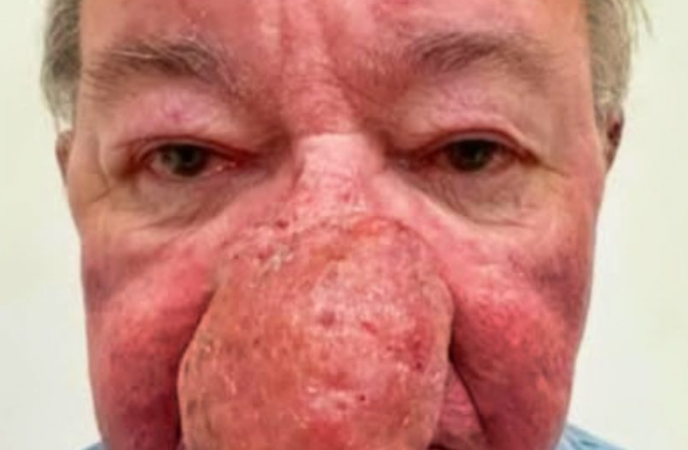
Man Overcomes Severe Rhinophyma with Life Changing Laser Treatment: A Truly Inspiring Transformation
For years, 56-year-old Alan Findlay from Dumbarton battled a rare and life-altering skin condition called rhinophyma, a severe form of rosacea that causes the skin on the nose to thicken and enlarge. As the condition progressed, Alan's nose became more swollen and misshapen, affecting not only his appearance but also his confidence and emotional well-being.
Once an outgoing and confident man, Alan began to withdraw from friends and family. He said he felt like "the elephant man," describing how deeply the changes in his appearance impacted his self-esteem. His story is one of suffering, isolation, and ultimately, remarkable renewal.
Understanding Rhinophyma
Rhinophyma is an advanced form of rosacea, a chronic skin condition that causes redness and visible blood vessels, usually on the face. In rhinophyma, the oil glands and tissue of the nose become enlarged, causing the nose to appear bulbous, swollen, and misshapen. It develops gradually over years and affects men far more often than women.
The condition is not caused by poor hygiene or lifestyle choices, though misconceptions persist. It's a medical condition rooted in chronic inflammation, and it can be profoundly disfiguring. Beyond the physical changes, the psychological impact is often severe: people with visible facial differences frequently experience staring, unwanted questions, and social isolation.
The Emotional Toll
The emotional toll became unbearable for Alan, especially during the holidays. Last Christmas, Alan chose to spend the day alone, a heartbreaking decision for someone who used to love being surrounded by loved ones.
"I didn't want people to see me," Alan shared. "It was easier to stay home than deal with the looks and questions."
This is the hidden suffering of visible conditions. It's not vanity. It's the exhaustion of being looked at, the dread of questions you can't answer simply, the gradual shrinking of your world to avoid the gaze of others. Alan went from outgoing to isolated, from celebrating with family to spending Christmas alone. The condition didn't just change his nose. It changed his life.
The Long Road to Treatment
Alan first noticed changes in his nose around 2018, when small folds began to appear. His doctor referred him to a specialist, who explained that traditional treatment involved complex surgery with a long recovery period.
Feeling discouraged by the risks, waiting lists, and limited options, especially during the COVID-19 lockdowns, Alan tried to cope in silence as his condition worsened. The pandemic created the worst possible circumstances: medical appointments delayed, elective procedures postponed, and isolation already the norm. For someone already withdrawing from the world, lockdowns provided both cover and trap.
It's a common story in chronic conditions: the gap between knowing treatment exists and being able to access it. Fear of surgery, long waits, and the disruption of the pandemic all conspired to keep Alan suffering in silence while his condition progressed.
A Family Steps In
But everything changed after last Christmas. Seeing how much he was suffering, Alan's family decided to step in. They researched alternative treatments and discovered a specialist offering advanced laser therapy, a far less invasive and more precise option than traditional surgery.
This is often how breakthroughs happen for people with chronic conditions: not through the medical system alone, but through the love and persistence of family members who refuse to accept suffering as inevitable. Alan's family did the research, found the option, and provided the encouragement he needed to try.
With their encouragement, Alan decided to give it a try.
The Life-Changing Results
The results were nothing short of life-changing. "The transformation was incredible," Alan said. "For the first time in years, I could look in the mirror and recognize myself again."
Laser therapy for rhinophyma works by precisely removing excess tissue layer by layer, reshaping the nose with far less trauma than traditional surgery. The precision of the laser means less bleeding, less scarring, and faster healing. For Alan, it meant getting his face back.
The laser treatment not only improved his appearance but also helped him regain his confidence and joy. His face healed beautifully, and his spirit lifted almost instantly. The man who had spent Christmas alone was suddenly looking forward to being surrounded by people again.
Alan now looks forward to celebrating this Christmas surrounded by family: smiling, socializing, and living fully again. "Christmas will be different this year," he said proudly. "I feel like myself again, and I'm ready to enjoy life."
More Than Skin Deep
Alan's story is a powerful reminder that modern medical treatments can do more than heal physical conditions. They can restore hope, happiness, and the confidence to live freely.
We often separate physical and emotional health, but Alan's journey shows how deeply they're connected. The same treatment that reshaped his nose also rebuilt his social life, his self-esteem, and his willingness to be seen. Healing the visible wound healed the invisible ones too.
His journey from isolation to renewal highlights the importance of family support, determination, and the incredible advances in laser technology that are transforming lives around the world. It also carries a message for anyone suffering in silence with a visible condition: options exist, and it's worth seeking them out.
Lessons from Alan's Journey
- Don't suffer in silence. Alan coped alone for years. Reaching out earlier might have shortened his suffering.
- Family advocacy matters. Sometimes the people who love us can see solutions we've stopped looking for.
- Medical technology keeps advancing. Treatments that once required major surgery can now be done with lasers, with better results and faster recovery.
- It's okay to want to look like yourself. Seeking treatment for appearance isn't vanity. It's about identity, dignity, and the right to feel comfortable in your own skin.
- Isolation is a symptom, not a solution. Withdrawing protected Alan from stares but cost him everything else. Reconnection was part of the cure.
Frequently Asked Questions
What is rhinophyma?
Rhinophyma is a severe form of rosacea that causes the skin and oil glands of the nose to thicken and enlarge, creating a swollen, bulbous appearance. It develops gradually, affects men more often than women, and is a medical condition, not a result of lifestyle choices.
How is rhinophyma traditionally treated?
Traditional treatment involved complex surgery to remove excess tissue, with significant recovery time. Many patients were discouraged by the risks and invasiveness of the procedure.
What is laser therapy for rhinophyma?
Advanced laser therapy precisely removes excess tissue layer by layer, reshaping the nose with less trauma than traditional surgery. It typically involves less bleeding, less scarring, and faster healing.
How did the treatment change Alan Findlay's life?
Beyond restoring his appearance, the treatment restored his confidence and social life. After years of isolation, including spending Christmas alone, Alan looked forward to celebrating with family again, saying he felt like himself for the first time in years.
What can others with visible skin conditions learn from Alan's story?
That suffering in silence isn't necessary, that family support can open doors, that medical options keep improving, and that seeking treatment for appearance-related distress is a legitimate act of self-care, not vanity.

