
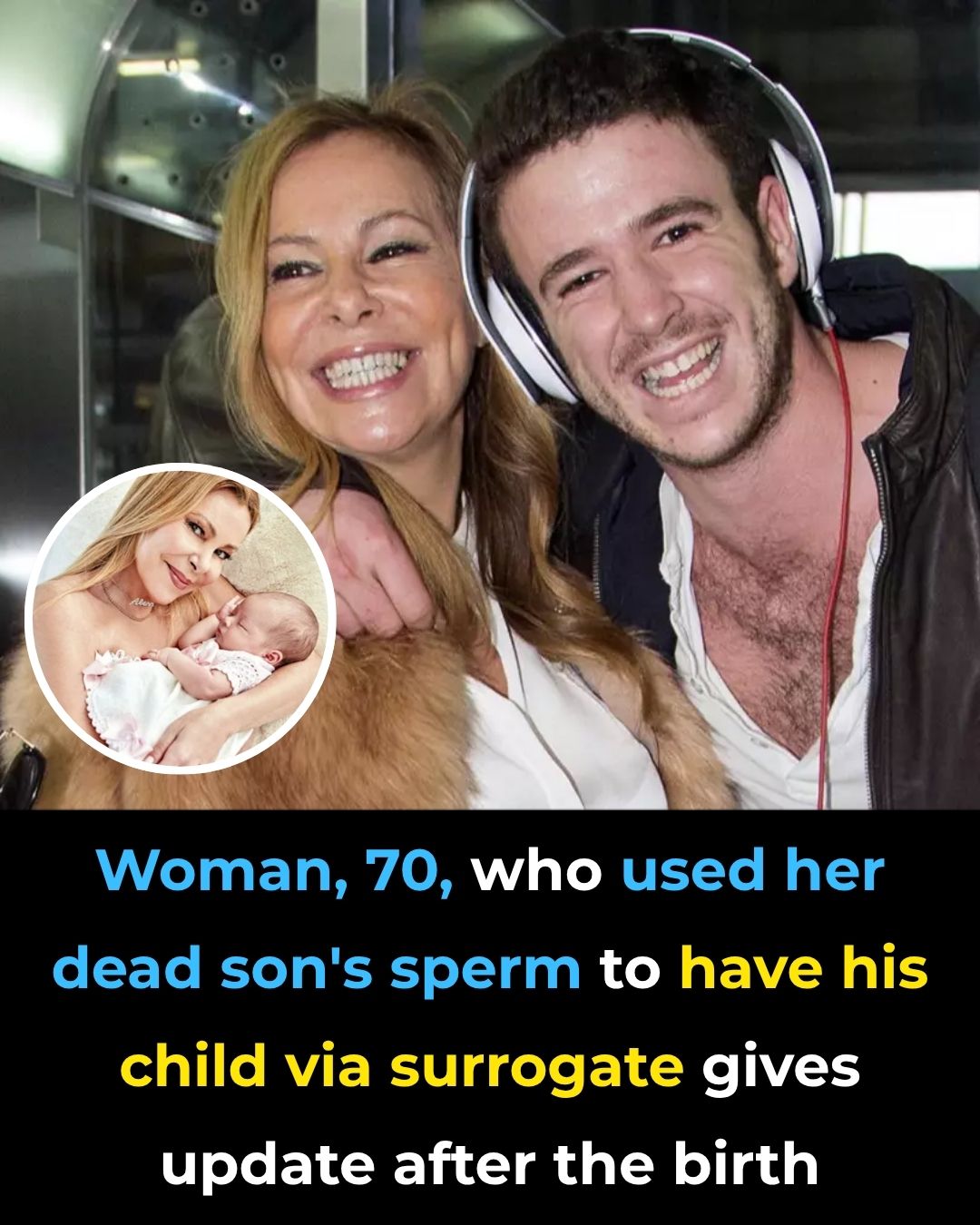
Spanish Actress Opens Up About Life After Welcoming Granddaughter Through Surrogacy
Spanish actress Ana Obregon has continued to speak publicly about the emotional journey that followed the loss of her son, Aless Lequio, who passed away from cancer in 2022. In the years since his death, Ana made international headlines after welcoming a baby girl through surrogacy using her late son's preserved sperm. The decision sparked intense public discussion, especially in Spain, where surrogacy laws remain highly restrictive.
A Mother's Grief
Ana has openly discussed the deep grief she experienced after losing her son. According to the actress, the years following his passing were emotionally overwhelming and left her struggling to move forward. Losing a child is widely regarded as the most devastating loss a person can endure, and Aless's death from cancer at a young age compounded the tragedy with its sense of promise cut short.
Grief counselors note that the death of an adult child carries particular complications. Parents expect to precede their children; the reversal of that order violates a fundamental assumption about how life works. For a public figure, the grieving unfolds under observation, with every statement parsed and every decision judged.
The Surrogacy Decision
Despite the controversy, Ana has consistently defended her choice, saying it was connected to what she believed was her son's final wish. The decision to pursue surrogacy using Aless's preserved sperm was, in her framing, not about replacing her son but about honoring him: bringing into the world the child he had hoped to have.
Surrogacy itself is a complex and emotionally charged path to parenthood under any circumstances. It involves:
- A gestational carrier who carries the pregnancy.
- Legal arrangements that vary dramatically by jurisdiction.
- Medical procedures including in vitro fertilization.
- Ethical considerations about compensation, autonomy, and the welfare of all parties.
When the intended parent is deceased and the grandmother is initiating the process, every one of these complexities multiplies.
Spain's Legal Landscape
The controversy was especially intense in Spain, where surrogacy laws remain highly restrictive. Spanish law does not permit surrogacy arrangements domestically, and the legal status of children born through surrogacy abroad has been the subject of ongoing legal and political debate.
This meant Ana's path necessarily involved arrangements outside Spain's borders, placing her story at the intersection of personal grief and international legal complexity. Critics argued she was circumventing the law. Supporters argued the law failed to account for situations like hers. The debate quickly expanded beyond one family into broader questions about reproductive rights, the limits of law, and who gets to decide how families are formed.
Clarifying the Relationship: Grandmother, Not Mother
After the birth of the child in 2023, many people believed Ana had become a mother again at the age of 70. However, the actress later explained that the baby girl, named Anita, is actually her granddaughter. Speaking in an interview, Ana said: "This girl is not my daughter; she is my granddaughter."
She explained that Anita is biologically the daughter of Aless and that she plans to teach the child about her father as she grows older. Ana has described Aless as someone she wants Anita to remember with pride and admiration.
This clarification matters enormously. It reframes the story from one about a 70-year-old seeking late motherhood to one about a grandmother preserving her son's lineage. The distinction addresses the most common criticism, that the decision was about Ana's needs, and recenters it on Aless's legacy.
Finding Joy Again
Since Anita's arrival, Ana has described finding moments of joy that grief had closed off. The baby's presence has not erased the loss; those who have followed her interviews describe a woman who still speaks of Aless with raw emotion. But joy and grief, psychologists emphasize, are not mutually exclusive. They can and do coexist, sometimes within the same hour.
For Ana, Anita represents continuity: a living connection to her son, a child who will grow up knowing who her father was, and a future that grief had seemed to foreclose. The actress has spoken of her commitment to raising Anita with full knowledge of Aless, ensuring the girl understands the love and circumstances that brought her into the world.
The Broader Conversation
Ana's story sits within larger debates that extend far beyond one family:
- Posthumous reproduction. The use of preserved genetic material after death raises questions about consent, intent, and the rights of the resulting child.
- Surrogacy regulation. Vast differences between countries create "reproductive tourism" and legal gray zones for resulting children.
- Grandparent-led families. As longevity increases, grandparents are taking on larger parenting roles worldwide, challenging traditional family structures.
- Grief and decision-making. Major life decisions made in the wake of profound loss invite scrutiny about timing and motivation, even when they are deeply considered.
These are questions societies are still working through, and Ana's high-profile case has forced them into public discussion in Spain and beyond.
What Anita Will Inherit
Beyond the controversy, there is a child. Anita will grow up with an unusual origin story, a grandmother as primary caregiver, and a father she will know only through stories, photographs, and her grandmother's devotion. Child psychologists note that what matters most for children in unconventional families is not the structure but the quality of care: stability, honesty, and love.
Ana's stated commitment, to teach Anita about Aless with pride, suggests an approach grounded in openness rather than secrecy. The girl will know who her father was, what he hoped for, and how much she was wanted. In the end, that may be the most important part of the story.
Frequently Asked Questions
Who is Ana Obregon?
A Spanish actress who lost her son Aless Lequio to cancer in 2022 and later welcomed a baby girl, Anita, through surrogacy in 2023.
Is Anita her daughter or granddaughter?
Her granddaughter. Ana clarified: "This girl is not my daughter; she is my granddaughter." Anita was conceived using her late son Aless's preserved sperm, making her biologically Aless's daughter.
Why was the decision controversial?
Surrogacy is highly restricted under Spanish law, the arrangement involved posthumous reproduction using a deceased person's genetic material, and the grandmother-led family structure challenged conventional norms.
How has Ana described her motivation?
She has said the decision was connected to what she believed was her son's final wish, framing it as honoring Aless's legacy rather than replacing him.



