The Day Tanner Ran Toward the Water: A Teen's Split-Second Decision That Saved a Life
It started out like any other peaceful summer day. The sun was high, families were laughing, and Scissortail Park buzzed with the sound of children playing and birds gliding across the pond. Seventeen-year-old Tanner was there with his mom and younger siblings, enjoying a simple afternoon picnic.
No one could have predicted that within minutes, this calm day would turn into a life-or-death moment, and Tanner would become an unexpected hero.
The Moment Everything Changed
As they strolled along the water's edge, Tanner suddenly stopped mid-step. Something caught his eye: a flicker of movement near the pond. Without saying a word, he dropped what he was holding and sprinted toward the water with urgency that startled his mother.
At first, she didn't understand what he had seen. But then she spotted it too: a tiny figure just beneath the surface. A toddler, no more than two years old, slipping under the water and disappearing fast.
Into the Water
Without hesitation, Tanner dove in. There was no time to think, no time to shout for help. Pure instinct took over.
The pond was deeper and murkier than it appeared, but Tanner kept going, pushing through the water until he reached the child. He grabbed the toddler and pulled him upward, breaking through the surface.
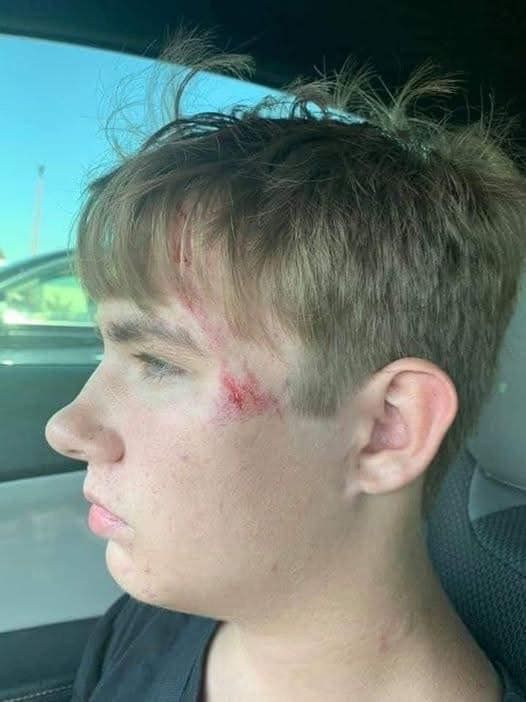
In that moment of rescue, Tanner struck his head on a hidden rock or ledge. Blood clouded the water, but he refused to stop. His only thought was getting that child to safety.
Drowning is often silent. Unlike the dramatic splashing seen in movies, real drowning victims, especially small children, can slip under with barely a sound. Tanner's ability to notice that faint struggle, that flicker of movement beneath the surface, made the difference between life and death.
The Aftermath
By the time first responders arrived, police, firefighters, and medics, Tanner had already done what needed to be done. The toddler was alive, coughing and crying in his mother's arms.
The child's mother collapsed in tears of gratitude. Just moments before, she had been staring into the unthinkable: the possibility of losing her baby. Now, she held him close, sobbing with relief, her life forever changed by the courage of a teenager she'd never met.
Tanner was rushed to the hospital for treatment. He received several staples for his head injury but never complained. When asked about what happened, he shrugged it off, insisting he simply did what anyone else would have done.
But the truth is: not everyone would have done what Tanner did. Not everyone would have noticed the faint struggle beneath the water. Not everyone would have acted without hesitation, diving headfirst into danger. Tanner did.
An Ordinary Teenager
He's not a trained lifeguard or first responder. He's a 17-year-old who enjoys skateboarding, playing video games, and spending time with his family. Yet when the moment came, his heart acted faster than fear.
That contrast is what makes stories like Tanner's so powerful. Heroism is often imagined as the domain of professionals: firefighters, soldiers, paramedics. But research on bystander rescues consistently shows that most lifesaving interventions are performed by ordinary people who happen to be present, paying attention, and willing to act.
Why Some People Act While Others Freeze
Psychologists have studied the difference between those who intervene in emergencies and those who don't. Several factors matter:
- Noticing the emergency. Most bystander failures begin here. People miss what's happening because they're distracted. Tanner was watching the water.
- Interpreting it correctly. Ambiguous situations cause hesitation. Tanner recognized the signs instantly.
- Taking responsibility. In crowds, responsibility diffuses: everyone assumes someone else will act. Tanner didn't wait for permission.
- Knowing what to do. Even basic instincts, swim toward the person, get them above water, can be enough.
- Decisiveness over deliberation. Tanner didn't weigh risks. In drowning rescues, seconds matter more than perfect plans.
None of this diminishes his courage. Understanding the psychology of heroism only highlights how remarkable it is that a seventeen-year-old got every step right.
Water Safety: Lessons for Every Family
Tanner's story is inspiring, but it also carries an urgent safety message. Drowning remains one of the leading causes of death for young children, and most incidents happen quickly and quietly:
- Supervise constantly near water. Drowning can happen in seconds, even in shallow water. Designate a "water watcher" whose only job is watching.
- Learn the signs of drowning. It's usually silent. Look for a head tilted back, glassy eyes, or a child who seems to be climbing an invisible ladder.
- Teach children to swim early. Formal swim lessons significantly reduce drowning risk for young children.
- Secure home water hazards. Pools need four-sided fencing with self-latching gates. Empty kiddie pools after use.
- Learn CPR. Bystander CPR can double or triple survival chances while waiting for paramedics.
- Don't assume lifeguards see everything. Even at guarded beaches and pools, parents remain the first line of defense.
The Takeaway
That day, Tanner didn't just save a child. He reminded everyone watching that real heroes don't always wear uniforms. Sometimes, they're just ordinary people who choose to run toward the water when it matters most.
A toddler is alive today because a teenager noticed, decided, and acted, all in the span of seconds. Tanner went home with staples in his head and a story he'll carry forever. The family he saved went home with something infinitely more precious: their child.
Frequently Asked Questions
How quickly can a toddler drown?
Tragically, a small child can drown in as little as 20 to 60 seconds, and it often happens silently. This is why constant, undistracted supervision near water is essential.
What should I do if I see someone drowning?
Alert others and call emergency services first. If you can swim and it's safe, go to them; otherwise, use the "reach, throw, don't go" principle: extend a pole or throw a flotation device rather than entering the water yourself.
Can a head injury from a rescue cause lasting damage?
Any head injury should be evaluated by medical professionals. Tanner received staples and hospital treatment, which is the right response. When in doubt, always get checked.
How can teenagers prepare to help in emergencies?
Take a first aid and CPR course, learn basic water rescue techniques, and consider lifeguard certification. Preparation turns instinct into effective action.
Why is drowning often silent?
When a person is drowning, the body's priority is getting air, not calling for help. The mouth sinks below the surface, preventing speech, and the arms instinctively press down rather than waving. This is why visual vigilance matters so much.