The Heartwarming Rescue Story Everyone Is Talking About
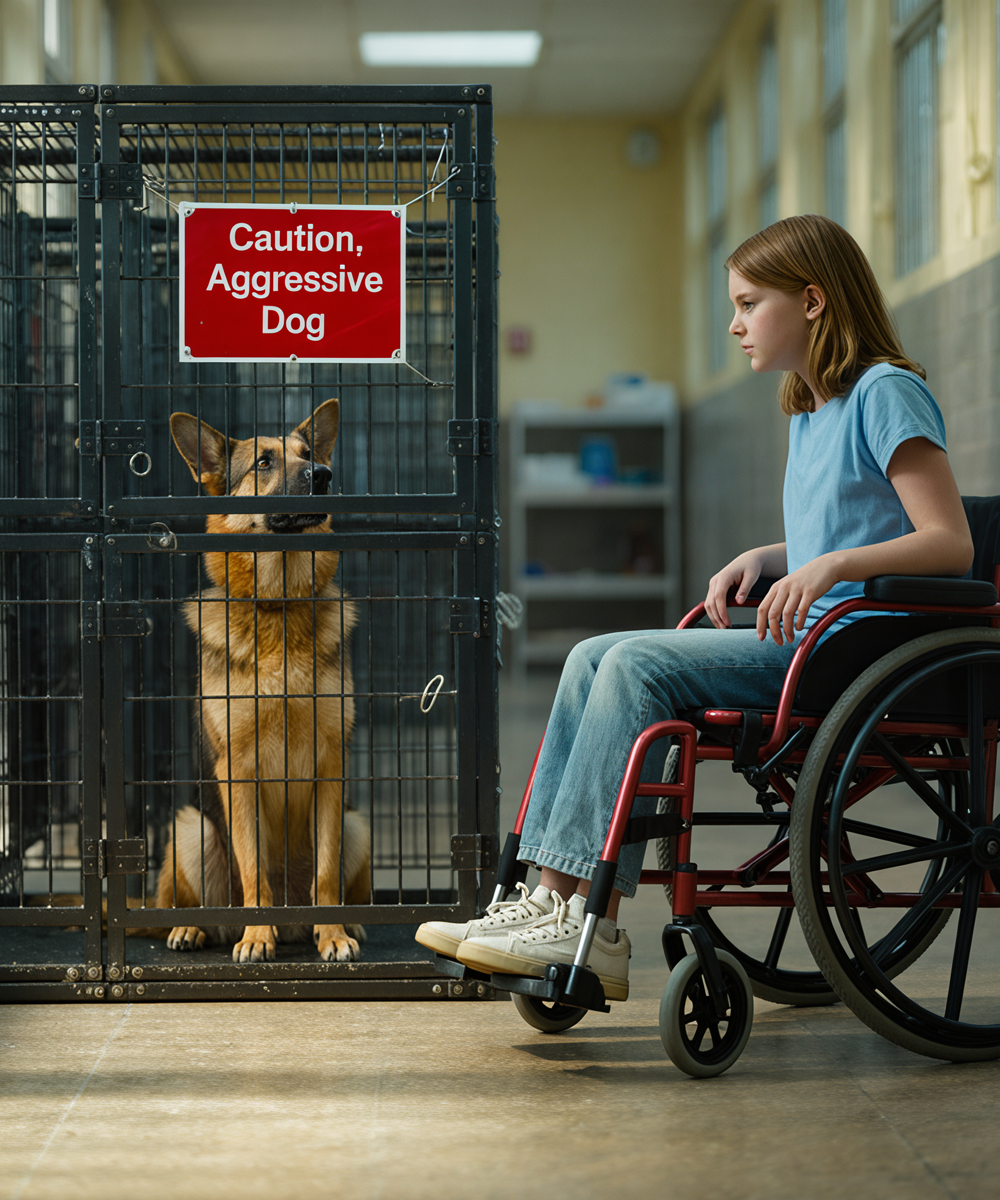
At the busy Riverside County Animal Shelter, hundreds of animals wait for second chances. Among them sat Ranger, a 70-pound German Shepherd mix with a red warning sign on his kennel. For eight long months he had been labeled "aggressive," his file full of bite reports and failed introductions. To most visitors, he looked like a lost cause. But in rare quiet moments, volunteers noticed him staring out of his tiny window, more like a soul in pain than a monster.
What happened next would change not only Ranger's life, but the entire shelter's approach to difficult cases. A dog once feared and forgotten found hope thanks to a brave 14-year-old girl in a wheelchair. Their bond not only saved his life but changed the way an entire shelter works.
The Dog Nobody Wanted
Eight months is a very long time in a shelter. Dogs who wait that long often stop showing their true personalities, and visitors walking past the kennels see only what the animal has become under stress, not who the animal really is. Ranger's file told a discouraging story: bite reports, failed introductions, a red "aggressive" label that made potential adopters hurry past kennel seven without a second glance.
Shelter workers know that long stays are hard on dogs. The constant noise, the confinement, and the lack of routine can turn even a friendly animal into a frightened, reactive one. Loud barking at the kennel door, snapping at strangers, and shutting down during introductions are all behaviors that frequently come from fear, not from a bad temperament. Still, labels stick. Once a dog is written off as unadoptable, it becomes a self-fulfilling prophecy, because fewer people stop, fewer interactions happen, and the dog's stress only grows.
Yet the volunteers who spent time near Ranger saw glimpses of something different. In rare quiet moments, he would stare out of his tiny kennel window with an expression that looked less like anger and more like sorrow. Someone, they suspected, had failed this dog long before he arrived at the shelter.
The Girl Who Saw Past the Label
One Saturday morning, 14-year-old Lily Chen arrived with her mother and teacher for a shelter tour. Born with spina bifida, Lily radiated quiet strength and genuine compassion. Instead of walking past the kennels, she asked about each animal's story and struggles.
When she heard Ranger's low, angry barking, she didn't recoil. She leaned in. "Can I meet him?" she asked.
As soon as Ranger saw Lily, something remarkable happened. The barking stopped. His posture softened. Lily spoke calmly, telling him about herself and how people sometimes misjudge her, too. Inch by inch, Ranger came closer, eventually touching her fingertips through the chain link. The "unadoptable" dog was reaching out for trust.
There was something deeply fitting about the connection. Lily knew what it felt like to be underestimated by people who only saw her wheelchair. Ranger knew what it felt like to be judged by a label. Neither of them needed words to understand the other.
Building Trust, One Visit at a Time
Lily began visiting Ranger three times a week. She read to him, shared stories from school, and never forced contact. Over time the fearful dog transformed, barking less, wagging his tail, and pressing his head against the bars for gentle strokes. Shelter staff called it a miracle; Lily simply called it friendship.
That patience is exactly what behavior experts say fearful dogs need most. Repeated, low-pressure visits teach a frightened animal that a person is predictable and safe. Reading aloud, sitting quietly nearby, and letting the dog set the pace are all techniques used in rehabilitation programs, because they build trust without triggering the defensive reactions that come from forced handling. Lily had instinctively done everything right.
The transformation was gradual but undeniable. The kennel that once rang with angry barking grew calmer. The dog that had lunged at strangers started seeking out gentle touch. Six weeks later, the shelter's veterinarian recommended Ranger for adoption.
Finding the Right Family
Lily helped search for the right family, people who would honor his journey. Enter Sarah and Michael Torres: a vet tech and a special education teacher. They didn't want a perfect pet; they wanted a dog who needed patience and love. With Lily present, Ranger slowly accepted them.
The match was ideal. A vet tech understands the medical and behavioral needs of a dog with a complicated history, and a special education teacher understands patience better than almost anyone. Most importantly, both of them went in with open eyes. They weren't expecting a dog who would bounce into the house and behave perfectly from day one. They were expecting a dog who needed time, and they had time to give.
Ranger thrived in his new home. He became affectionate, protective of children, and even visited hospitals to comfort patients. And whenever Lily visited, he greeted her with pure joy, never forgetting the girl who believed in him first.
The Ranger Protocol
Inspired by this unlikely friendship, the shelter launched a new approach, "The Ranger Protocol," focusing on patience, respect, and one-on-one connections for the hardest-to-place animals. The program spread statewide, saving countless lives.
The core idea is simple, and it is reshaping how shelters think about so-called problem dogs. Instead of writing off animals with bite histories or failed introductions, the protocol gives them what Ranger got: consistent one-on-one time with a calm, patient human, no forced interactions, and progress measured in small victories rather than quick turnarounds. Programs built on similar principles have helped shelters everywhere reduce euthanasia rates for behavior cases and turn long-stay dogs into adopted dogs.
Years later, Lily became Dr. Lily Chen, a veterinarian specializing in animal behavior. She now shares Ranger's story at conferences, teaching that aggression is often fear in disguise. Ranger grew old by her side, his muzzle gray but his spirit strong, a living ambassador of hope.
Where the red "Caution" sign once hung on kennel seven, a new plaque now reads: "Here began the transformation of Ranger. Proof that every animal deserves patience, understanding, and the chance to heal."
Why Fearful Dogs Are Misunderstood
Ranger's story points to a lesson that animal behaviorists repeat often: in dogs, aggression is usually fear in disguise. A dog that barks, lunges, or snaps is most often a dog that feels cornered and is trying to create distance from something it finds frightening. Punishing the behavior without addressing the fear rarely works. Patience, consistency, and letting the dog approach on its own terms work far better.
Shelter environments make this worse. A kennel is loud, strange, and unpredictable, which keeps a dog's stress hormones elevated around the clock. Many dogs who act out in shelters behave completely differently once they are in a quiet home. This is why foster programs and quiet visitation rooms can reveal a dog's real personality when the kennel cannot.
How Readers Can Help
Ranger's story has a happy ending, but thousands of shelter dogs are still waiting for their Lily. Here are some general ways you can make a difference:
- Adopt a long-stay or senior dog. The animals who have waited longest are often the most overlooked, and they are frequently the most grateful companions.
- Foster. Even a short-term foster home gives a stressed shelter dog a chance to decompress and show its real personality, which dramatically improves its chances of adoption.
- Volunteer at your local shelter. Walking dogs, sitting with shy cats, and helping with socialization directly change outcomes for hard-to-place animals.
- Donate. Shelters always need funds, food, blankets, and enrichment toys. Even small monthly donations add up.
- Spay or neuter your pets. Reducing unplanned litters is one of the most effective ways to lower shelter intake over time.
- Share adoptable animals online. A single share can put a long-stay dog in front of the right family.
Every animal deserves patience, understanding, and the chance to heal. Sometimes, all it takes is one person who is willing to look past the label.