The Letter My Parents Left Behind Taught Me the True Meaning of Inheritance
Growing up, my parents were inseparable. My brother and I were their only children, and from the very beginning, we learned the importance of family, respect, and caring for one another. As they grew older, my brother and I made it our mission to ensure they were comfortable. We visited every weekend, handled their bills, and even renovated their home so they could enjoy their golden years in peace.
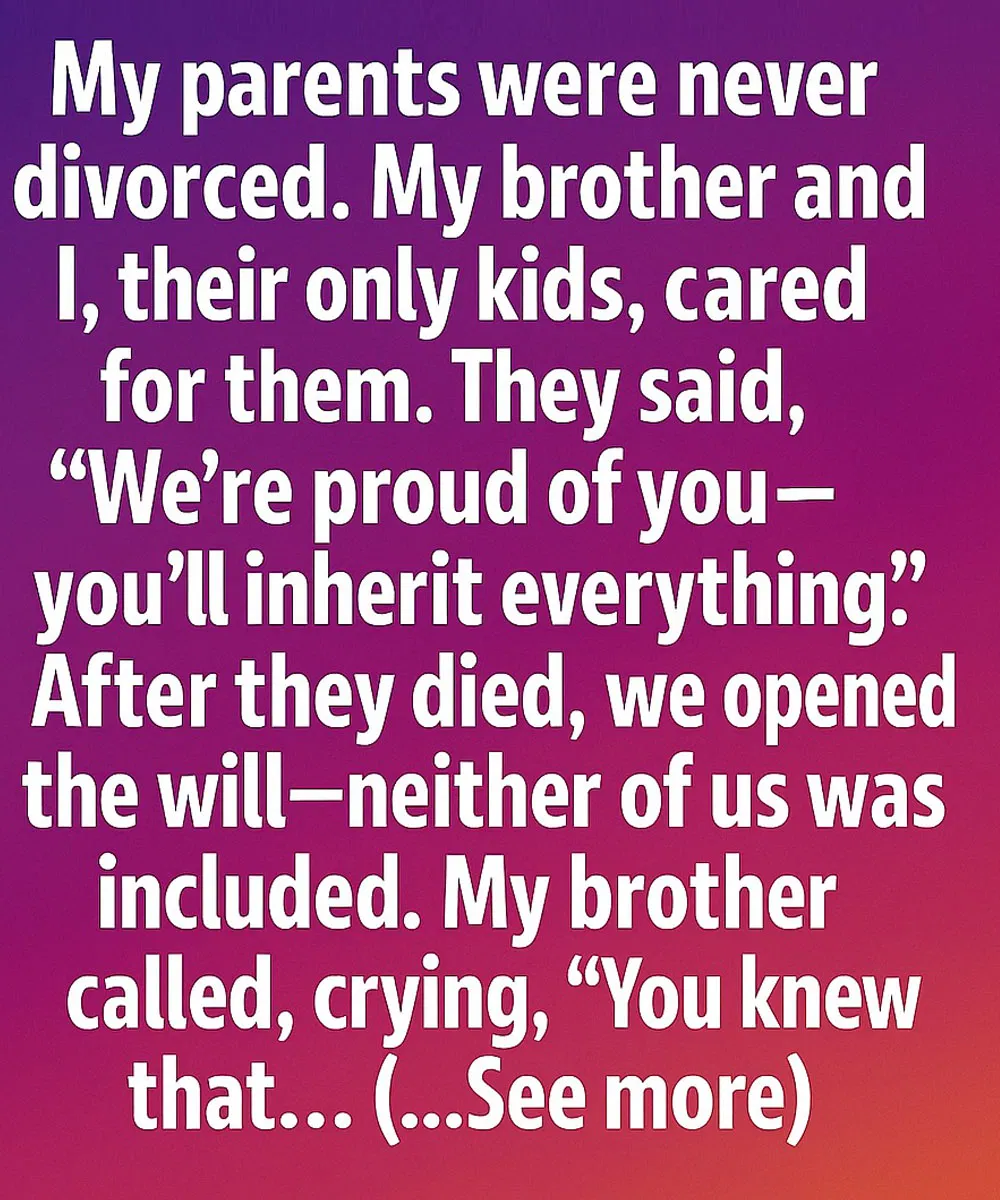
My parents would often smile and say, "We're proud of you, you'll inherit everything." At the time, those words felt like a promise, a guarantee that our dedication and love would be rewarded.
Then came the day we dreaded. When they passed away, grief weighed heavily on us. But even in our sorrow, we clung to one hope: the will. We opened it with trembling hands, only to find something we could never have imagined. Neither my brother nor I were mentioned.
Shock, confusion, and disbelief hit us all at once. My brother called me, his voice breaking with tears. "You knew about this," he whispered. I didn't know what to say. How could this be? We had done everything right. Every visit, every phone call, every small act of kindness, it all seemed meaningless in that moment.
Weeks passed. I combed through old letters, photographs, and keepsakes, desperately searching for answers. Then, one afternoon, while flipping through my mother's worn cookbook, I discovered a small folded note tucked inside. What it said changed everything I thought I knew about inheritance.
The Note That Changed Everything
The letter was in my mother's handwriting, the familiar loops and curves I had known since childhood. It explained what the will could not. My parents had not forgotten us. They had made a deliberate choice, and the note revealed the love and reasoning behind it.
They wrote about what they had observed in families around them: inheritances that divided siblings, money that poisoned relationships, and children who stopped visiting once the checks stopped coming. They had watched wealth become a wedge, and they refused to let it happen to us.
Instead of dividing assets in a way that might breed resentment or entitlement, they had arranged things differently. The details of their plan mattered less than its purpose: to protect the bond between my brother and me, and to ensure that what we inherited was not a source of conflict but a foundation for continued closeness.
The note ended with words I will never forget: the greatest inheritance they could leave was not money or property, but the values they had spent a lifetime teaching, and the relationship my brother and I shared.
Why Inheritance Tears Families Apart
My parents' fears were not unfounded. Estate disputes are among the most common and most bitter family conflicts. Probate courts are filled with siblings who stopped speaking over unequal distributions, unclear wills, and perceived favoritism.
Common triggers include:
- Unequal distributions: Even when parents have good reasons, unequal shares often feel like a judgment about who was loved more.
- Unclear intentions: Vague wills invite competing interpretations, and grief makes every ambiguity feel personal.
- Blended family complications: Second marriages and stepchildren add layers of complexity that test even strong families.
- Sentimental items: Fights over objects with little monetary value, a ring, a chair, a photograph, are often the most emotional.
- Executor conflicts: Placing one sibling in charge of distributing to others can strain even healthy relationships.
My parents had seen all of this happen to people they knew. Their note made clear they were not willing to gamble our relationship on a conventional will.
Rethinking What Inheritance Really Means
The word "inheritance" usually brings to mind money, houses, and possessions. But the deepest things parents pass down are rarely listed in legal documents:
- Values: Integrity, kindness, and work ethic shape a life far more than any bank balance.
- Memories: Shared meals, family traditions, and everyday moments become the wealth we draw on forever.
- Relationships: The bond between siblings, nurtured over a lifetime, is an asset no market can crash.
- Resilience: Watching parents face hardship with grace teaches coping skills that money cannot buy.
- Identity: Family stories, cultural heritage, and a sense of belonging root us in something larger than ourselves.
My brother and I had already received all of this. The will's silence on material assets did not erase decades of investment in who we had become. The note simply helped us see what had been there all along.
The Conversation That Healed Us
After finding the note, I called my brother. This time, there were no accusations, only tears of a different kind. We read our mother's words together, and the suspicion that had begun to grow between us dissolved.
We realized we had both been asking the wrong question. We had been asking, "Why did they leave us nothing?" The right question was, "What did they actually leave us?" The answer was: each other, intact.
That phone call became a turning point. Instead of letting grief and confusion drive us apart, we chose to honor our parents' actual wishes. We talked openly about our fears, our hurt, and our love for each other. It was one of the hardest and most healing conversations of our lives.
Practical Wisdom for Families
Our experience taught us lessons worth sharing with any family facing estate planning:
- Communicate while you can: The note saved us, but a conversation during their lifetimes would have prevented weeks of pain. Tell your children your intentions and your reasoning.
- Put it in writing: Wills handle assets, but letters handle hearts. A personal letter explaining your choices can prevent years of resentment.
- Consider the relationship, not just the assets: The best estate plan is one that preserves family bonds, not just wealth.
- Update documents regularly: Life changes. Wills and letters should be reviewed every few years.
- Do not assume understanding: What seems obvious to parents is often invisible to grieving children. Spell it out with love.
- Seek professional guidance: Estate attorneys and mediators can help structure plans that minimize conflict.
Frequently Asked Questions
Is it legal to leave children out of a will?
In most jurisdictions, parents are generally free to distribute their assets as they choose, though some places have forced heirship rules or protections for minor children. An estate attorney can explain the specific laws in your area.
What should I do if I am surprised by a parent's will?
Allow yourself time to grieve before making decisions. Look for explanatory letters or documents, consider the possibility of misunderstandings, and consult an estate attorney before assuming the worst. Open communication with siblings is essential.
How can parents prevent inheritance disputes?
Clear, updated legal documents combined with honest family conversations are the best prevention. A personal letter explaining the reasoning behind decisions can be as valuable as the will itself.
What is the "true" inheritance parents leave?
Beyond material assets, parents pass down values, memories, resilience, identity, and family relationships. These intangible gifts often shape children's lives more profoundly than money.
Should I write a letter to accompany my will?
Many estate planners recommend it. A heartfelt letter explaining your choices, expressing your love, and sharing your hopes can provide clarity and comfort that legal documents alone cannot offer.
My parents' note taught me that inheritance is not about what you receive when someone dies. It is about what they spent their whole life giving you while they lived. The cookbook is still on my shelf, worn and stained. Inside it, folded small, is the most valuable thing my parents ever left me: proof that they loved us enough to think beyond money, and trusted us enough to understand.