
The Mystery of the Long Strands: What I Discovered Will Surprise You
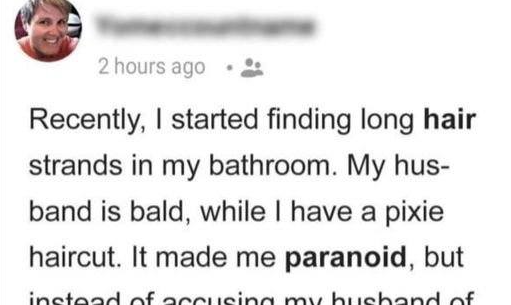
For weeks, I kept noticing something strange in my home: long strands of hair scattered across the bathroom floor. At first, I brushed it off as nothing unusual. But soon, it became clear that this was no ordinary mess. The situation puzzled me deeply. My husband has a completely bald head, and I keep my own hair cropped short in a neat pixie cut. So where could these lengthy strands possibly be coming from?
When Doubt Creeps In
As the days went by, the mystery weighed on me more and more. My mind began racing with questions I did not want to ask. Could my husband be hiding something? Was there an explanation I was not seeing?
Anyone who has lived with an unsolved household mystery knows this feeling. The mind abhors a vacuum, and in the absence of facts, it manufactures stories. Each new strand on the bathroom floor became evidence in a case I did not want to build. The rational part of my brain knew there had to be a mundane explanation. The anxious part kept whispering alternatives.
Instead of letting my imagination run wild, I decided to calmly bring it up with him. To my surprise, he looked just as confused as I was. He shrugged, saying he had no idea where the hair was coming from. His calmness reassured me for a while, until the strands appeared yet again.
That conversation was the right move, and it is worth pausing on why. In relationships, unexplained mysteries have a way of curdling into suspicion when they are not discussed. Naming the weird thing out loud, early and without accusation, keeps a small puzzle from becoming a big problem. He was confused. I was confused. At least we were confused together.
The Turning Point
Determined to find an answer, I started paying closer attention to the little details around the house. I checked the drains. I looked at our clothing. I wondered about visitors, about the cleaning products we used, about everything except the actual answer.
Then one afternoon, the mystery finally solved itself. As the sunlight streamed into the bathroom, I saw a small bird slip in through a narrow vent. To my amazement, it had been building a nest in a hidden corner of our home. The bird was gathering materials from outside, and among them were those mysterious long strands of hair.
I stood there, half laughing and half relieved, watching this tiny architect go about its business. The strands were not a sign of betrayal or a household malfunction. They were building materials, collected from gardens and yards and who knows where, carried in beakful by beakful through a vent I had never paid attention to.
Why Birds Collect Hair
What felt like a bizarre personal mystery turns out to be completely ordinary bird behavior. Many bird species actively seek out hair, fur, and other soft fibers for nest building. Mammal hair is prized nesting material: it is soft, insulating, flexible, and abundant in suburban environments.
Ornithologists note that birds gather nesting materials from surprising distances, sometimes traveling well beyond their immediate territory. Long human hairs, shed naturally and caught by wind, are easy to spot and carry. A single nesting bird can make dozens of trips a day, each time adding to a structure it builds entirely by instinct.
The vent was the missing piece. Bathroom vents, dryer vents, and attic gaps are classic entry points for small birds. From the bird's perspective, our bathroom offered shelter, warmth, and a hidden corner, essentially prime real estate. From our perspective, it was the source of weeks of confusion.
Lesson Learned
In that moment, I learned something I have carried with me since. The lesson was not really about birds. It was about the stories we tell ourselves when we do not have information.
Consider the progression:
- Observation. Long strands of hair where they should not be.
- Confusion. Neither of us could explain it.
- Suspicion. My mind supplied the worst available story.
- Communication. I raised it calmly; he was genuinely baffled.
- Investigation. I watched, waited, and paid attention.
- Resolution. A bird, a vent, a nest. Mystery solved.
At every step, the anxious story felt more compelling than the boring truth. That is how human minds work. We are pattern-seeking, threat-detecting machines, and we would rather have a dramatic wrong answer than sit with an unanswered question. The discipline is in waiting for the evidence.
The Relationship Lesson Hidden in the Mystery
There is a second lesson here, quieter but arguably more important. When I noticed the strands, I had a choice: accuse or inquire. I chose to bring it up calmly, without building a case first. That choice protected something valuable.
Relationship researchers consistently find that how couples handle small confusions predicts how they handle large ones. Contempt and accusation erode trust even when the underlying suspicion is unfounded. Curiosity and directness preserve it. My husband's confusion was genuine, and because I had asked rather than accused, there was nothing to repair afterward.
The bird did us a favor, in a way. It gave us a low-stakes rehearsal for the high-stakes moments every long relationship eventually faces: the unexplained charge on the bill, the strange text, the changed plan. The method is always the same. Notice, ask calmly, investigate together, and let the evidence speak before the imagination does.
What To Do If You Find a Bird Nesting in Your Home
If this story inspires you to check your own vents, here is the practical guidance:
- Identify the entry point. Bathroom vents, dryer vents, chimneys, and attic gaps are the usual suspects.
- Check local regulations. Many bird species are legally protected, and active nests with eggs or chicks often cannot be disturbed.
- Wait if there are eggs or babies. Nesting cycles are short, usually a few weeks. Once the young have fledged, you can act.
- Seal the entry after the nest is empty. Vent covers and mesh guards prevent return visits.
- Clean thoroughly. Old nesting material can harbor mites and bacteria, so wear gloves and disinfect the area.
And if you find mysterious strands of hair in your own bathroom, consider the bird hypothesis before the betrayal hypothesis. Your blood pressure will thank you.
Frequently Asked Questions
Where did the long hair strands come from?
A small bird was entering through a narrow bathroom vent and building a nest in a hidden corner, carrying in long strands of hair collected from outside as nesting material.
Why do birds collect human hair for nests?
Hair is soft, insulating, and flexible, making it ideal nesting material. Birds gather it from the environment along with twigs, leaves, and other fibers.
How did the mystery affect the couple?
It briefly sparked suspicion, but calm, direct communication kept it from becoming a real problem. The husband was genuinely confused, and the eventual discovery resolved everything.
What is the main takeaway?
That unexplained mysteries deserve investigation before imagination. Ask calmly, look for evidence, and remember that the boring explanation is usually the right one.



