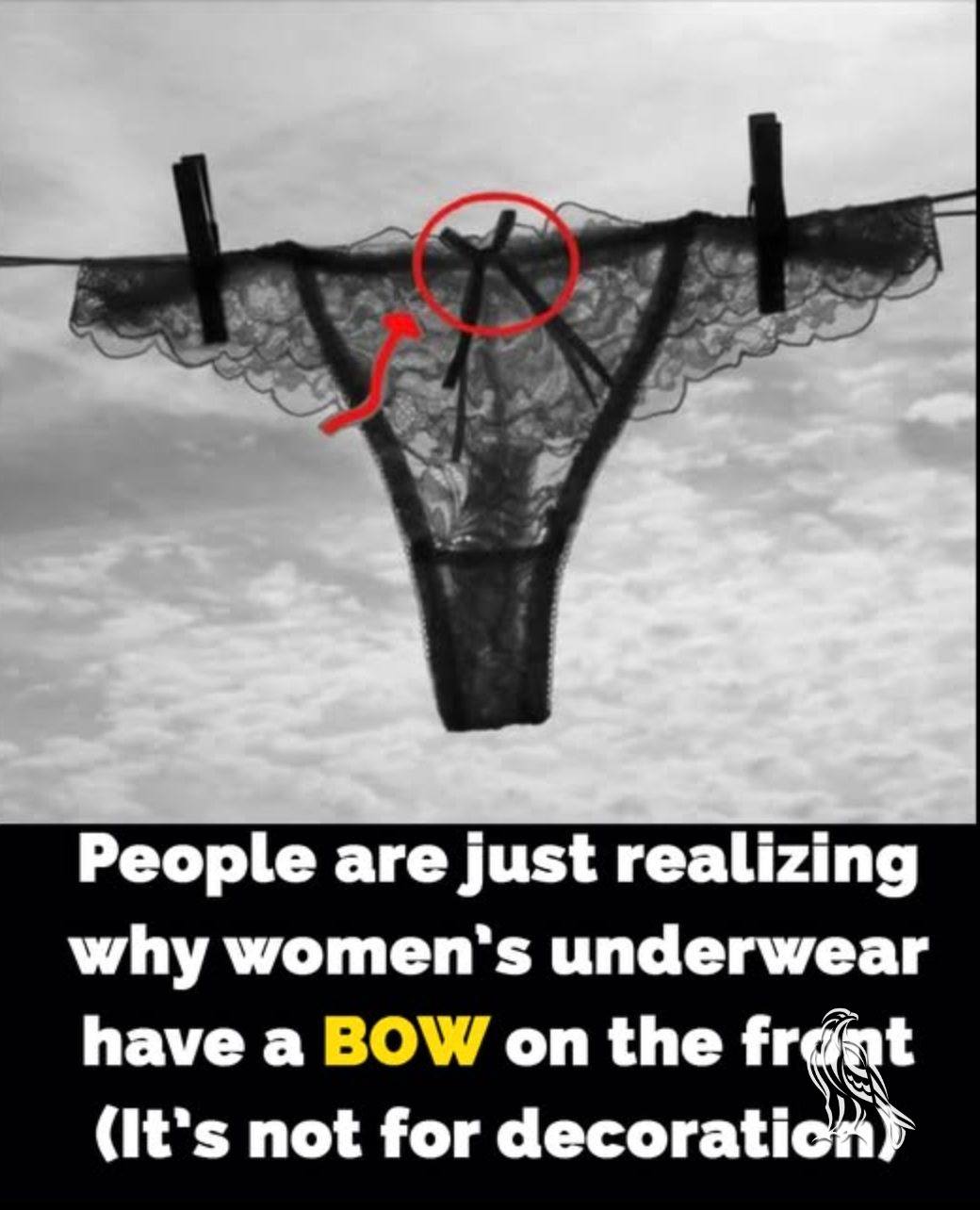
At first glance, the tiny bow found on the front of many women’s underwear designs may seem like nothing more than a decorative detail. Most people assume it was added simply to make lingerie look softer, more elegant, or more feminine. However, fashion historians say this small feature actually has a fascinating history rooted in practicality rather than style.
For generations, clothing design was heavily influenced by everyday needs. Long before elastic fabrics and modern manufacturing existed, undergarments were made in much simpler ways. Women’s underwear, often referred to as “drawers” in earlier centuries, relied on ribbons, laces, or cords tied around the waist to stay secure. These ties were commonly fastened at the front of the garment, and the loose ends were usually finished in a small bow.
The bow served several useful purposes. First, it helped hide the knot created by the ribbon, giving the garment a cleaner and more refined appearance. In an era when sewing and clothing construction were more manual and time-consuming, even small details mattered. A neatly tied bow made the garment look more polished and organized.
But the bow also had another surprisingly practical function that many people today would never expect.
Before electricity became common in homes, people often dressed in low-light conditions. Bedrooms were lit by candles, lanterns, or early oil lamps, which did not provide the bright lighting we are used to today. In dim conditions, it could sometimes be difficult to quickly tell which side of a garment was the front and which was the back.
The tiny bow solved that problem in a simple way. By feeling for the bow with their hands, people could immediately identify the front of the underwear without needing to clearly see it. This small addition acted almost like a built-in guide for dressing.
Although modern lighting and elastic waistbands eventually removed the need for such features, the bow continued to survive in fashion. When elastic underwear designs became popular during the 20th century, ribbons and front ties gradually disappeared because they were no longer necessary for keeping garments in place. Yet many designers chose to keep the small bow as part of the overall design.
Over time, the meaning of the bow changed completely. Instead of being a practical tool, it became associated with tradition, softness, and classic lingerie fashion. The detail was carried forward through decades of changing trends, proving how fashion often preserves pieces of history long after their original purpose disappears.
Today, opinions about the tiny bow are mixed. Some people love it because they see it as cute, elegant, or nostalgic. Others prefer simpler modern styles and sometimes remove the bow entirely. Still, many are fascinated when they discover that this tiny decoration once had a genuine everyday purpose.
Fashion experts often point out that clothing is filled with hidden historical details like this. Many elements that now seem decorative originally existed to solve practical problems. Buttons on jacket sleeves, small pockets on jeans, and even certain stitching patterns all have stories connected to earlier lifestyles and technologies.
The small bow on women’s underwear is one of those unexpected examples. What appears to be a simple fashion choice today is actually a surviving reminder of how people dressed centuries ago. It shows how traditions can continue quietly through generations, even when most people no longer remember why they started.
In the end, the tiny bow represents more than decoration. It is a small piece of fashion history that has survived into modern times, carrying a practical story from the past into everyday life today.