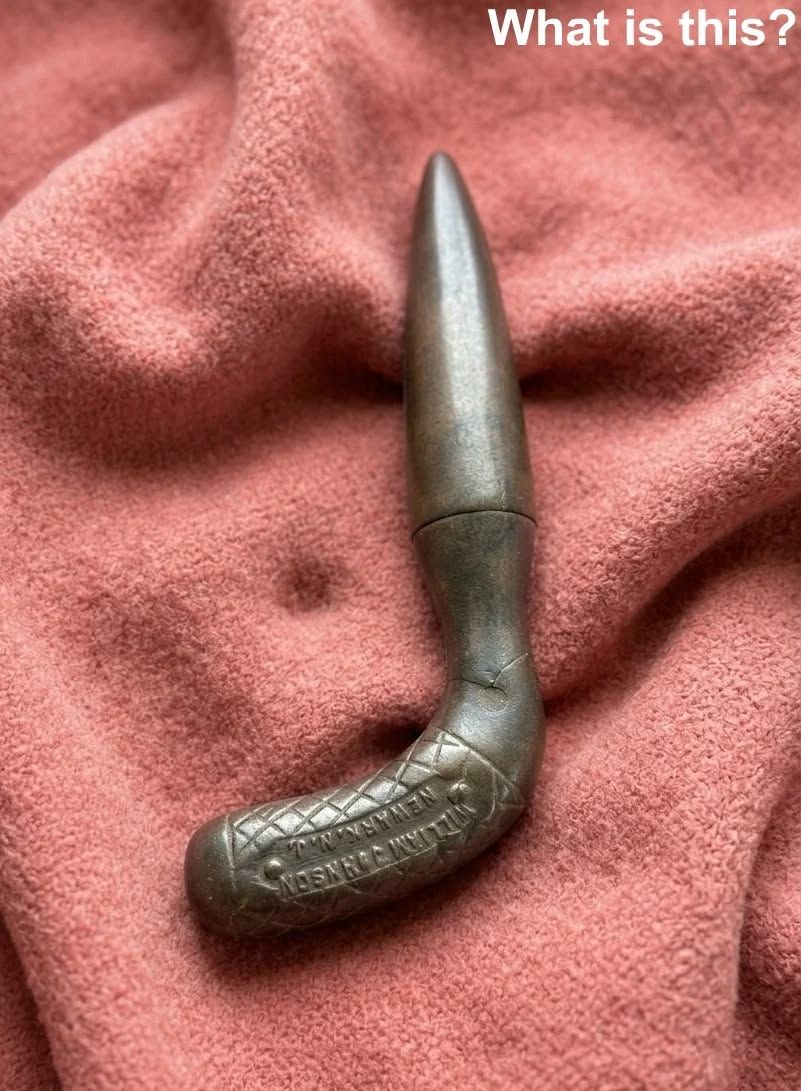
While sorting through the belongings of a late family friend, one family came across a strange heavy object hidden among old household items. At first glance, nobody could identify it. The unusual shape and solid metal construction made it look like a forgotten industrial tool or perhaps a piece of antique machinery.
After some research, the mystery was finally solved: the object was an antique cast iron garden dibble planting tool dating back to the 1800s, originally associated with the well-known horticultural company Peter Henderson & Co.
What Is a Garden Dibble?
A dibble, sometimes called a dibber, is a simple gardening tool designed to create holes in soil for planting seeds, bulbs, or young plants. Gardeners have used versions of this tool for centuries because it allows for quick and precise planting.
Although modern dibbles are often made from lightweight plastic or wood, older versions were commonly crafted from cast iron for extra durability.
Why Cast Iron Was Popular in the 1800s
During the Industrial Revolution, cast iron became a widely used material for tools and household items. It was strong, long-lasting, and easier to mass-produce than many earlier materials.
For gardening tools, cast iron offered several advantages. It provided excellent durability, resisted wear from tough soil, and had enough weight to help the tool sink into the ground more easily. With proper care, these tools could last for generations.
The downside was that cast iron could crack if dropped or struck too hard, so these tools were designed for careful and steady use.
The Role of Peter Henderson & Co.
The connection to Peter Henderson & Co. adds historical value to the discovery. Founded in the 19th century, the company became highly respected in American horticulture and gardening.
It supplied seeds, gardening advice, and professional-grade tools to farmers and market gardeners across the country. During that era, efficient planting tools were extremely important because many growers relied on speed and consistency to maintain productive crops.
Owning a branded gardening tool from a respected company was considered a sign of quality and reliability.
A Closer Look at the Design
Most antique dibble tools from the 1800s featured a pointed tapered shaft that could easily press into soil. Many included a rounded or T-shaped handle to provide a comfortable grip while planting.
Some versions even had depth markings along the shaft. These marks helped gardeners place seeds and bulbs at consistent depths, improving plant growth and organization in the garden.
This attention to detail shows how advanced practical gardening methods had already become during the late 19th century.
Why Antique Gardening Tools Still Fascinate Collectors
Today, antique gardening tools continue to attract collectors and history enthusiasts. Their appeal comes from several factors.
One reason is their historical value. These tools provide insight into everyday agricultural life during the 1800s and reflect the growing importance of professional gardening.
Another reason is craftsmanship. Many antique tools were built with impressive durability and simple but highly effective designs.
They also have decorative appeal. Vintage cast iron tools are often displayed in homes, workshops, or rustic garden settings because of their timeless appearance.
Rarity also plays an important role. Well-preserved examples connected to recognizable companies are becoming increasingly difficult to find.
Gardening Then and Now
Although modern materials such as stainless steel and reinforced plastics have replaced cast iron in many tools, the basic purpose of the dibble has remained unchanged for generations.
Gardeners still use similar tools today to plant bulbs, transplant seedlings, create evenly spaced planting holes, and improve planting accuracy.
This shows how some traditional gardening methods continue to remain useful even as technology evolves.
A Small Tool With a Big Story
What first appeared to be a mysterious metal object turned out to be a valuable piece of gardening history. The antique cast iron dibble is more than just an old tool. It represents a time when craftsmanship, manual labor, and practical innovation shaped everyday life.
For collectors, gardeners, and history enthusiasts alike, discoveries like this offer a fascinating connection to the past and a reminder that even the simplest tools once played an important role in daily work.