The Vintage Kitchen Item That Sparked Online Curiosity
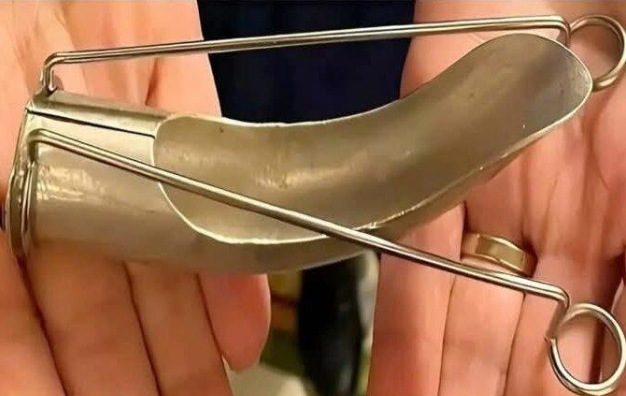
When unusual household items appear in photos online, they often spark lively discussions. That was the case with this mysterious kitchen object, which left many people wondering about its purpose. As it turns out, the item is an attachment designed for the classic Sunbeam Mixmaster mixer, specifically, part of its juicer accessory.
What the Mystery Object Actually Is
This curved metal piece served a simple but clever function. The spout guided freshly squeezed juice neatly into a glass, while the attached wire frame supported a small strainer to catch seeds and pulp. Together, they made it easy for home cooks to prepare fresh citrus juice without the mess or need for a separate appliance.
On its own, separated from the mixer and the rest of the juicer assembly, the piece looks baffling: a curved chute with a wire cage that could be anything from a medical instrument to a strange tool. In context, though, it is an elegant little piece of engineering.
A Multi-Purpose Kitchen Classic
The Sunbeam Mixmaster became one of the most recognizable home appliances of the mid-20th century. Beyond mixing batters and kneading dough, it offered a variety of attachments that transformed it into a versatile kitchen companion. From grinding meat to whipping cream and juicing oranges, it was designed to handle multiple tasks efficiently.
At a time when kitchen space was limited and families valued practicality, this all-in-one approach was especially appealing. Instead of buying several different machines, households could rely on a single sturdy mixer to meet many of their cooking needs.
The attachment system was the Mixmaster's secret weapon:
- A juicer attachment with a reamer, strainer, and the spout that puzzled the internet
- A meat grinder for homemade sausage and ground meat
- A blender attachment in some models
- Various beaters, dough hooks, and whisks for the core mixing tasks
One motor, many jobs. It was the original kitchen multi-tool.
Why It Looks Unfamiliar Today
For those unfamiliar with vintage appliances, this juicer spout and strainer frame can look unusual on its own. If discovered in a drawer, an estate sale box, or an inherited kitchen collection, its purpose may not be immediately obvious. Without the full juicer setup attached to the mixer, the shape alone doesn't clearly reveal its function.
In reality, it's a straightforward and harmless kitchen tool from a time when appliances were built with durability and adaptability in mind. Modern kitchens favor single-purpose gadgets: a citrus press here, a juicer there, each with its own cord and footprint. The Mixmaster philosophy was the opposite: buy one excellent machine and extend it.
A Glimpse Into Kitchen History
Before modern electric citrus presses became widely available, attachments like this played an important role in everyday food preparation. Manufacturers focused on creating reliable products that could withstand years of regular use. In fact, many Mixmaster units from the 1940s through the 1960s are still operational today, a testament to their solid craftsmanship.
Collectors and vintage appliance enthusiasts often seek out these attachments because they reflect a practical design philosophy. With simple mechanical parts and thoughtfully shaped components, these tools delivered dependable results without complex electronics.
The mid-century kitchen was a marvel of mechanical ingenuity. Without microchips or digital displays, engineers solved problems with gears, levers, and cleverly shaped metal. The juicer spout is a perfect example: no moving parts at all, just a shape that does exactly one job perfectly.
Appreciating Practical Design
Discovering a vintage attachment like this can be a reminder of how home kitchens have evolved. It highlights a period when manufacturers prioritized versatility, longevity, and user-friendly design. Even small components were carefully engineered to make everyday tasks easier.
While it may initially appear puzzling, this juicer spout and strainer frame is a small piece of culinary history. It represents a time when kitchen innovation focused on smart, lasting solutions, and it continues to spark curiosity decades later.
If you find one in a drawer or at an estate sale, don't throw it away. Clean it up, and if you have a Mixmaster, or know a collector who does, you've found a genuine piece of Americana. And if you don't, it still makes a wonderful conversation piece and a reminder that the best designs are often the simplest ones.
The Internet's Love of Mystery Objects
The viral curiosity around this juicer part is part of a larger phenomenon. Online communities dedicated to identifying strange objects have millions of members, and vintage kitchen tools are among their favorite puzzles. There's something deeply satisfying about watching a baffling object get identified in real time by collective knowledge.
These moments also serve as informal history lessons. Each identified gadget teaches a new generation about how people lived, cooked, and solved everyday problems before the digital age. A curved piece of metal becomes a window into mid-century American kitchens, and a reminder that innovation doesn't always require a microchip.
Frequently Asked Questions
What is the mysterious vintage kitchen item?
It is a juicer attachment part for the classic Sunbeam Mixmaster mixer: a curved spout that guided juice into a glass, with a wire frame that held a strainer to catch seeds and pulp.
What was the Sunbeam Mixmaster?
One of the most popular stand mixers of the mid-20th century, known for its durability and its system of attachments that let one machine handle mixing, juicing, grinding meat, and more.
Why does the juicer part look so strange on its own?
Without the mixer and the rest of the juicer assembly for context, the curved spout and wire frame don't clearly suggest their purpose. It only makes sense as part of the complete setup.
Are old Mixmasters still usable?
Yes. Many units from the 1940s through the 1960s still work today thanks to their solid, simple mechanical construction, which is why collectors prize them.
What should I do if I find vintage mixer attachments?
Clean them, identify them (online collector communities can help), and consider keeping them with a matching mixer, passing them to a collector, or displaying them as pieces of kitchen history.