The Whisper of Forgiveness: A Heartwarming Story of Love and Healing
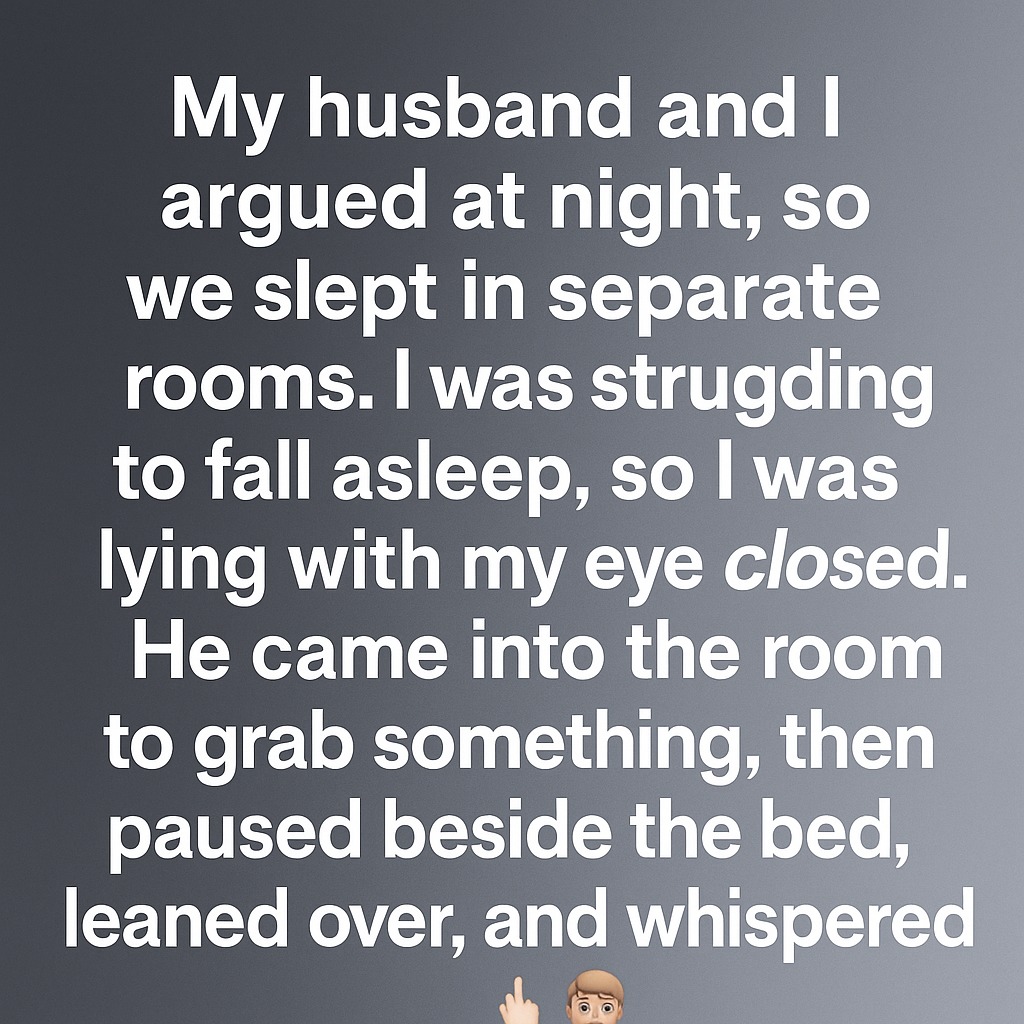
Some of the most powerful moments in a relationship are the quietest ones. In this story, a small misunderstanding between a husband and wife escalates into a tense argument. Exhausted and drained, they sleep in separate rooms. In the middle of the night, the husband slips quietly into her room, kneels beside the bed, and whispers an apology. He is not there to rehash the fight or defend himself. He comes simply to remind her that their love is bigger than one bad night. The next morning, she meets him in the kitchen, wraps her arms around him, and whispers forgiveness back.
Stories like this one are shared so widely because almost every couple knows that exact 2 a.m. feeling: lying awake, replaying harsh words, too proud to be the first to reach out. The anecdote itself cannot be verified, so it is best read as an illustration rather than a proven event. What it illustrates, though, is something relationship researchers have studied for decades: the repair attempt. Here is genuinely useful guidance on fighting fair, apologizing well, and finding your way back after a bad night.
Why Small Disagreements Explode
The story begins the way most couple fights begin: a minor disagreement that escalates fast. This happens for predictable reasons:
- Timing. Tired, hungry, or stressed partners have almost no patience for friction. The same comment at noon might roll off; at 11 p.m. it detonates.
- Stacked grievances. The argument is rarely about the dishes. It is about the dishes plus the thing from Tuesday plus the thing from last month that never got resolved.
- Feeling unheard. Escalation often starts the moment one person feels the other is not listening. Volume becomes a substitute for being understood.
- Pride. Once harsh words are out, backing down feels like losing. So both people double down on words neither of them means.
Understanding this pattern does not excuse hurtful words, but it does make them less mysterious. You were not fighting about what you were fighting about.
The Power of the Repair Attempt
What the husband does in the story, creeping in to whisper rather than to argue, is what psychologists call a repair attempt: any gesture that de-escalates tension and signals "we are still us." Repair attempts can be verbal or physical, grand or tiny. A hand on a shoulder. A joke that breaks the ice. A whispered apology in the dark.
Research on couples has consistently found that the success of a relationship depends less on avoiding conflict and more on repairing it. Couples who repair well can fight often and still be happy. Couples who cannot repair will drift apart even over small things. The key insight: it is not the fight that defines you. It is what happens next.
A good repair attempt has a few qualities:
- It comes without conditions. "I am sorry, but you…" is not a repair. It is a counterattack wearing an apology costume.
- It prioritizes connection over correctness. He did not come to prove who was right. He came to close the distance.
- It is timed with care. He waited until the heat had passed. A repair attempt launched mid-shouting usually gets swatted away.
Sleeping on It: When Apart Helps and When It Hurts
The couple in the story slept in separate rooms, and for them it created the space for reflection. Sleeping apart after a fight is neither universally good nor universally bad. It depends on how you do it.
When it helps:
- When either partner is too flooded with emotion to think clearly. Sleep genuinely resets the nervous system.
- When you agree on it together, even briefly: "I need some space tonight. We will talk in the morning."
- When the alternative is saying things you will regret.
When it hurts:
- When one person storms off and slams the door. That is punishment, not space.
- When "sleeping on it" becomes sleeping on it for three days. Distance curdles into avoidance quickly.
- When it becomes the default ending to every disagreement, so nothing ever gets resolved.
If you do sleep apart, set a time to reconnect. "Let's talk over coffee" gives the space a boundary and prevents the silence from becoming the message.
How to Apologize So It Actually Lands
The whispered apology in the story works because it is simple and sincere. Real apologies follow the same anatomy:
- Name what you did. "I am sorry I raised my voice and called you careless" beats "I am sorry you got upset." The first takes ownership. The second blames the other person's feelings.
- Acknowledge the impact. Show you understand how it landed: "I know that must have felt awful to hear."
- Skip the excuses. Explanations can come later, in a calm conversation. In the apology itself, they dilute the remorse.
- Say what will change. "Next time I feel that frustrated, I will ask for a pause instead of snapping" turns regret into a plan.
- Let them respond. An apology is an offering, not a transaction. They may need time before they can accept it.
And then there is the other half of the story: her whispered forgiveness the next morning. Forgiveness does not mean pretending it did not happen. It means choosing not to hold the offense over the person indefinitely. That choice can take time, and that is normal.
Rebuilding After the Words Are Said
An apology ends the fight. Repairing the underlying crack takes a little longer. In the days after a bad argument:
- Revisit the real issue calmly. Once everyone is rested, talk about what actually triggered the fight. This is where the stacked grievances get unpacked.
- Watch for the echo. For a few days, both of you may be tender and quick to flare. Name it: "I think we are both still raw from the other night."
- Do something kind and ordinary. Make the coffee. Ask about their day. Normalcy is how trust gets rebuilt, one small gesture at a time.
- Notice what worked. If the whispered apology melted the tension, remember that. Every couple has repair moves that work for them. Build a repertoire.
When Fights Follow a Destructive Pattern
Most couples fight, and most fights are survivable. But some patterns are warning signs that the dynamic itself needs professional attention:
- Arguments regularly involve contempt: mockery, eye-rolling, name-calling, disgust.
- One partner stonewalls for days, refusing all communication.
- Fights escalate to threats, intimidation, or any physical aggression.
- The same issue cycles endlessly with no resolution, year after year.
- Either partner feels afraid, not just upset, during conflicts.
If any of these describe your relationship, couples counseling is not an admission of failure. It is hiring a guide for terrain you cannot navigate alone. And if there is any physical violence or you feel unsafe, reach out to a local domestic violence support service for help making a safety plan.
Frequently Asked Questions
Should I always be the first to apologize?
No, and keeping score of who apologizes first is its own problem. But being willing to go first, even when you think you were only 30 percent wrong, is a sign of strength. Someone has to break the stalemate.
What if my partner never apologizes?
Some people were raised in homes where apologies never happened, and they genuinely do not know how. Tell them what you need in concrete terms: "When you raise your voice, I need to hear that you are sorry before we move on." If they refuse even that, it is worth exploring in counseling.
Is it okay to go to bed angry?
The old advice says never go to bed angry, but exhausted midnight conflict resolution often does more harm than good. Going to bed with a plan to talk in the morning is usually wiser than forcing a 1 a.m. summit.
How long should forgiveness take?
There is no deadline. Small hurts may resolve overnight; deeper ones can take weeks. What matters is the direction: are you moving toward release, or nursing the grievance? If you find yourself bringing up the same offense months later, the forgiveness is not complete yet.
The Takeaway
The whisper in the story is memorable because it captures what repair really looks like: not a dramatic speech, but a quiet choice to come back. Love, in the long run, is not measured by how rarely you fight. It is measured by how reliably you find your way back to each other afterward. Show up, say you are sorry without the "but," and let the small gestures do their slow, steady work.